BooksThe Intruder
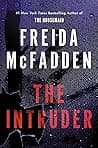
In the claustrophobic confines of a wilderness cabin, Freida McFadden examines the fragile boundary between sanctuary and trap. When Casey, a woman seeking solace in isolation, encounters a bloodied young girl at her window during a lethal hurricane, the narrative shifts from a survivalist struggle against nature to a psychological interrogation of trauma. The girl, clutching a knife and refusing to explain her origins, represents a physical manifestation of a history Casey has tried to outrun, forcing a confrontation not just with a stranger, but with the volatile mechanics of victimhood and defense.
The story functions as a study of displacement and the cyclical nature of violence. As the storm cuts off the cabin from the outside world, the internal architecture of the house becomes a labyrinth of secrets and shifting loyalties. McFadden strips away the comforts of the modern thriller—technology, easy escape, and law enforcement—leaving only two characters trapped in a pressure cooker of mutual suspicion. The tension is built not through high-speed chases, but through the agonizingly slow revelation of what the girl is hiding and what Casey is willing to overlook to maintain her own sense of safety.
The setting of the novel is defined by a dual-layered isolation: the physical decay of a cabin ill-equipped for a hurricane and the elemental fury of the storm itself. McFadden utilizes the "locked-room" mechanic by using the weather as an impassable barrier, effectively turning the cabin into a sensory-deprivation tank where every creak of the floorboards and flicker of the lights is amplified. The world outside is a chaotic void of wind and falling trees, which serves to heighten the intimacy and the danger inside. This environment creates a specific set of rules for the characters; there is no help coming, resources are finite, and the presence of a weapon in a small space dictates every movement and conversation.
Casey begins the narrative as a woman defined by her withdrawal from society, yet her reaction to the intruder reveals a dormant, complex instinct to protect. Her initial arc is a struggle between self-preservation and a profound, perhaps dangerous, empathy for the girl, Eleanor. The relationship is a tense power struggle; Casey attempts to play the role of the humanitarian savior, while Eleanor remains an enigma—silent, armed, and seemingly traumatized. This dynamic explores the moral dilemma of the "good samaritan": at what point does helping a victim turn into a lapse in judgment that endangers one’s own life? Casey’s background in a fractured family structure subtly informs her need to provide the safety she may have once lacked herself.
While the novel utilizes the foundational elements of the "Home Invasion" thriller, it subverts the typical predatory motive. Instead of a random villain seeking material gain, the intrusion is framed through the lens of generational trauma and the "Sins of the Father" motif. By weaving in a secondary timeline focused on a young girl named Ella, the narrative suggests that the intrusion is not an accident, but a consequence of long-buried secrets. This thematic approach elevates the book from a standard survival tale into a gothic exploration of how childhood abuse and flawed paternal figures create ripples that eventually wash up on distant shores. The "intruder" is not just a person, but the return of a past that refuses to stay buried.
The narrative tension is driven by a series of disturbing discoveries made in the dead of night, forcing Casey to question the girl’s identity and her own safety. McFadden focuses on the psychological weight of the "unreliable witness"—both in the protagonist’s perception of the storm and the girl’s refusal to provide a coherent story. The stakes are centered on a singular, terrifying question: Is the girl a victim running from a monster, or is she the monster herself? By keeping the focus on the immediate, claustrophobic interactions within the first half of the book, the story builds a foundation of dread that relies on the reader’s own fear of the unknown.
Add to your library to track progress and write reviews
Find The Intruder Freida McFadden in PDF, EPUB, ebook, audiobook, print, or library editions.

The Intruder
11 books in catalog
Propelled by tight plotting and sharp suspense, psychological thrillers featuring domestic secrets and rapid twists have become a major fixture on bestseller lists worldwide. The breakout success of The Housemaid established Freida McFadden as a prominent voice in modern mystery fiction, earning top positions across major publishing charts.
Writing under her pen name, McFadden—the pseudonym of physician Sara Cohen—has reached #1 on bestseller lists from the New York Times, Amazon Charts, USA Today, Washington Post, Wall Street Journal, Sunday Times, and Publisher's Weekly. Her works have been translated into more than 45 languages and recognized among Amazon Editors' best books of the year.
Born Sara Cohen on May 1, 1980, in New York City, McFadden studied at Harvard University and Stony Brook University before completing medical training and practicing as a physician. She began her literary career in 2013 by self-publishing medical humor novels alongside dark domestic thrillers, balancing hospital work with fiction writing for nearly a decade.
Her 2022 novel The Housemaid marked a turning point in her publishing career, remaining on global bestseller lists for months and sparking sequels such as The Housemaid Is Watching. Following the adaptation of her work for a Lionsgate feature film starring Amanda Seyfried and Sydney Sweeney, she transitioned to writing full-time. Honored with the International Thriller Writers Award for Best Paperback Original and a Goodreads Choice Award for Best Thriller, McFadden resides with her family and cat in a centuries-old three-story oceanfront home with creaking staircases.
McFadden's thrillers typically center on everyday environments—including suburban homes, high schools, locked hospital wards, and remote properties—where mundane routines conceal hidden motives. Her narratives frequently employ unreliable narrators, short chapters, fast pacing, and late-stage plot twists that recontextualize earlier events.
Drawing directly on her background in medicine, McFadden often incorporates clinical settings and medical procedure details into her psychological suspense. Works like Ward D showcase her use of healthcare environments to generate claustrophobic tension, while standalone thrillers such as The Teacher, Never Lie, and The Boyfriend examine themes of trust, professional ethics, and deception in intimate relationships.