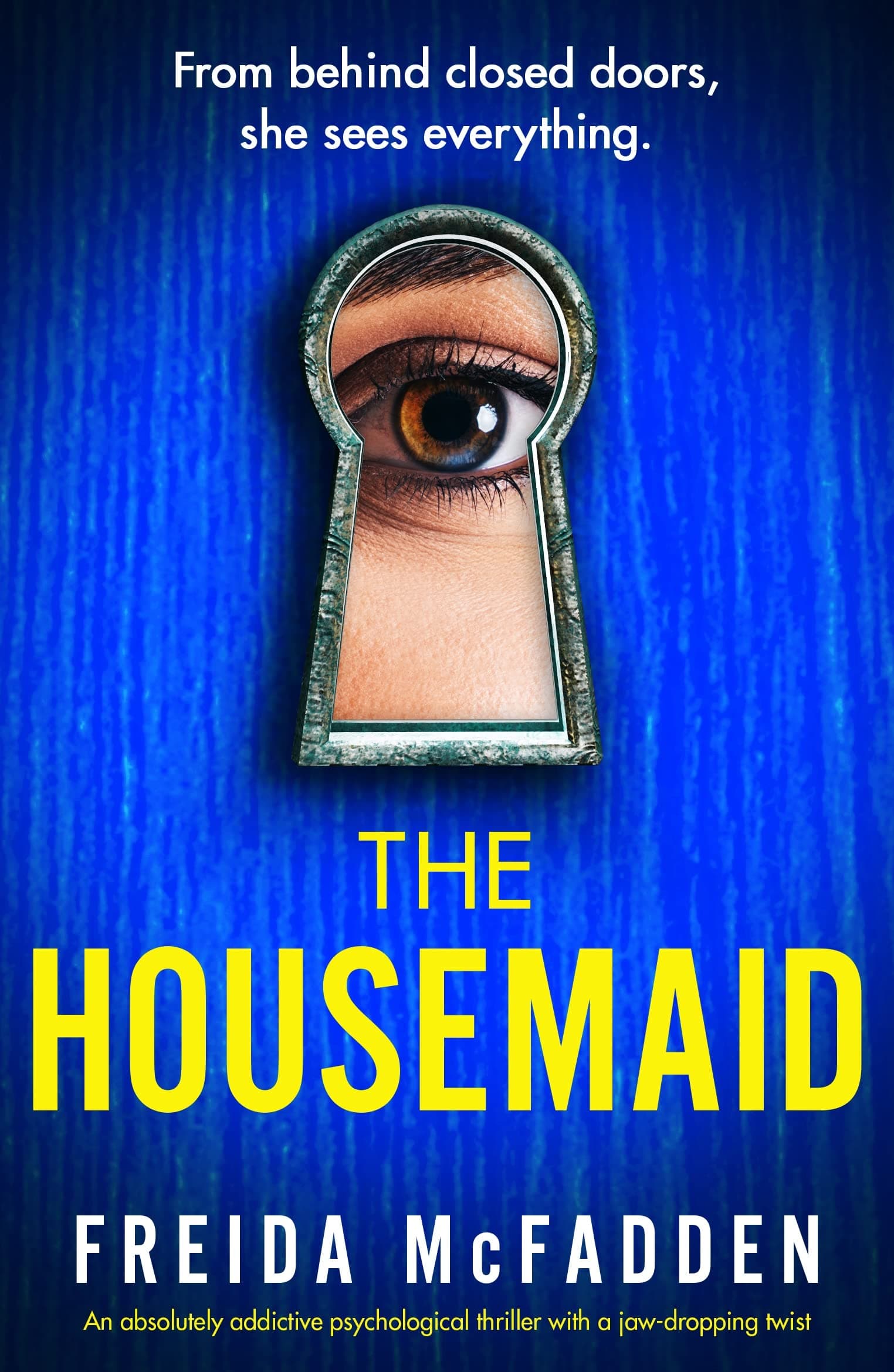
Millie Calloway is a woman existing on the razor's edge of survival. Having spent years behind bars, her transition back into society is hindered by a criminal record that makes even the most menial employment a near impossibility. When she is offered a live-in position at the opulent Winchester estate, it presents as a miraculous escape from the indignity of sleeping in her car and the constant threat of a parole violation. However, the grandeur of the Long Island mansion serves as a thin veneer for a domestic arrangement defined by psychological volatility and rigid hierarchies.
The narrative tension is rooted in the stark imbalance of power between an employer who can revoke a lifeline at any moment and an employee whose very presence is conditional on her total compliance. As Millie navigates the erratic, often cruel demands of Nina Winchester and the steady, protective presence of Andrew Winchester, the physical space of the house begins to feel less like a sanctuary and more like a laboratory for social and mental exhaustion. The central conflict lies in the friction between Millie’s need for a clean slate and the realization that the Winchesters’ "perfect" life is maintained through a series of increasingly disturbing interpersonal rules.
The world-building in this domestic thriller is centered on the physical and social geography of the Winchester home. Wealth is portrayed not just as a luxury, but as a tool for isolation. The most significant element of the setting is Millie’s living quarters: a cramped, sweltering attic room that can only be locked from the outside. This architectural detail serves as a constant reminder of her status—she is an essential part of the household’s functioning but is simultaneously kept at a physical and metaphorical distance. The house itself functions as a silent character, characterized by surveillance, strict schedules, and a growing sense of claustrophobia that underscores the vulnerability of domestic laborers.
The character dynamics are established through a complex triangle of manipulation. Millie begins her arc as a woman desperate to prove her worth, willing to endure Nina’s irrational outbursts—ranging from intentional messes to false accusations—in order to keep her job. Nina Winchester is presented as a paradigm of domestic instability, someone whose behavior oscillates between manic friendliness and calculated malice. Andrew Winchester acts as the stabilizer in this environment, offering Millie a sense of safety and normalcy. However, this dynamic creates a moral dilemma for the protagonist: as she becomes more entrenched in the couple's private life, she must decide how much of her own dignity she is willing to sacrifice for the sake of a paycheck and a roof over her head.
The novel utilizes and subverts several hallmarks of the psychological thriller genre, most notably the "madwoman in the attic" and the "unreliable narrator." While the setup mirrors classic Gothic literature, it updates these tropes by framing them through the lens of modern class disparity. Rather than focusing on supernatural elements, the story looks at the visceral reality of being an outsider in a wealthy environment. By establishing Millie’s own secrets early on, the narrative challenges the reader to question her perceptions of the Winchesters. The trope of the "perfect husband" is also scrutinized, examining how patriarchal structures within a home can create a vacuum of power that pits women against one another for the scraps of security provided by the head of the household.
Add to your library to track progress and write reviews
Find The Housemaid Freida McFadden in PDF, EPUB, ebook, audiobook, print, or library editions.
11 books in catalog
Propelled by tight plotting and sharp suspense, psychological thrillers featuring domestic secrets and rapid twists have become a major fixture on bestseller lists worldwide. The breakout success of The Housemaid established Freida McFadden as a prominent voice in modern mystery fiction, earning top positions across major publishing charts.
Writing under her pen name, McFadden—the pseudonym of physician Sara Cohen—has reached #1 on bestseller lists from the New York Times, Amazon Charts, USA Today, Washington Post, Wall Street Journal, Sunday Times, and Publisher's Weekly. Her works have been translated into more than 45 languages and recognized among Amazon Editors' best books of the year.
Born Sara Cohen on May 1, 1980, in New York City, McFadden studied at Harvard University and Stony Brook University before completing medical training and practicing as a physician. She began her literary career in 2013 by self-publishing medical humor novels alongside dark domestic thrillers, balancing hospital work with fiction writing for nearly a decade.
Her 2022 novel The Housemaid marked a turning point in her publishing career, remaining on global bestseller lists for months and sparking sequels such as The Housemaid Is Watching. Following the adaptation of her work for a Lionsgate feature film starring Amanda Seyfried and Sydney Sweeney, she transitioned to writing full-time. Honored with the International Thriller Writers Award for Best Paperback Original and a Goodreads Choice Award for Best Thriller, McFadden resides with her family and cat in a centuries-old three-story oceanfront home with creaking staircases.
McFadden's thrillers typically center on everyday environments—including suburban homes, high schools, locked hospital wards, and remote properties—where mundane routines conceal hidden motives. Her narratives frequently employ unreliable narrators, short chapters, fast pacing, and late-stage plot twists that recontextualize earlier events.
Drawing directly on her background in medicine, McFadden often incorporates clinical settings and medical procedure details into her psychological suspense. Works like Ward D showcase her use of healthcare environments to generate claustrophobic tension, while standalone thrillers such as The Teacher, Never Lie, and The Boyfriend examine themes of trust, professional ethics, and deception in intimate relationships.
The Housemaid