American literature during the Gilded Age gained some of its most incisive social commentary through realistic portrayals of upper-class New York society, exemplified by the novel The Age of Innocence (1920). Edith Wharton drew directly from her insider knowledge of elite social circles to examine the rigid moral codes and social strictures imposed upon individuals during this era. Her novel won the 1921 Pulitzer Prize for literature, making her the first woman to win the award for fiction.
Career & Background
Born Edith Newbold Jones in New York City in 1862, Wharton was raised in a tightly controlled society where women were discouraged from achieving beyond a proper marriage. Encouraged in her childhood literary endeavors, she wrote her first novel as a teenager under the pen name David Oliveri. She married Edward Wharton in 1885 and lived in Newport, Rhode Island, before settling in Europe in 1907. Fluent in French as well as several other languages, Wharton was a prolific novelist, short story writer, and designer who saw many of her books published in both French and English. During World War I, she helped organize the American Hostel for Refugees and the Children of Flanders Rescue Committee, receiving the French Legion of Honor in 1916 and Belgium's Order of Leopold in 1919. Over a career spanning four decades, she published over forty books, earned an honorary Doctorate of Letters from Yale University in 1923, and became a full member of the American Academy of Arts and Letters.
Writing Style & Themes
Wharton's fiction is recognized for its careful narrative form, sharp social satire, and deep concern with ethical dilemmas. Drawing on her expertise as a designer and co-author of non-fiction works on architecture, interior design, and travel, she created realistic settings that reflected the social stratifications of her subjects. Her recurring themes explore the struggle between personal inclination and social duty, the systemic constraints placed on women, and the rigid expectations of high society. She applied these stylistic strengths across multiple forms, from tragic short novels such as Ethan Frome and Summer to broad social studies like The House of Mirth and complex short stories including Roman Fever.
Major Works
- The Age of Innocence — Published in 1920, this novel set in 1870s New York won the 1921 Pulitzer Prize for literature, detailing the restrictive moral and social expectations of elite society.
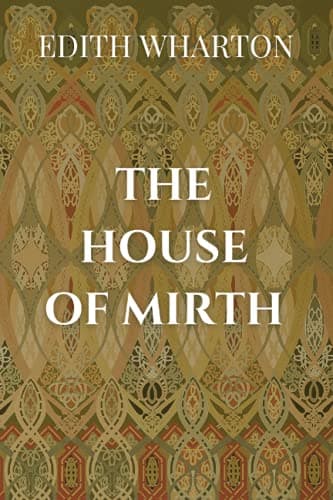
- The House of Mirth — Published in 1905, this novel analyzes the stratified Gilded Age society through the tragic trajectory of Lily Bart.
- Ethan Frome — Published in 1911, this tragic novella presents a stark portrayal of rural isolation, duty, and spiritual entrapment in New England.
- Summer — A novella exploring personal passion, social strictures, and small-town dynamics in rural New England.
- The Buccaneers — Wharton's final, posthumously published novel concerning young American women navigating Victorian British high society.
- Roman Fever — A celebrated short story illustrating Wharton's mastery of irony, social competition, and concise narrative structure.
- Bunner Sisters — A novella focused on working-class sisters in New York, demonstrating Wharton's realistic range beyond high-society settings.