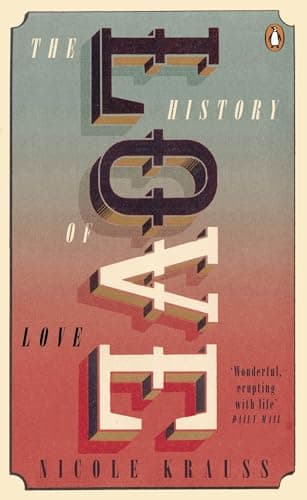
Intricate multi-narrator structures and emotionally resonant explorations of memory, loss, and personal history define the literary fiction of American author Nicole Krauss. Her 2005 novel The History of Love established her international reach through its interconnected narrative of surviving historical trauma, lost manuscripts, and the persistent desire for human connection.
Krauss has authored four novels and a short story collection that have been translated into 35 languages. Her fiction frequently examines personal identity, displacement, and the intricate ways art and written words bridge long-separated lives.
Career & Background
Born on August 18, 1974, Nicole Krauss completed her undergraduate and master's degrees at Stanford University in 1996. She made her novelistic debut in 2002 with Man Walks Into a Room, which was named a finalist for the Los Angeles Times Book of the Year. Her major breakthrough arrived with her second novel, The History of Love, in 2005. The book became an international bestseller, won the William Saroyan International Prize for Writing and France's Prix du Meilleur Livre Étranger, was shortlisted for the Orange Prize, Prix Médicis, and Prix Femina, and was later adapted into a 2016 feature film.
In 2007, Krauss was selected as one of Granta's Best of Young American Novelists. Her third novel, Great House, was published in 2010 and earned nominations as a finalist for both the National Book Award and the Orange Prize, as well as winning an Anisfield-Wolf Book Award in 2011. She published the novel Forest Dark in 2017, followed by her debut short story collection, To Be a Man, in 2020, which won the 2022 Wingate Literary Prize. Her shorter work has appeared in publications such as The New Yorker, Harper's, Esquire, and multiple editions of The Best American Short Stories.
Writing Style & Themes
Krauss's narrative technique relies on complex architectural design, weaving fragmented perspectives, geographically distant settings, and significant physical objects across generations. In novels like Great House, her storytelling connects voices across New York, Jerusalem, and London around a single massive desk with nineteen drawers, using material culture to anchor stories about grief, secrecy, and artistic creation.
Her prose balances rigorous structural ambition with deep psychological insight. Krauss regularly examines Jewish cultural inheritance, historical memory, and the ways her characters reconstruct damaged pasts through storytelling, self-invention, and literary imagination.
Major Works
- The History of Love — Published in 2005, this bestseller follows an elderly Holocaust survivor living in New York and a young girl seeking a cure for her mother's grief, tied together by an obscure book written decades earlier. It won the Saroyan Prize and was adapted into a 2016 film.
- Great House — Published in 2010, this National Book Award finalist links four narrative threads across different continents through their connection to an imposing nineteen-drawer desk once owned by a Chilean poet.
- Man Walks Into a Room — Published in 2002, Krauss's debut novel explores memory, identity, and solitude through the story of a thirty-two-year-old professor who loses all recollection of his life prior to the removal of a brain tumor.
- Forest Dark — Published in 2017, this novel traces two distinct Americans—an aging lawyer giving away his wealth and a famous novelist facing creative paralysis—who travel to Tel Aviv looking for self-transformation.
- To Be a Man — Published in 2020, this collection of ten short stories spans different life stages and international locations to examine power dynamics, intimacy, and personal identity, winning the 2022 Wingate Literary Prize.