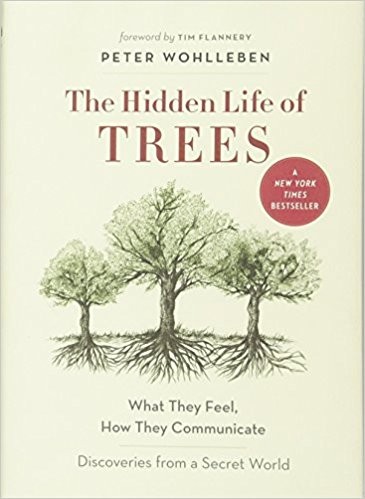
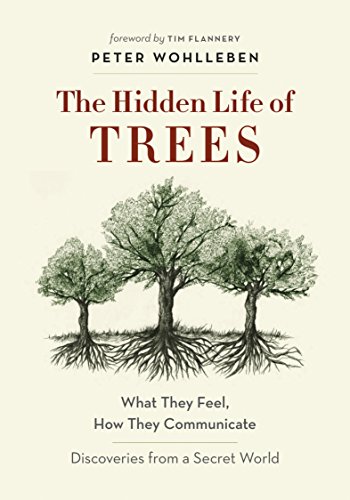
"Opening this book, you are about to enter a wonderland." Tim Flannery, author of Atmosphere of Hope and The Weather Makers "Charming, provocative, fascinating." David George Haskell, author of The Forest Unseen, Pulitzer finalist Are trees social beings? In this international bestseller, forester and author Peter Wohlleben convincingly makes the case that, yes, the forest is a social network. He draws on groundbreaking scientific discoveries to describe how trees are like human families- tree parents live together with their children, communicate with them, support them as they grow, share nutrients with those who are sick or struggling, and even warn each other of impending dangers. Wohlleben also shares his deep love of woods and forests, explaining the amazing processes of life, death, and regeneration he has observed in his woodland. After you have read The Hidden Life of Trees, a walk in the woods will never be the same again.
Add to your library to track progress and write reviews
Find The Hidden Life of Trees Peter Wohlleben in PDF, EPUB, ebook, audiobook, print, or library editions.
1 books in catalog
Popular ecological writing gained new ground through accessible studies of forest ecosystems that explain arboreal communication, root networks, and plant biology to general audiences. German conservationist and author Peter Wohlleben brought these natural processes into global popular science with his international bestseller The Hidden Life of Trees: What They Feel, How They Communicate—Discoveries from a Secret World, which was translated into English in 2016.
Through non-fiction works translating complex forestry science and ecology into engaging narrative prose, his writings offer fresh perspectives on how forest communities interact, adapt, and sustain biological balance.
Born in Bonn, West Germany, on June 3, 1964, Wohlleben developed an interest in environmental conservation at a young age, caring about rainforest preservation and marine life during his school years. He formally studied forestry in Rottenburg am Neckar before joining the Rhineland-Palatinate state forestry administration, where he worked as a state forest ranger for approximately twenty years.
During his two decades in state forestry, Wohlleben concluded that traditional forestry practices such as large clear-cuts damaged forest ecosystems rather than protecting them. Realizing the difficulty of reforming conventional forestry from within the state system, he transitioned to managing an ecological forest in Hümmel. In 2014, he established a Forest Academy in Wershofen, Germany, dedicated to ecological education, public advocacy, and teaching forest owners sustainable practices.
Wohlleben's literary approach combines observational naturalism with accessible popular science terminology to describe complex forest dynamics. A central focus of his work involves plant sentience and underground fungal networks through which trees communicate, share nutrients, and respond to environmental stressors. He also addresses urban forestry issues, pointing out how trees in cities are frequently treated like inanimate street furniture rather than living biological entities.
His broader body of work explores the interconnectedness between plants, animals, and ecosystems. By framing ecological scientific research in relatable everyday language, Wohlleben encourages readers to reconsider human relationships with the natural world and advocate for ancient forest preservation over industrial timber harvesting.
1 books in catalog
Popular ecological writing gained new ground through accessible studies of forest ecosystems that explain arboreal communication, root networks, and plant biology to general audiences. German conservationist and author Peter Wohlleben brought these natural processes into global popular science with his international bestseller The Hidden Life of Trees: What They Feel, How They Communicate—Discoveries from a Secret World, which was translated into English in 2016.
Through non-fiction works translating complex forestry science and ecology into engaging narrative prose, his writings offer fresh perspectives on how forest communities interact, adapt, and sustain biological balance.
Born in Bonn, West Germany, on June 3, 1964, Wohlleben developed an interest in environmental conservation at a young age, caring about rainforest preservation and marine life during his school years. He formally studied forestry in Rottenburg am Neckar before joining the Rhineland-Palatinate state forestry administration, where he worked as a state forest ranger for approximately twenty years.
During his two decades in state forestry, Wohlleben concluded that traditional forestry practices such as large clear-cuts damaged forest ecosystems rather than protecting them. Realizing the difficulty of reforming conventional forestry from within the state system, he transitioned to managing an ecological forest in Hümmel. In 2014, he established a Forest Academy in Wershofen, Germany, dedicated to ecological education, public advocacy, and teaching forest owners sustainable practices.
Wohlleben's literary approach combines observational naturalism with accessible popular science terminology to describe complex forest dynamics. A central focus of his work involves plant sentience and underground fungal networks through which trees communicate, share nutrients, and respond to environmental stressors. He also addresses urban forestry issues, pointing out how trees in cities are frequently treated like inanimate street furniture rather than living biological entities.
His broader body of work explores the interconnectedness between plants, animals, and ecosystems. By framing ecological scientific research in relatable everyday language, Wohlleben encourages readers to reconsider human relationships with the natural world and advocate for ancient forest preservation over industrial timber harvesting.
The Mysteries of Nature