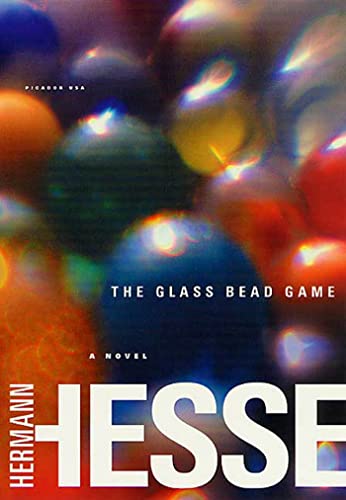
Hesse’s most highly acclaimed book, The Glass Bead Game is set in a fictional state in Central Europe in the 25th Century. The state of Castalia is the home of an austere order of intellectuals who run a group of boarding schools for boys but also make it their life’s work to extend their knowledge and prowess of the Glass Bead Game, a mysterious game whose rules are never revealed. The story chronicles the life of Magister Ludi, the man responsible for administering the game. Although educated in Castalia he has spent a significant length of time in the outside world and as he reflects on his experiences in China and elsewhere he begins to doubt the value of the introverted life he and his fellow masters are leading.
Add to your library to track progress and write reviews
Find The Glass Bead Game Hermann Hesse in PDF, EPUB, ebook, audiobook, print, or library editions.
4 books in catalog
Exploring the deep spiritual crises of individuals seeking self-knowledge and authenticity beyond social conventions, twentieth-century fiction gained a profound psychological dimension through novels such as Siddhartha and Steppenwolf. Born in Calw, Germany, German-Swiss novelist and poet Hermann Karl Hesse crafted works that examined the persistent tension between intellect, spirituality, and instinct.
Awarded the Nobel Prize in Literature in 1946, Hesse's writing bridges Western psychological inquiry and Eastern philosophical thought to articulate the universal search for personal identity.
Hesse grew up in Calw and Basel in a missionary family where Pietist-Lutheran traditions intermingled with exposure to Asian cultures through his family's missionary background in the Far East. Though expected to enter the clergy, he ran away from the seminary at Maulbronn Monastery as a young man. Following a period of severe personal crisis and rebellion, Hesse worked as a bookseller in Tübingen and Basel. He published his debut poetry in 1896 and achieved financial independence as a full-time writer following the publication of his novel Peter Camenzind in 1904. He spent most of his mature life residing in Montagnola, Ticino, Switzerland.
Throughout his literary career, Hesse produced an extensive body of novels, essays, and poetry. His artistic contributions earned him major international honors, including the Goethe Prize of Frankfurt in 1946 and the Peace Prize of the German Booksellers in 1955. His literary influence extended globally through translations in sixty languages, establishing his works among the most widely read German-language literature of the twentieth century.
The central theme of Hesse's work focuses on the individual's effort to break away from rigid modes of civilization in order to discover an essential spiritual identity. His narrative style synthesizes Jungian psychoanalysis with Eastern religious, spiritual, and philosophical traditions, particularly Buddhism and Hinduism. Works such as Demian and The Glass Bead Game examine dualities—such as spirit and flesh, order and chaos, or contemplation and action—tracing characters who must navigate internal turmoil and isolation to achieve inner harmony.
4 books in catalog
Exploring the deep spiritual crises of individuals seeking self-knowledge and authenticity beyond social conventions, twentieth-century fiction gained a profound psychological dimension through novels such as Siddhartha and Steppenwolf. Born in Calw, Germany, German-Swiss novelist and poet Hermann Karl Hesse crafted works that examined the persistent tension between intellect, spirituality, and instinct.
Awarded the Nobel Prize in Literature in 1946, Hesse's writing bridges Western psychological inquiry and Eastern philosophical thought to articulate the universal search for personal identity.
Hesse grew up in Calw and Basel in a missionary family where Pietist-Lutheran traditions intermingled with exposure to Asian cultures through his family's missionary background in the Far East. Though expected to enter the clergy, he ran away from the seminary at Maulbronn Monastery as a young man. Following a period of severe personal crisis and rebellion, Hesse worked as a bookseller in Tübingen and Basel. He published his debut poetry in 1896 and achieved financial independence as a full-time writer following the publication of his novel Peter Camenzind in 1904. He spent most of his mature life residing in Montagnola, Ticino, Switzerland.
Throughout his literary career, Hesse produced an extensive body of novels, essays, and poetry. His artistic contributions earned him major international honors, including the Goethe Prize of Frankfurt in 1946 and the Peace Prize of the German Booksellers in 1955. His literary influence extended globally through translations in sixty languages, establishing his works among the most widely read German-language literature of the twentieth century.
The central theme of Hesse's work focuses on the individual's effort to break away from rigid modes of civilization in order to discover an essential spiritual identity. His narrative style synthesizes Jungian psychoanalysis with Eastern religious, spiritual, and philosophical traditions, particularly Buddhism and Hinduism. Works such as Demian and The Glass Bead Game examine dualities—such as spirit and flesh, order and chaos, or contemplation and action—tracing characters who must navigate internal turmoil and isolation to achieve inner harmony.