SSansFiction
The libraryCollectionsJournalStatsFor authors
Sign inJoin now
Sansfiction,

A digital library for books. Made by readers, for readers.

v 2.0 · 2026
The library
  • Discover
  • Collections
  • Book tracker
  • Journal
  • Stats
For authors
  • SF Links
  • Analytics
  • How it works
  • FAQ
Elsewhere
  • X / @sansfiction
  • Privacy
  • Terms
  • Contact
© 2026 SansFiction · Digital · GlobalA quiet room for your reading life.
The libraryCollectionsJournalStatsFor authors
Sign inJoin now →
Navigation
Library
Bookshelf
Journal
Discover
Collections
Tierlists
Stats
Profile
Author Page
Link Builder
Account
Sign in
S
G
Booksaction & adventureThe Gathering Storm
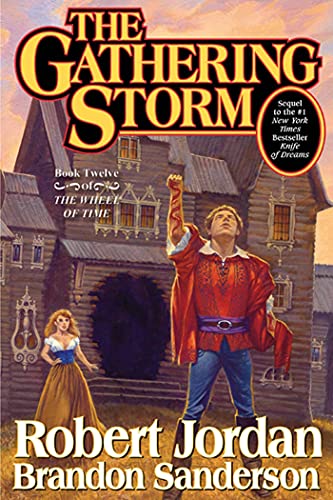
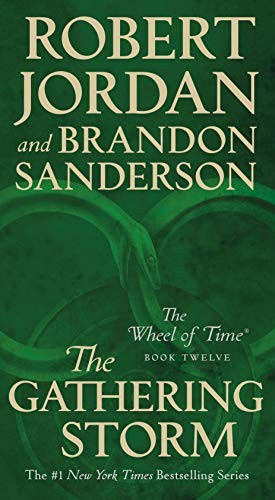
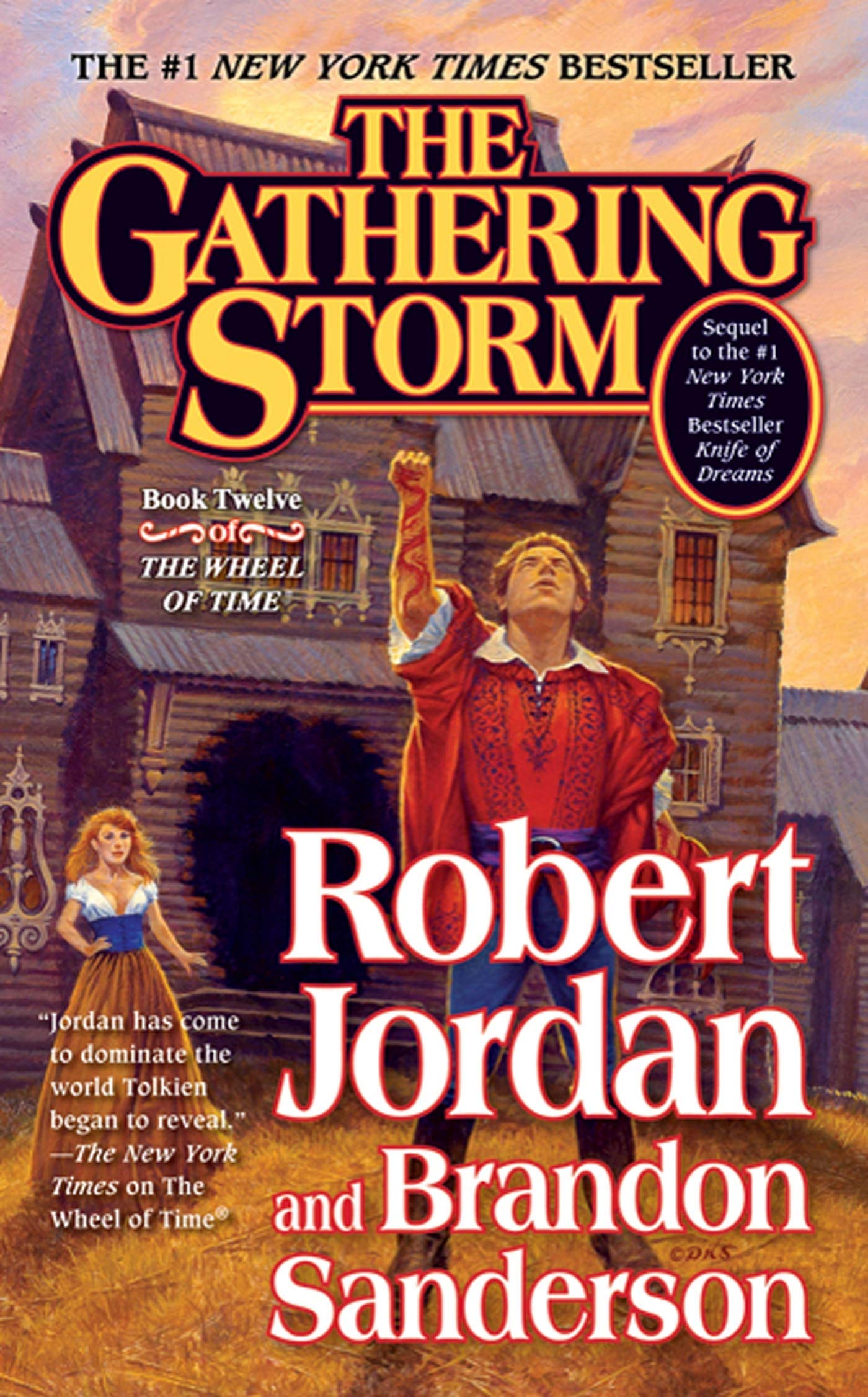
Cover of The Gathering Storm by Brandon Sanderson
№ 12 · The Wheel of Time

The Gathering Storm,

by Brandon Sanderson, Robert Jordan

Ask AI
Rating4.4/ 5
Ratings603
Pages792
Reading Hours17h
Published2010
LanguageEnglish

§Synopsis

01

As the shadow of Tarmon Gai’don looms, the world of the Wheel of Time shifts from the abstract threat of prophecy to the visceral reality of a collapsing civilization. Rand al’Thor, the Dragon Reborn, has begun a desperate race to unify the fractured nations of the world before the Last Battle, but the greatest threat he faces is not the armies of the Shadow, but the encroaching darkness within his own soul. He believes that to save the world, he must become as hard as the cuendillar he once broke, alienating allies and suppressing his own humanity in a grim pursuit of victory.

Simultaneously, the White Tower—once the undisputed center of magical and political authority—remains a house divided. Egwene al’Vere, the Amyrlin Seat of the rebel faction, finds herself a prisoner within the very walls she seeks to lead. Her battle is one of psychological endurance and moral clarity, as she attempts to heal the schism of the Aes Sedai from within while the ticking clock of a Seanchan invasion threatens to shatter what remains of their order. The narrative focuses on the heavy cost of leadership and the thin line between necessary strength and self-destructive ruthlessness.

The Thinning of the Pattern

The world-building in this installment emphasizes a mounting sense of entropy and claustrophobia. The atmosphere is defined by the "thinning" of reality; food spoils in sealed containers, the weather refuses to obey the seasons, and "bubbles of evil" become more frequent and lethal. The setting has shifted from an expansive journey across a map to a series of high-pressure political and military theaters. Arad Doman serves as a primary example of social collapse, where Rand’s attempts to impose order through sheer force of will highlight the friction between magical prophecy and practical governance.

Main Characters

  • Rand al'Thor: A man intentionally stripping away his emotions to prepare for a final sacrifice he believes must be absolute.
  • Egwene al'Vere: A captive who uses the White Tower’s own laws and her unwavering discipline to challenge a tyrant’s legitimacy from the bottom of the hierarchy.
  • Mat Cauthon: A reluctant commander leading a massive refugee and military train while trying to outrun the supernatural luck that defines his life.
  • Perrin Aybara: A leader forced to balance his protective instincts for his people with the brutal pragmatism required by the approaching end of the Age.
  • Elaida a'Roihan: The incumbent Amyrlin Seat whose descent into paranoia and authoritarianism serves as the primary obstacle to Aes Sedai unification.

The Psychology of Command

The character development focuses heavily on the internal cost of duty. Rand’s arc is a study in clinical detachment; he views himself as a tool for the Light and, in doing so, begins to treat everyone around him—including his closest advisors—as expendable assets. This creates a tense dynamic with characters like Min and Nynaeve, who serve as the last tether to his former self. Conversely, Egwene’s arc explores leadership through submission and endurance. Rather than using external power, she relies on the "Three Oaths" and the inherent dignity of her office to wage a war of ideas against her captors, proving that authority is granted by the governed rather than seized by the powerful.

Subverting the Chosen One

This novel utilizes and deconstructs several major fantasy tropes, most notably the "Chosen One" and the "Divided Kingdom." While many epics treat the unification of warring factions as a series of grand speeches and battlefield victories, this narrative frames it as a grueling exercise in logistics, torture, and psychological manipulation. It subverts the trope of the hero’s "hardening" by framing it not as a necessary evolution, but as a potential tragedy. The "Gathering Storm" is as much about the moral rot within the forces of Light—evidenced by the use of forbidden interrogation techniques and political purges—as it is about the external threat of the Dark One.

Track this book

Add to your library to track progress and write reviews

§Genres
action & adventure2epic2fantasy2fiction2adventure1american1fantasy fiction1
§Moods
adventurous1challenging1mysterious1series1slow-paced1
§Tags
#diverse characters1#loveable characters1#not diverse characters1

§About the Author

Brandon Sanderson
Brandon Sanderson

37 books in catalog

The creation of the Cosmere, a vast interconnected universe where magic systems are governed by distinct physical laws, has redefined the scope of modern epic fantasy. Brandon Sanderson established this shared setting through a series of novels that began with the publication of Elantris and expanded into the multi-volume saga The Stormlight Archive.

His work is characterized by intricate world-building and a commitment to "hard magic," where the limitations of supernatural abilities are as important as the powers themselves. This approach has made his books, such as Mistborn: The Final Empire and The Way of Kings, central to contemporary discussions of genre construction and narrative consistency.

Career & Background

Born on December 19, 1975, in Lincoln, Nebraska, Brandon Winn Sanderson was the eldest of four children born to Barbara and Winn Sanderson. Although he was a reluctant reader in his early youth, his perspective changed in the eighth grade when his teacher, Mrs. Reeder, gave him a copy of Dragonsbane by Barbara Hambly. This encounter led him to explore the works of Robert Jordan, Melanie Rawn, David Eddings, Anne McCaffrey, and Orson Scott Card, eventually inspiring his own early attempts at fiction. In 1994, he enrolled at Brigham Young University (BYU) as a biochemistry major. However, a two-year hiatus from 1995 to 1997 to serve as a missionary for the Church of Jesus Christ of Latter-day Saints in Seoul, South Korea, shifted his focus. During this time, he realized he missed writing more than chemistry. Upon returning to BYU, he changed his major to English, much to the dismay of his mother, who had hoped he would become a doctor.

To support his education while maximizing his writing time, Sanderson worked as a night desk clerk at a local hotel, writing between midnight and 5:00 AM. By the time he finished his undergraduate degree, he had completed seven novels, though he faced a steady stream of rejections from publishers. He also volunteered for The Leading Edge, BYU’s science fiction and fantasy magazine, where he served as Editor in Chief during his senior year. This role allowed him to read many submissions and form lifelong friendships within the industry. He learned about the business side of writing by taking a class from David Farland, author of the Runelords series, who advised him to attend conventions like WorldCon and World Fantasy to connect with professionals. He eventually met his current agent and one of his editors at these events.

His persistence paid off in 2003 when editor Moshe Feder at Tor Books discovered the manuscript for Elantris in a slush pile. The novel was published in May 2005, marking the official start of his professional career. Shortly after, he launched the Mistborn trilogy, which includes Mistborn: The Final Empire (2006), The Well of Ascension (2007), and The Hero of Ages. In 2004, after graduating with his Master’s degree in creative writing from BYU, he was asked to teach the same genre-focused writing class he had once taken as an undergraduate. He continues to teach this section because he enjoys helping aspiring writers. In July 2006, he married Emily Bushman, a fellow English major from BYU. Emily began working as his business manager following the birth of their first child in October 2007.

A significant turning point occurred in December 2007 when Harriet McDougal Rigney selected Sanderson to complete Robert Jordan’s The Wheel of Time series following Jordan's death. This massive undertaking resulted in three volumes: The Gathering Storm (2009), Towers of Midnight (2010), and A Memory of Light (2013). During this same period, Sanderson began his own magnum opus, The Stormlight Archive, starting with The Way of Kings in 2010. He has since balanced these epic projects with middle-grade series like Alcatraz Versus the Evil Librarians (2007) and young adult science fiction such as Skyward. His novella The Emperor’s Soul won the Hugo Award in 2013, and he has been a judge for Writers of the Future since 2016. He also co-hosts the podcast Writing Excuses, which has won multiple awards for its writing advice.

Writing Style & Themes

Sanderson is widely recognized for his development of "Sanderson’s Laws of Magic," a set of guidelines for authors to create consistent and logical magic systems. His approach emphasizes that an author's ability to solve problems with magic is directly proportional to how well the reader understands said magic. This philosophy is evident in the "Allomancy" of the Mistborn series, where characters ingest and "burn" metals to gain specific abilities, and the "Surgebinding" found in The Stormlight Archive. By establishing clear costs and limitations, he ensures that magical resolutions feel earned rather than arbitrary. This dedication to internal logic has influenced a generation of fantasy writers seeking to move away from "soft" magic systems where powers are ill-defined.

His world-building often incorporates unique geological and ecological elements that directly influence the cultures and technologies of his characters. For instance, the landscape of Roshar in The Stormlight Archive features a rocky terrain and flora that retracts into the ground, a design inspired by the sandstone buttes and slot canyons of southeastern Utah. Similarly, the world of Scadrial in Mistborn is defined by falling ash and a red sun, environmental factors that shape the social hierarchy and survival strategies of its inhabitants. His background in linguistics, influenced by his time in Korea, often informs the naming conventions and structural logic of his fictional languages, adding a layer of authenticity to his diverse civilizations.

Thematic depth in his work often explores the intersection of leadership, morality, and mental health. Characters in The Stormlight Archive frequently struggle with depression, post-traumatic stress, or identity crises, reflecting a nuanced approach to heroism that acknowledges human vulnerability. The "Cosmere" framework allows for subtle cross-over elements, where characters known as "Worldhoppers" appear in different series, rewarding observant readers with a deeper layer of narrative connectivity. This interconnectedness is further explored in his "Secret Projects," such as Tress of the Emerald Sea and The Sunlit Man, which expand the boundaries of his shared universe into new genres and planetary systems, including the transition into a space age as seen in Wind and Truth.

Major Works

  • The Stormlight Archive — A projected ten-volume epic fantasy series set on the world of Roshar, beginning with The Way of Kings (2010) and continuing through Words of Radiance (2014), Oathbringer, Rhythm of War, and the upcoming Wind and Truth.
  • Mistborn — An initial trilogy consisting of Mistborn: The Final Empire, The Well of Ascension, and The Hero of Ages, followed by the "Wax and Wayne" era starting with The Alloy of Law (2011) and continuing through Shadows of Self, The Bands of Mourning (2016), and The Lost Metal.
  • The Wheel of Time — The final three volumes of Robert Jordan's legendary series, completed by Sanderson: The Gathering Storm (2009), Towers of Midnight (2010), and A Memory of Light (2013).
  • Elantris — Sanderson's 2005 debut novel, which introduced the first iteration of the Cosmere and explored a city of fallen, god-like beings.
  • Warbreaker — A standalone novel featuring a color-based magic system known as Awakening, which has significant ties to the broader Cosmere.
  • Skyward — A young adult science fiction series following a girl named Spensa who dreams of being a pilot in a world under constant alien siege, continuing through Starsight, Cytonic, and Defiant.
  • Secret Projects — A series of novels originally funded via a record-breaking Kickstarter campaign, including Tress of the Emerald Sea, The Frugal Wizard's Handbook for Surviving Medieval England, Yumi and the Nightmare Painter, and The Sunlit Man.
  • Alcatraz Versus the Evil Librarians — A middle-grade series beginning in 2007 that follows a boy who discovers his family's legacy of fighting a secret society of librarians.

§Featured Series

The Wheel of Time

Glimmers: Prologue to Crossroads of Twilight

ROBERT JORDAN

Glimmers: Prologue to Crossroads of Twilight

Robert Jordan, 2002
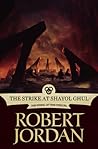
Cover of The Strike at Shayol Ghul by Robert Jordan

The Strike at Shayol Ghul

Robert Jordan, 1996
Cover of El ataque a Shayol Ghul by Robert Jordan

El ataque a Shayol Ghul

Robert Jordan, 1996
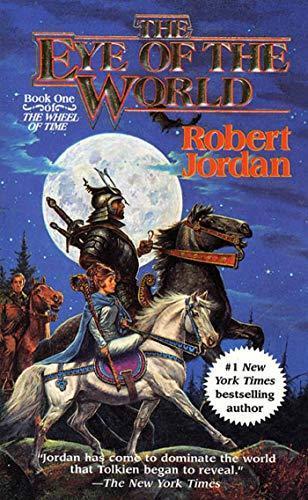
Cover of The Eye of the World by Robert Jordan

The Eye of the World

Robert Jordan, 1990
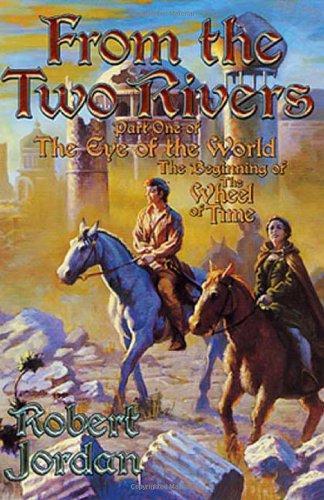
Cover of From the Two Rivers: The Eye of the World, Part 1 by Robert Jordan

From the Two Rivers: The Eye of the World, Part 1

Robert Jordan, 1990
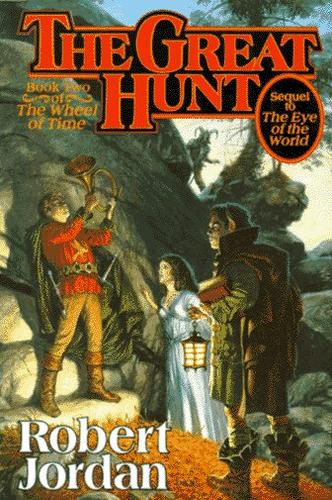
Cover of The Great Hunt by Robert Jordan

The Great Hunt

Robert Jordan, 1990
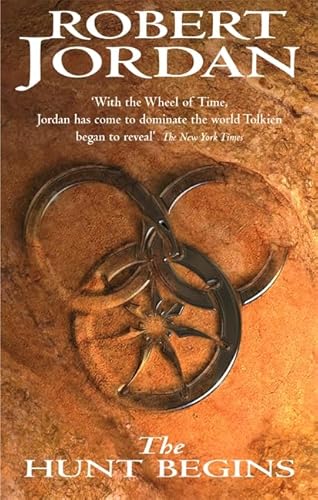
Cover of The Hunt Begins by Robert Jordan

The Hunt Begins

Robert Jordan, 1990
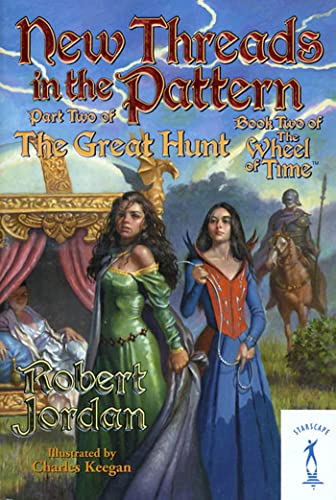
Cover of New Threads in the Pattern: The Great Hunt, Part 2 by Robert Jordan

New Threads in the Pattern: The Great Hunt, Part 2

Robert Jordan, 1990
Cover of The Dragon Reborn by Robert Jordan

The Dragon Reborn

Robert Jordan, 1991
Cover of Le Dragon Réincarné - première partie by Robert Jordan

Le Dragon Réincarné - première partie

Robert Jordan, 1991
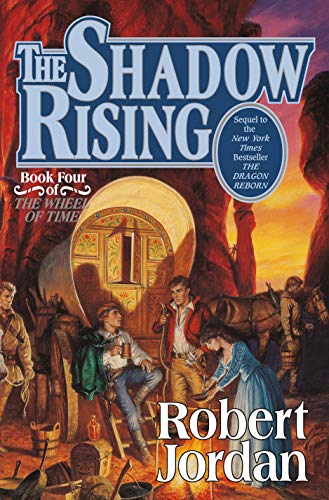
Cover of The Shadow Rising by Robert Jordan

The Shadow Rising

Robert Jordan, 1990
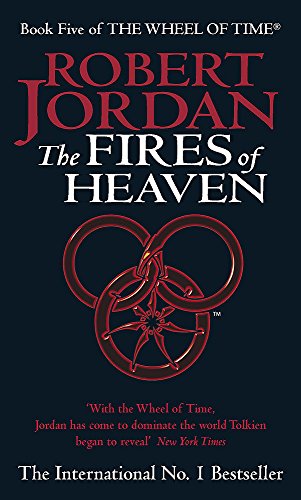
Cover of The Fires of Heaven by Robert Jordan

The Fires of Heaven

Robert Jordan, 1993

Heer van Chaos

ROBERT JORDAN

Heer van Chaos

Robert Jordan, 1994
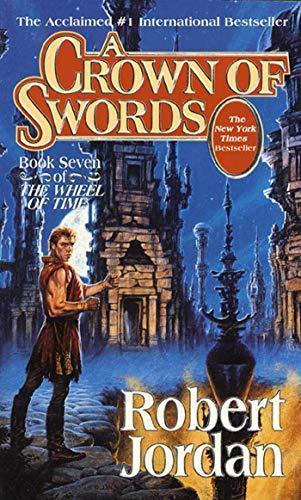
Cover of A Crown of Swords by Robert Jordan

A Crown of Swords

Robert Jordan, 1996
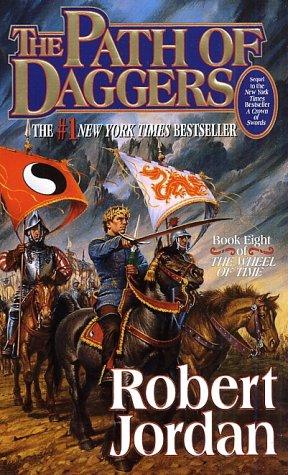
Cover of The Path of Daggers by Robert Jordan

The Path of Daggers

Robert Jordan, 1998
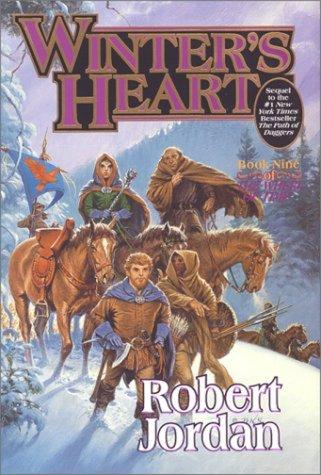
Cover of Winter's Heart by Robert Jordan

Winter's Heart

Robert Jordan, 2000
Cover of Crossroads of Twilight by Robert Jordan

Crossroads of Twilight

Robert Jordan, 2003
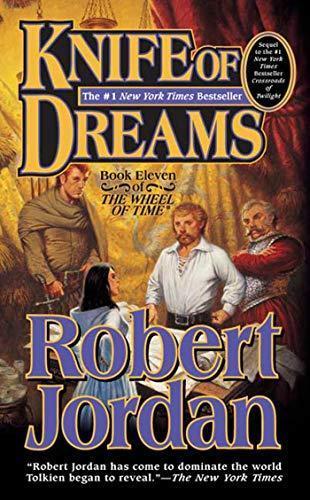
Cover of Knife of Dreams by Robert Jordan

Knife of Dreams

Robert Jordan, 2003
Cover of What the Storm Means: Prologue to The Gathering Storm by Robert Jordan, Brandon Sanderson

What the Storm Means: Prologue to The Gathering Storm

Robert Jordan, 2009
Cover of The Gathering Storm by Brandon Sanderson, Robert Jordan

The Gathering Storm

Brandon Sanderson, 2007

§Other Editions

Showing 2 of 32 editions
Cover of The Gathering Storm

The Gathering Storm

engPaperbackMedia tie-in
Tor Fantasy20099781250252609
Amazon
Cover of The Gathering Storm

The Gathering Storm

engAudio CD
Macmillan Audio20099781593977672
Amazon
§Genres
action & adventure2epic2fantasy2fiction2adventure1american1fantasy fiction1
§Moods
adventurous1challenging1mysterious1series1slow-paced1
§Tags
#diverse characters1#loveable characters1#not diverse characters1

Metadata

ISBN-139780765341532
ISBN-100765341530
ASIN1250252601

Editions and availability

Find The Gathering Storm Brandon Sanderson in PDF, EPUB, ebook, audiobook, print, or library editions.

View on Amazon
Bookshop.orgGoogle Play BooksBarnes & NobleOpen Library