Popular science writing that translates complex mathematical theorems, historic ciphers, and cosmological models into accessible narratives has transformed how general audiences engage with technical subjects. Simon Singh established his reputation through detailed explorations of mathematical history and cryptography, beginning with his breakthrough account of Andrew Wiles's proof of Fermat's Last Theorem and expanding into comprehensive studies of secret communications.
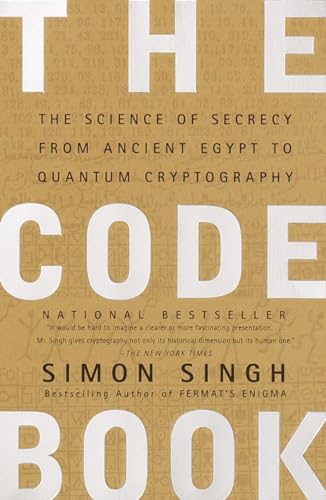
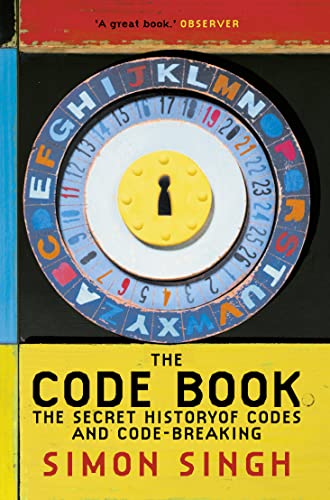
His widely read work The Code Book: The Science of Secrecy from Ancient Egypt to Quantum Cryptography provides a detailed historical and technical overview of encryption, tracing human efforts to protect and unlock secrets across two millennia.
Career & Background
Born in Somerset, England, in 1964 to parents who emigrated from the Punjab region of India, Singh grew up in Wellington and pursued higher education in physics at Imperial College London. He earned a PhD in particle physics from the University of Cambridge in 1990 after conducting research at CERN in Geneva. Following his doctorate, he joined the BBC as a science television producer from 1990 to 1996, directing an award-winning documentary on Fermat's Last Theorem that subsequently inspired his first book.
Beyond his writing, Singh presented the five-part television series The Science of Secrecy on Channel 4 and co-founded the Undergraduate Ambassadors Scheme. In 2012, he founded the Good Thinking Society to promote rational thinking, challenge pseudoscience, and encourage excellence in mathematics education. After defending himself in a high-profile libel lawsuit, he helped initiate the Campaign for Libel Reform, which led to the passage of the Defamation Act 2013 in the United Kingdom.
Writing Style & Themes
Singh's narrative approach bridges abstract scientific and mathematical concepts with human storytelling, placing key intellectual discoveries within their historical, social, and technological contexts. His work frequently examines the mechanics of problem-solving, the evolution of codebreaking during major historical conflicts, and the rigor required in scientific investigation. Whether analyzing ancient substitution ciphers or exploring mathematical humor hidden within animated television shows, his writing emphasizes clarity, historical accuracy, and empirical evidence.
Major Works
- The Code Book: The Science of Secrecy from Ancient Egypt to Quantum Cryptography — A comprehensive history of encryption and decipherment spanning two thousand years, detailing how cryptography has shaped political, military, and technological history up through the modern Information Age.
- The Code Book for Young People — An accessible adaptation designed to introduce younger readers to the history and mechanics of secret codes, ciphers, and cryptanalysis.
- Fermat's Last Theorem — Singh's chronicle of the centuries-long quest to solve a famous mathematical puzzle, detailing Sir Andrew Wiles's ultimate success in proving the conjecture.
- Big Bang — An exploration of cosmological science, tracing the theoretical developments, key astronomical observations, and intense scientific debates that led to the modern understanding of the universe's origin.
- Trick or Treatment? Alternative Medicine on Trial — Co-authored with Edzard Ernst, this volume applies rigorous scientific methodology and clinical evidence to evaluate the efficacy and safety of various complementary therapies.
- The Simpsons and Their Mathematical Secrets — An investigation into the subtle mathematical theorems, equations, and humor embedded within episodes of the animated television series The Simpsons and Futurama.