Low fantasy literature for children was profoundly shaped by the creation of miniature secret worlds existing alongside everyday human life, most famously represented by The Borrowers. British children's author Mary Norton (née Pearson) introduced readers to the Clock family—tiny people standing roughly six inches tall who inhabit hidden spaces beneath floorboards and inside walls, surviving by borrowing small domestic items from human homeowners.
Career & Background
Born Kathleen Mary Pearson on December 10, 1903, in London, Norton grew up in a Georgian house in Bedfordshire that later served as the physical setting for her famous series. She attended a convent school in London and trained as an actress with the Old Vic Shakespeare company. In 1926, she married Robert Charles Norton and lived in Portugal until the outbreak of World War II. During the war, she worked for the British Purchasing Commission in the United States, where she began writing stories for children.
Norton published her early books in the 1940s before releasing The Borrowers in 1952. The novel won the Library Association's Carnegie Medal as the outstanding children's book of the year by a British author, establishing her standing in children's fiction. Over the following decades, she expanded the series while raising her four children: Ann Mary, Robert George, Guy, and Caroline. Following the death of her first husband, she married Lionel Bonsey in 1970 and spent her later years in Devon, writing until her death on August 29, 1992.
Writing Style & Themes
Norton's writing is characterized by precise observational detail, logical consistency, and a realistic approach to fantasy. Rather than relying on magic or traditional fairy-tale elements, her stories emphasize resourcefulness, self-reliance, and the mechanical ingenuity required for tiny beings to adapt human debris into functional tools and furnishings. Her narratives explore themes of survival, human impact, displacement, and parallel communities, grounding imaginative premises in recognizable domestic realism.
Major Works
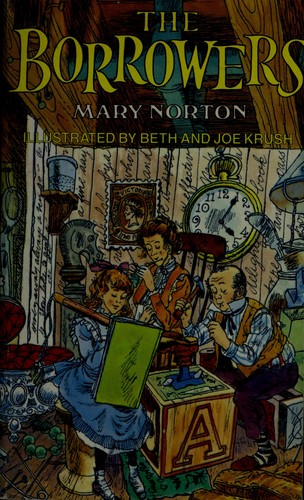
- The Borrowers — Published in 1952, this inaugural novel introduces Pod, Homily, and Arrietty Clock, a family of tiny beings living beneath the floorboards of an English country house. The book won the 1952 Carnegie Medal and was later selected as one of the top ten Carnegie winning works for the medal's 70th anniversary in 2007.
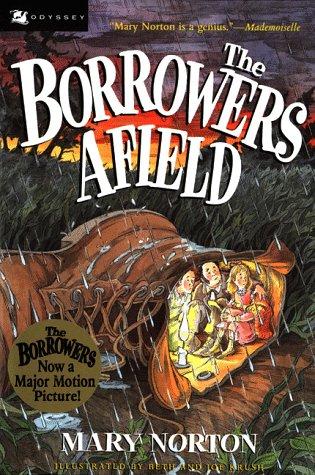
- The Borrowers Afield — First published in 1955, this second installment follows the Clock family after they are forced to flee their indoor sanctuary and learn to survive in the surrounding fields and hedgerows.
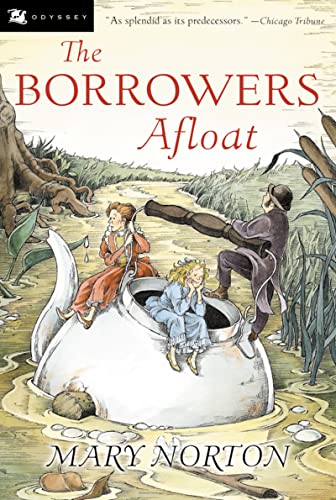
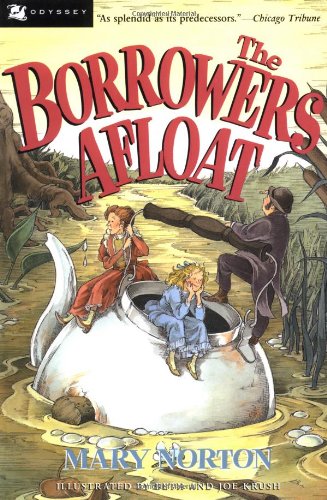
- The Borrowers Afloat — Published in 1959, this third entry details the family's journey along streams and drainpipes in an improvised kettle boat as they search for a new place to live.
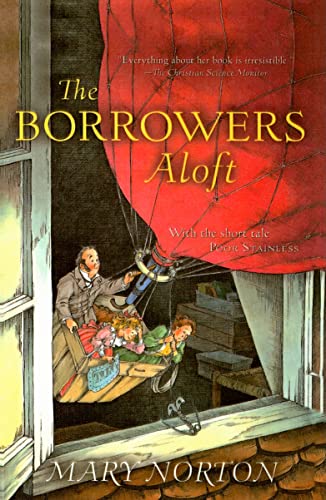
- The Borrowers Aloft — Released in 1961, this fourth book recounts the Clocks' captivity by humans who wish to display them in a model village, leading to their escape using a homemade hot-air balloon.
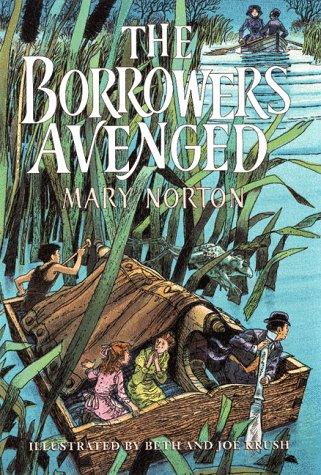
- The Borrowers Avenged — Published in 1982, this fifth full-length novel concludes the series as the Clock family settles into a new home in a church rectory while eluding former captors.
- Poor Stainless — Originally published as a short tale about a young Borrower who goes missing, this work was the last Borrowers story written by the author.