Philosophical fiction exploring political oppression, exile, and existential irony achieved widespread attention through novels such as The Unbearable Lightness of Being. Czech and French novelist Milan Kundera examined the complexities of human existence, blending narrative storytelling with essayistic philosophy and satirical commentary.
Career & Background
Born on April 1, 1929, in Brno, Czechoslovakia, Kundera grew up in an intellectual family where his father, Ludvík Kundera, was a pianist and musicologist. Kundera studied music, enrolled at Charles University in Prague, and completed studies in film at the Prague Academy of Music and Dramatic Arts in 1956. He published his debut novel, The Joke, in 1967, offering a critical look at political dogmatism. Following his outspoken opposition to the 1968 Soviet invasion of Czechoslovakia, his books were banned in his homeland.
In 1975, Kundera went into exile in France, where he resided for the remainder of his life. His Czechoslovak citizenship was revoked in 1979, and he became a naturalized French citizen in 1981, later receiving Czech citizenship in 2019. In France, he published major novels including The Book of Laughter and Forgetting in 1979 and The Unbearable Lightness of Being in 1984. Although his early works were written in Czech, Kundera began writing fiction directly in French in 1993, requesting that his literature be cataloged as French writing. He was shortlisted for the Man Booker International Prize in 2005 and died in Paris on July 11, 2023, at the age of 94.
Writing Style & Themes
Kundera's fiction is recognized for polyphonic structures, essayistic digressions, and philosophical inquiries into light versus heavy existential conditions. He frequently structured his compositions around musical principles, drawing on his formal music education. His narratives systematically examine political totalitarianism, personal memory, state-enforced forgetting, and the absurdity of bureaucratic control.
In works such as Ignorance and his short fiction collection Laughable Loves, Kundera analyzed nostalgia, romance, and identity. A reclusive writer who avoided media publicity and interviews, Kundera insisted that readers focus strictly on his written text rather than biographical commentary.
Major Works
- The Unbearable Lightness of Being — Published in 1984, this novel explores love, political exile, and existential choices in communist Czechoslovakia, contrasting personal freedom against political weight.
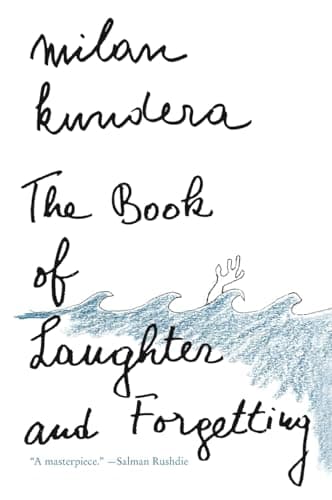
- The Book of Laughter and Forgetting — Published in 1979, this work combines fictional narratives and non-fictional reflections to examine memory, state oppression, and political amnesia.
- The Joke — Published in 1967, Kundera's debut novel recounts how a young man's satirical postcard leads to persecution under Czechoslovakia's communist regime.
- Ignorance — Published in 2000, this novel focuses on themes of exile, nostalgia, and the emotional complexity of returning to a homeland after decades away.