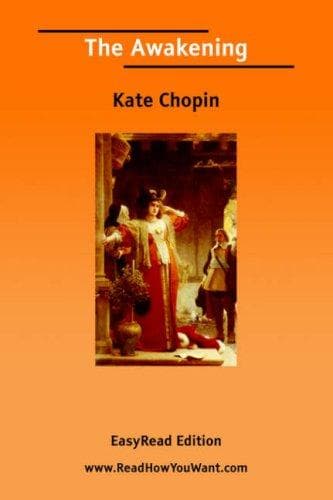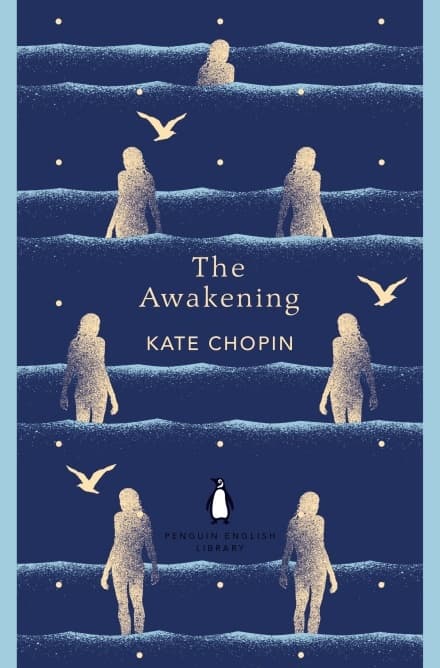
When first published in 1899, The Awakening shocked readers with its honest treatment of female marital infidelity. Audiences accustomed to the pieties of late Victorian romantic fiction were taken aback by Chopin's daring portrayal of a woman trapped in a stifling marriage, who seeks and finds passionate physical love outside the confines of her domestic situation.
Aside from its unusually frank treatment of a then-controversial subject, the novel is widely admired today for its literary qualities. Edmund Wilson characterized it as a work "quite uninhibited and beautifully written, which anticipates D. H. Lawrence in its treatment of infidelity." Although the theme of marital infidelity no longer shocks, few novels have plumbed the psychology of a woman involved in an illicit relationship with the perception, artistry, and honesty that Kate Chopin brought to The Awakening.
When first published in 1899, The Awakening shocked readers with its honest treatment of female marital infidelity. Audiences accustomed to the pieties of late Victorian romantic fiction were taken aback by Chopin's daring portrayal of a woman trapped in a stifling marriage, who seeks and finds passionate physical love outside the confines of her domestic situation.
Aside from its unusually frank treatment of a then-controversial subject, the novel is widely admired today for its literary qualities. Edmund Wilson characterized it as a work "quite uninhibited and beautifully written, which anticipates D. H. Lawrence in its treatment of infidelity." Although the theme of marital infidelity no longer shocks, few novels have plumbed the psychology of a woman involved in an illicit relationship with the perception, artistry, and honesty that Kate Chopin brought to The Awakening.
Add to your library to track progress and write reviews
Add to your library to track progress and write reviews
Find The Awakening Kate Chopin in PDF, EPUB, ebook, audiobook, print, or library editions.
Find The Awakening Kate Chopin in PDF, EPUB, ebook, audiobook, print, or library editions.
1 books in catalog
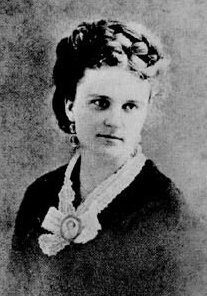
American realism and regional fiction in the late nineteenth century offered candid portrayals of women seeking personal autonomy and self-determination, best represented by the 1899 novel The Awakening. Written by Kate Chopin, this celebrated work and her collection of roughly one hundred short stories provided an uncommonly direct lens into the psychological complexities, domestic constraints, and inner lives of women in Victorian-era society.
Set primarily against the distinct cultural backdrop of Louisiana Creoles and New Orleans society, her fiction challenged the prevailing moral and narrative conventions of her era, establishing her work as a critical link between nineteenth-century local color writing and modern feminist literature.
Born Katherine O'Flaherty on February 8, 1850, in St. Louis, Missouri, she was raised in a prominent family of Irish and French Creole heritage. Her father, Thomas O'Flaherty, a successful Irish-born businessman, died in a railroad bridge collapse when she was five years old, leaving her to be raised by her mother, Eliza Faris, alongside her grandmother and great-grandmother. She attended the Sacred Heart Academy, a Catholic boarding school, while enduring significant family tragedy, as both of her sisters died in infancy and her brothers died in their twenties.
In June 1870, she married Oscar Chopin and moved to his native New Orleans, Louisiana, later relocating to a plantation in Natchitoches Parish. Following her husband's death in 1882, Chopin returned to St. Louis with her six children and began writing seriously in the late 1880s. Throughout the 1890s, she published two novels and nearly a hundred short stories in national magazines. However, the 1899 publication of The Awakening provoked harsh public disapproval and critical condemnation for its frank depiction of female sexual independence and unrepentant adultery. The hostile backlash severely reduced her literary production in the final years before her death on August 22, 1904.
Chopin's literary style combines the detailed environment of local color regionalism with acute psychological realism. Writing about Louisiana Creoles, Cajuns, and Southern social structures, she captured regional dialects, traditions, and settings with precision while avoiding sentimental idealization. Her short fiction, including stories like The Story of an Hour, Désirée's Baby, A Pair of Silk Stockings, and The Storm, relies on concise narrative architecture, ironic turns, and sharp social observation.
The central focus of Chopin's body of work is female identity, individual freedom, and the emotional boundaries imposed by conventional marriage and motherhood. Rather than passing moral judgment on her characters, her narratives portray sensitive, intelligent women navigating conflicts between personal desire and social expectation. Though her writing fell into obscurity after her death, a major literary revival in the late twentieth century restored her reputation as an essential nineteenth-century American author.
1 books in catalog
American realism and regional fiction in the late nineteenth century offered candid portrayals of women seeking personal autonomy and self-determination, best represented by the 1899 novel The Awakening. Written by Kate Chopin, this celebrated work and her collection of roughly one hundred short stories provided an uncommonly direct lens into the psychological complexities, domestic constraints, and inner lives of women in Victorian-era society.
Set primarily against the distinct cultural backdrop of Louisiana Creoles and New Orleans society, her fiction challenged the prevailing moral and narrative conventions of her era, establishing her work as a critical link between nineteenth-century local color writing and modern feminist literature.
Born Katherine O'Flaherty on February 8, 1850, in St. Louis, Missouri, she was raised in a prominent family of Irish and French Creole heritage. Her father, Thomas O'Flaherty, a successful Irish-born businessman, died in a railroad bridge collapse when she was five years old, leaving her to be raised by her mother, Eliza Faris, alongside her grandmother and great-grandmother. She attended the Sacred Heart Academy, a Catholic boarding school, while enduring significant family tragedy, as both of her sisters died in infancy and her brothers died in their twenties.
In June 1870, she married Oscar Chopin and moved to his native New Orleans, Louisiana, later relocating to a plantation in Natchitoches Parish. Following her husband's death in 1882, Chopin returned to St. Louis with her six children and began writing seriously in the late 1880s. Throughout the 1890s, she published two novels and nearly a hundred short stories in national magazines. However, the 1899 publication of The Awakening provoked harsh public disapproval and critical condemnation for its frank depiction of female sexual independence and unrepentant adultery. The hostile backlash severely reduced her literary production in the final years before her death on August 22, 1904.
Chopin's literary style combines the detailed environment of local color regionalism with acute psychological realism. Writing about Louisiana Creoles, Cajuns, and Southern social structures, she captured regional dialects, traditions, and settings with precision while avoiding sentimental idealization. Her short fiction, including stories like The Story of an Hour, Désirée's Baby, A Pair of Silk Stockings, and The Storm, relies on concise narrative architecture, ironic turns, and sharp social observation.
The central focus of Chopin's body of work is female identity, individual freedom, and the emotional boundaries imposed by conventional marriage and motherhood. Rather than passing moral judgment on her characters, her narratives portray sensitive, intelligent women navigating conflicts between personal desire and social expectation. Though her writing fell into obscurity after her death, a major literary revival in the late twentieth century restored her reputation as an essential nineteenth-century American author.