Exploring the deep spiritual crises of individuals seeking self-knowledge and authenticity beyond social conventions, twentieth-century fiction gained a profound psychological dimension through novels such as Siddhartha and Steppenwolf. Born in Calw, Germany, German-Swiss novelist and poet Hermann Karl Hesse crafted works that examined the persistent tension between intellect, spirituality, and instinct.
Awarded the Nobel Prize in Literature in 1946, Hesse's writing bridges Western psychological inquiry and Eastern philosophical thought to articulate the universal search for personal identity.
Career & Background
Hesse grew up in Calw and Basel in a missionary family where Pietist-Lutheran traditions intermingled with exposure to Asian cultures through his family's missionary background in the Far East. Though expected to enter the clergy, he ran away from the seminary at Maulbronn Monastery as a young man. Following a period of severe personal crisis and rebellion, Hesse worked as a bookseller in Tübingen and Basel. He published his debut poetry in 1896 and achieved financial independence as a full-time writer following the publication of his novel Peter Camenzind in 1904. He spent most of his mature life residing in Montagnola, Ticino, Switzerland.
Throughout his literary career, Hesse produced an extensive body of novels, essays, and poetry. His artistic contributions earned him major international honors, including the Goethe Prize of Frankfurt in 1946 and the Peace Prize of the German Booksellers in 1955. His literary influence extended globally through translations in sixty languages, establishing his works among the most widely read German-language literature of the twentieth century.
Writing Style & Themes
The central theme of Hesse's work focuses on the individual's effort to break away from rigid modes of civilization in order to discover an essential spiritual identity. His narrative style synthesizes Jungian psychoanalysis with Eastern religious, spiritual, and philosophical traditions, particularly Buddhism and Hinduism. Works such as Demian and The Glass Bead Game examine dualities—such as spirit and flesh, order and chaos, or contemplation and action—tracing characters who must navigate internal turmoil and isolation to achieve inner harmony.
Major Works
- Siddhartha — Published in 1922, this novel set in ancient India draws upon Eastern spiritual traditions to follow a man's lifelong quest toward enlightenment and self-discovery.
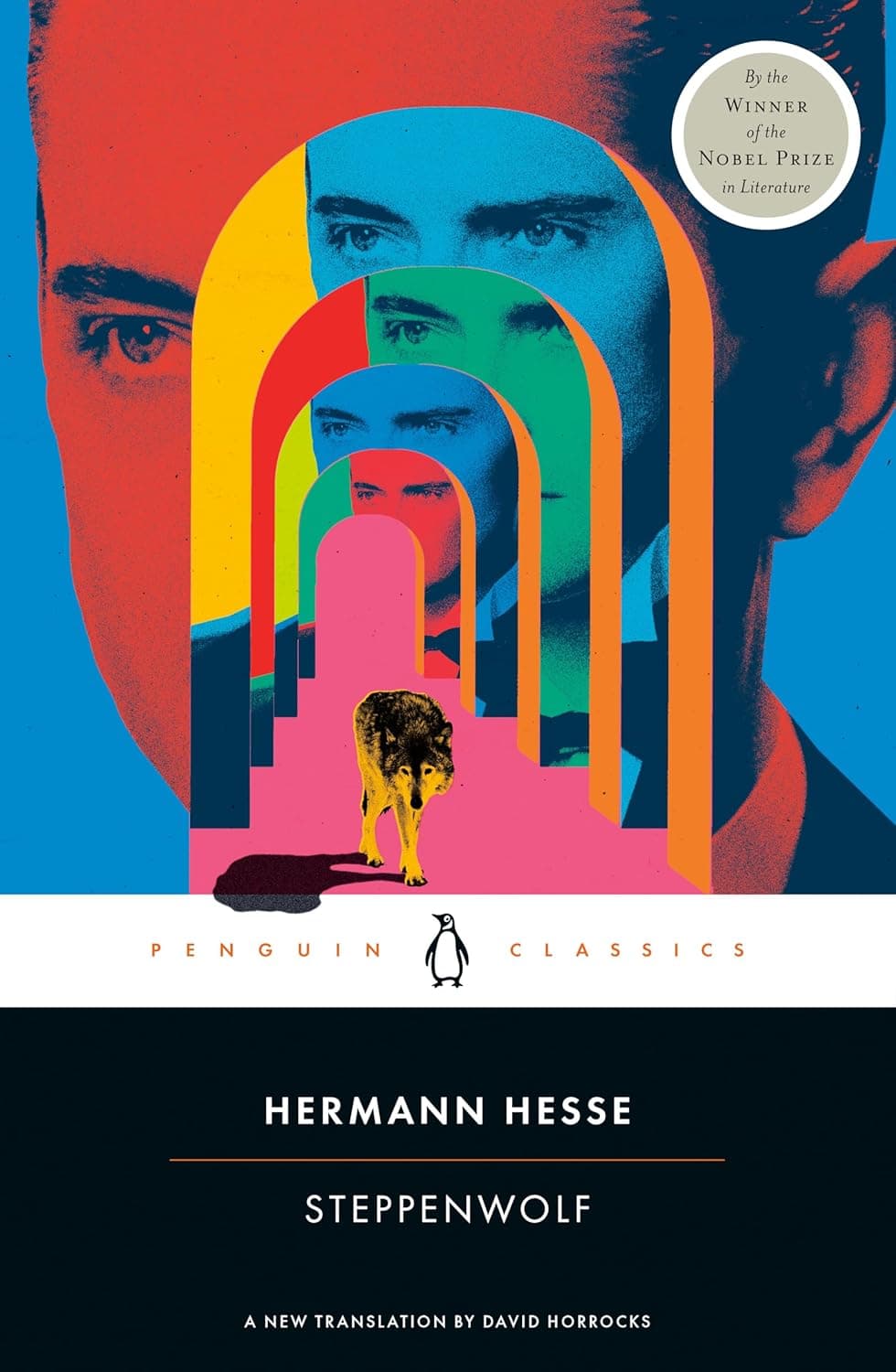
- Steppenwolf — This 1927 psychological novel portrays the internal struggle of Harry Haller, a man torn between civilized human intellect and wild, instinctual nature.
- Demian — First published in 1919 under the pseudonym Emil Sinclair, this coming-of-age novel explores themes of self-knowledge, Jungian psychology, and moral dualities.
- The Glass Bead Game — Set in a fictional future academic order, Hesse's final major novel explores the synthesis of art, philosophy, and mathematics, playing a major role in his 1946 Nobel Prize honor.