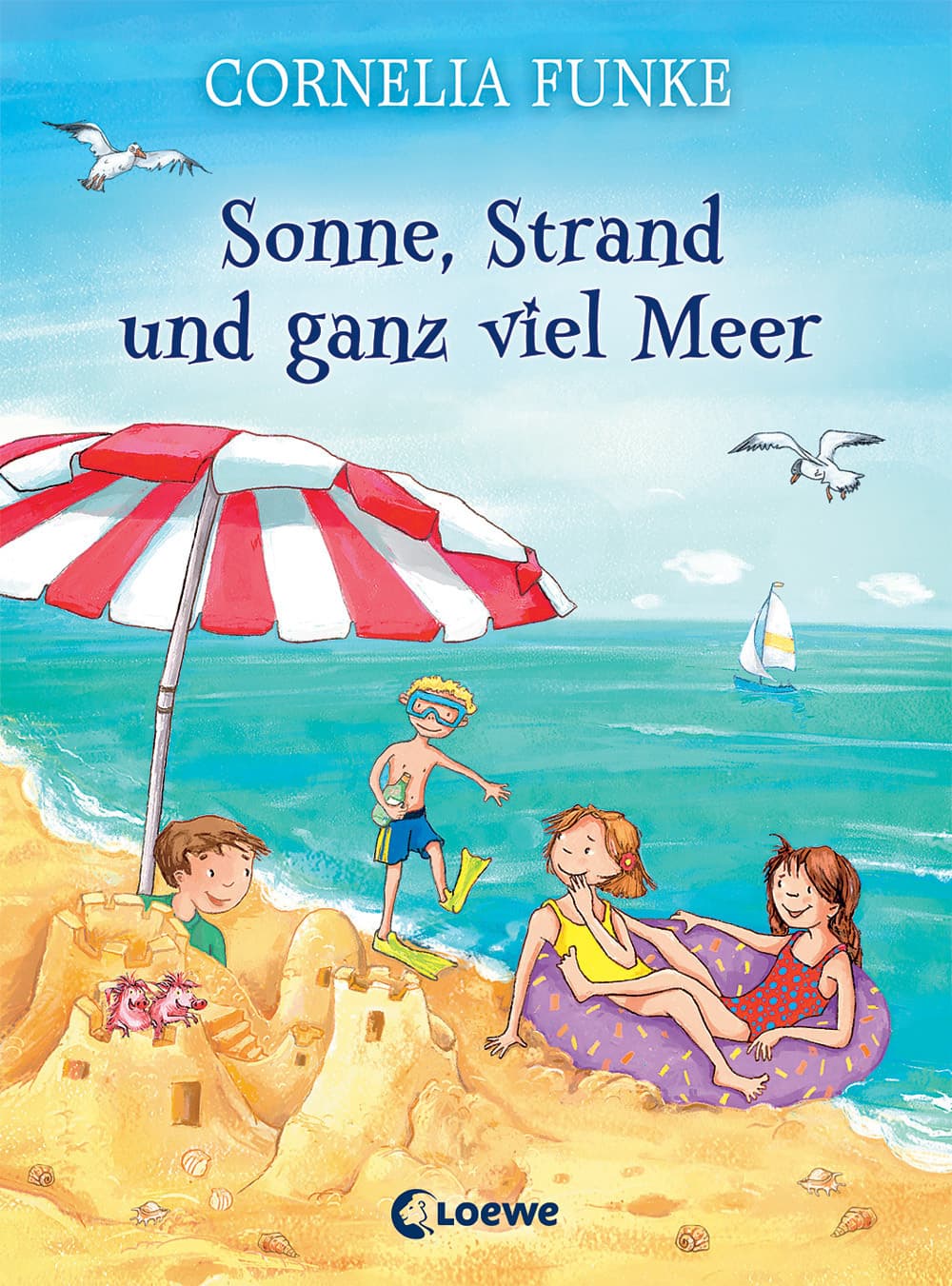

The seaside serves as a unique liminal space where the boundaries between the mundane and the magical are softened by the salt air and shifting sands. For the children in these narratives, the beach is not a place of passive relaxation but a landscape of potential discovery, where every tide brings a new mystery to solve or a hidden world to protect.
Cornelia Funke explores the quiet tension between the vastness of the ocean and the intimate, tactile experiences of childhood. Through the lens of short, focused narratives, the book examines how small moments—finding a polished stone, building a fortress, or meeting a stranger—can reshape a child’s understanding of their environment and their place within it.
The setting is defined by its tactile realism and rhythmic pacing. The world operates on the logic of the "found object": the story's momentum is driven by what the sea discards and what the characters choose to keep. While the environment is grounded in the familiar sights and sounds of a summer holiday, there is a persistent undercurrent of the "unseen." Sandcastles are not just temporary structures; they are potential habitats. The water is not just a geological feature; it is a source of both physical gifts and narrative catalysts. The atmosphere remains bright and accessible, yet it acknowledges the weight of a child’s internal world.
The character dynamics in the first half of the book focus on the transition from solitary play to shared responsibility. Ben starts his journey focused on individual collection, but his arc begins to shift toward the pride of sharing his findings with others. Jule’s development is rooted in the vulnerability of seeking a "best friend," a quest that carries as much weight as any fantasy adventure. For Jo, the development is one of stewardship; he moves from being a simple creator of sandcastles to a guardian of the lives that have taken up residence within them.
The book utilizes the "Summer of Discovery" trope but grounds it in Funke’s signature brand of low-fantasy realism. Rather than relying on epic quests or high-intensity conflict, the narrative subverts the expectation of grand adventure by finding the extraordinary within the miniature. It employs the "Hidden World" trope, where magical or unique elements coexist with the human world, unnoticed by those without a child’s specific brand of focus. This approach emphasizes the recurring thematic question: is magic something we find, or something we create through our own attention and care?
The seaside serves as a unique liminal space where the boundaries between the mundane and the magical are softened by the salt air and shifting sands. For the children in these narratives, the beach is not a place of passive relaxation but a landscape of potential discovery, where every tide brings a new mystery to solve or a hidden world to protect.
Cornelia Funke explores the quiet tension between the vastness of the ocean and the intimate, tactile experiences of childhood. Through the lens of short, focused narratives, the book examines how small moments—finding a polished stone, building a fortress, or meeting a stranger—can reshape a child’s understanding of their environment and their place within it.
The setting is defined by its tactile realism and rhythmic pacing. The world operates on the logic of the "found object": the story's momentum is driven by what the sea discards and what the characters choose to keep. While the environment is grounded in the familiar sights and sounds of a summer holiday, there is a persistent undercurrent of the "unseen." Sandcastles are not just temporary structures; they are potential habitats. The water is not just a geological feature; it is a source of both physical gifts and narrative catalysts. The atmosphere remains bright and accessible, yet it acknowledges the weight of a child’s internal world.
The character dynamics in the first half of the book focus on the transition from solitary play to shared responsibility. Ben starts his journey focused on individual collection, but his arc begins to shift toward the pride of sharing his findings with others. Jule’s development is rooted in the vulnerability of seeking a "best friend," a quest that carries as much weight as any fantasy adventure. For Jo, the development is one of stewardship; he moves from being a simple creator of sandcastles to a guardian of the lives that have taken up residence within them.
The book utilizes the "Summer of Discovery" trope but grounds it in Funke’s signature brand of low-fantasy realism. Rather than relying on epic quests or high-intensity conflict, the narrative subverts the expectation of grand adventure by finding the extraordinary within the miniature. It employs the "Hidden World" trope, where magical or unique elements coexist with the human world, unnoticed by those without a child’s specific brand of focus. This approach emphasizes the recurring thematic question: is magic something we find, or something we create through our own attention and care?
Add to your library to track progress and write reviews
Find Sonne, Strand und ganz viel Meer Cornelia Funke in PDF, EPUB, ebook, audiobook, print, or library editions.
7 books in catalog
7 books in catalog