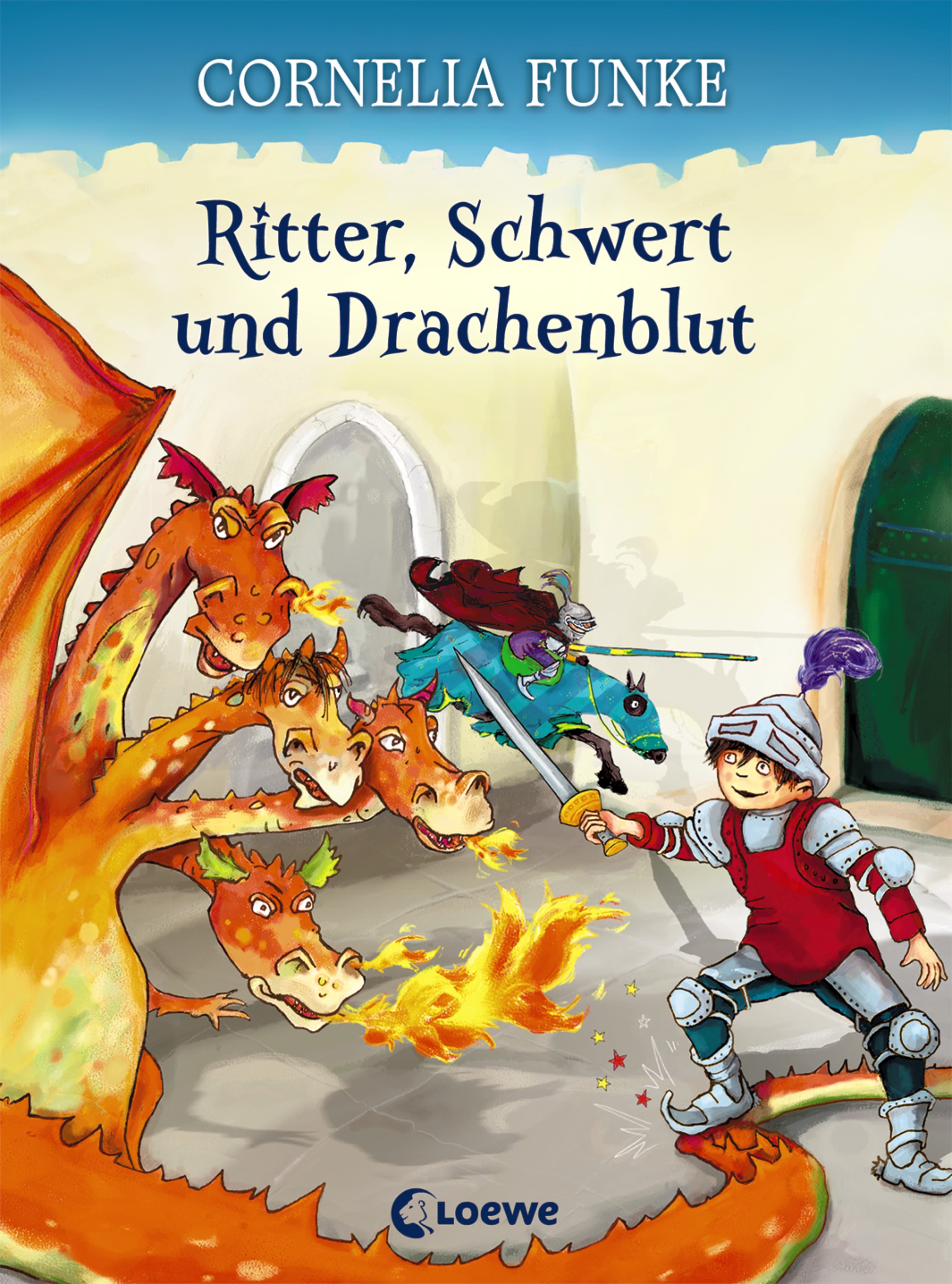

In this collection of six interconnected tales, Cornelia Funke strips away the somber majesty of chivalry to reveal a world where knights are as clumsy as they are courageous and the monsters they face are often more eccentric than they are evil. The stories explore the friction between traditional knightly duties—slaying dragons, winning tournaments, and guarding moats—and the unpredictable, often humorous realities of a world inhabited by multi-headed beasts and stubborn opponents.
Instead of focusing on grand epics of good versus evil, the narrative centers on the everyday challenges of the medieval fantasy archetype. Whether it is dealing with a six-headed dragon that refuses to vacate a castle or a sea serpent making a home in a moat, the central conflict often revolves around problem-solving and the subversion of expectations. It is a study of bravery not as a lack of fear, but as a willingness to engage with the bizarre and the inconvenient.
The setting is a storybook medieval landscape where the fantastical is a common nuisance. The rules of this world are governed by the rigid conventions of chivalry—tournaments, heavy armor, and ancient codes of honor—yet these rules are frequently tested by the sheer absurdity of the magical creatures present. Dragons are not just distant legends; they are immediate, physical obstacles that require specific strategies to manage. The atmosphere balances the tangible grit of a rusted suit of armor with the whimsical impossibility of creatures like six-headed dragons, creating a world where a knight is more likely to be outsmarted than devoured.
The core development across these stories involves the dismantling of the "hero versus monster" binary. The human characters begin with a rigid understanding of their roles—knights are meant to fight, and dragons are meant to be fought. However, the early dynamics suggest a shift toward begrudging respect or tactical negotiation. The relationship between Knight Griesbart and his draconic counterpart, for instance, focuses on the frustration of unmet expectations; the knight must learn that a sword is an ineffective tool when an opponent refuses to acknowledge the rules of combat.
The collection leans heavily into the subversion of the "Dragon Slayer" and "Knight in Shining Armor" tropes. While the setting is high fantasy, the stories replace the "Heroic Quest" with localized, domestic conflicts. Instead of saving a kingdom from an existential threat, these knights are often trying to reclaim their own dignity or clear their property of magical pests. By utilizing the "Reluctant Hero" and "Friendly Monster" archetypes, the narrative emphasizes wit and patience over brute strength, suggesting that the most difficult part of being a hero is often the paperwork and the personality clashes.
In this collection of six interconnected tales, Cornelia Funke strips away the somber majesty of chivalry to reveal a world where knights are as clumsy as they are courageous and the monsters they face are often more eccentric than they are evil. The stories explore the friction between traditional knightly duties—slaying dragons, winning tournaments, and guarding moats—and the unpredictable, often humorous realities of a world inhabited by multi-headed beasts and stubborn opponents.
Instead of focusing on grand epics of good versus evil, the narrative centers on the everyday challenges of the medieval fantasy archetype. Whether it is dealing with a six-headed dragon that refuses to vacate a castle or a sea serpent making a home in a moat, the central conflict often revolves around problem-solving and the subversion of expectations. It is a study of bravery not as a lack of fear, but as a willingness to engage with the bizarre and the inconvenient.
The setting is a storybook medieval landscape where the fantastical is a common nuisance. The rules of this world are governed by the rigid conventions of chivalry—tournaments, heavy armor, and ancient codes of honor—yet these rules are frequently tested by the sheer absurdity of the magical creatures present. Dragons are not just distant legends; they are immediate, physical obstacles that require specific strategies to manage. The atmosphere balances the tangible grit of a rusted suit of armor with the whimsical impossibility of creatures like six-headed dragons, creating a world where a knight is more likely to be outsmarted than devoured.
The core development across these stories involves the dismantling of the "hero versus monster" binary. The human characters begin with a rigid understanding of their roles—knights are meant to fight, and dragons are meant to be fought. However, the early dynamics suggest a shift toward begrudging respect or tactical negotiation. The relationship between Knight Griesbart and his draconic counterpart, for instance, focuses on the frustration of unmet expectations; the knight must learn that a sword is an ineffective tool when an opponent refuses to acknowledge the rules of combat.
The collection leans heavily into the subversion of the "Dragon Slayer" and "Knight in Shining Armor" tropes. While the setting is high fantasy, the stories replace the "Heroic Quest" with localized, domestic conflicts. Instead of saving a kingdom from an existential threat, these knights are often trying to reclaim their own dignity or clear their property of magical pests. By utilizing the "Reluctant Hero" and "Friendly Monster" archetypes, the narrative emphasizes wit and patience over brute strength, suggesting that the most difficult part of being a hero is often the paperwork and the personality clashes.
Add to your library to track progress and write reviews
Find Ritter, Schwert und Drachenblut Cornelia Funke in PDF, EPUB, ebook, audiobook, print, or library editions.
7 books in catalog
7 books in catalog