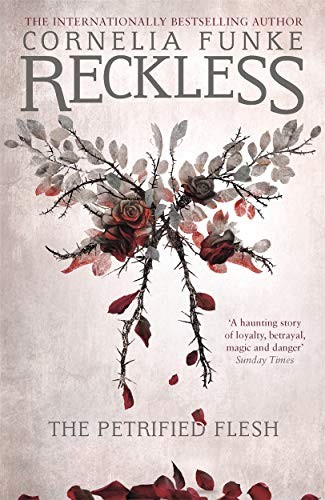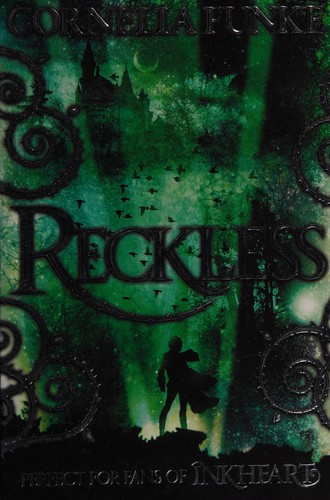

For years, Jacob Reckless has used a mirror in his father’s abandoned study to escape into a world where the folklore of the Brothers Grimm is not mere fiction, but a visceral and often lethal reality. In this Mirrorworld, Jacob has built a reputation as a preeminent treasure hunter, a man who navigates the shifting alliances of fairies, dwarves, and emperors to retrieve enchanted artifacts. His life is defined by a sharp binary: the mundane grief of the modern world, where his father vanished and his mother withered away, and the adrenaline-fueled sanctuary behind the glass where he can be whoever he chooses.
This carefully maintained separation collapses when his younger brother, Will, follows him through the portal. During an ambush by the Goyl—a race of subterranean warriors with skin made of living stone—Will is struck by a curse. As jade begins to sprout across Will’s skin, a transformation begins that threatens to overwrite his humanity with cold, mindless stone. Jacob is thrust into a race against a ticking clock, forced to navigate the treacherous political landscape of a world at war to find a cure before his brother’s heart is finally petrified.
Cornelia Funke constructs a setting that exists at the intersection of 19th-century industrialization and ancient magic. The Mirrorworld is not a static medieval fantasy; it is a place where steam engines and flintlock pistols coexist alongside carnivorous trees and water sprites. The atmosphere is heavy with the scent of pine and gunpowder, grounded by a "darker" interpretation of fairy lore that emphasizes the cost of magic. A central element of this world is the Goyl, a species that is literally born of the earth, currently engaged in a brutal war against human kingdoms. Their biology and culture serve as the primary catalyst for the story's conflict, as their touch carries the very petrification that claims Will.
The core of the narrative focuses on the strained dynamic between the two siblings. Jacob’s development is rooted in the guilt of his abandonment; by choosing the Mirrorworld as his true home, he left Will to handle the wreckage of their family alone. Now that Will has followed him, Jacob’s expertise is both a survival tool and a reminder of his past negligence. The story explores the weight of being a protector when you are the one who introduced the danger, and the desperate lengths an older brother will go to in order to preserve the innocence of a sibling who was never meant to see behind the curtain.
While Reckless utilizes the "portal fantasy" and "enchanted quest" tropes, it subverts them by stripping away the whimsical veneer usually associated with these genres. The "happily ever after" is replaced by a cynical reality where every magical favor requires a steep price, and the heroes are often as morally grey as the villains. Funke moves away from the traditional "chosen one" narrative, instead presenting a protagonist who survives through wit, historical knowledge, and a cold understanding of how magic actually functions. The book treats the tropes of the Brothers Grimm as biological and political facts rather than moral lessons, creating a narrative that is more akin to a gritty historical thriller than a standard children's fable.
For years, Jacob Reckless has used a mirror in his father’s abandoned study to escape into a world where the folklore of the Brothers Grimm is not mere fiction, but a visceral and often lethal reality. In this Mirrorworld, Jacob has built a reputation as a preeminent treasure hunter, a man who navigates the shifting alliances of fairies, dwarves, and emperors to retrieve enchanted artifacts. His life is defined by a sharp binary: the mundane grief of the modern world, where his father vanished and his mother withered away, and the adrenaline-fueled sanctuary behind the glass where he can be whoever he chooses.
This carefully maintained separation collapses when his younger brother, Will, follows him through the portal. During an ambush by the Goyl—a race of subterranean warriors with skin made of living stone—Will is struck by a curse. As jade begins to sprout across Will’s skin, a transformation begins that threatens to overwrite his humanity with cold, mindless stone. Jacob is thrust into a race against a ticking clock, forced to navigate the treacherous political landscape of a world at war to find a cure before his brother’s heart is finally petrified.
Cornelia Funke constructs a setting that exists at the intersection of 19th-century industrialization and ancient magic. The Mirrorworld is not a static medieval fantasy; it is a place where steam engines and flintlock pistols coexist alongside carnivorous trees and water sprites. The atmosphere is heavy with the scent of pine and gunpowder, grounded by a "darker" interpretation of fairy lore that emphasizes the cost of magic. A central element of this world is the Goyl, a species that is literally born of the earth, currently engaged in a brutal war against human kingdoms. Their biology and culture serve as the primary catalyst for the story's conflict, as their touch carries the very petrification that claims Will.
The core of the narrative focuses on the strained dynamic between the two siblings. Jacob’s development is rooted in the guilt of his abandonment; by choosing the Mirrorworld as his true home, he left Will to handle the wreckage of their family alone. Now that Will has followed him, Jacob’s expertise is both a survival tool and a reminder of his past negligence. The story explores the weight of being a protector when you are the one who introduced the danger, and the desperate lengths an older brother will go to in order to preserve the innocence of a sibling who was never meant to see behind the curtain.
While Reckless utilizes the "portal fantasy" and "enchanted quest" tropes, it subverts them by stripping away the whimsical veneer usually associated with these genres. The "happily ever after" is replaced by a cynical reality where every magical favor requires a steep price, and the heroes are often as morally grey as the villains. Funke moves away from the traditional "chosen one" narrative, instead presenting a protagonist who survives through wit, historical knowledge, and a cold understanding of how magic actually functions. The book treats the tropes of the Brothers Grimm as biological and political facts rather than moral lessons, creating a narrative that is more akin to a gritty historical thriller than a standard children's fable.
Add to your library to track progress and write reviews
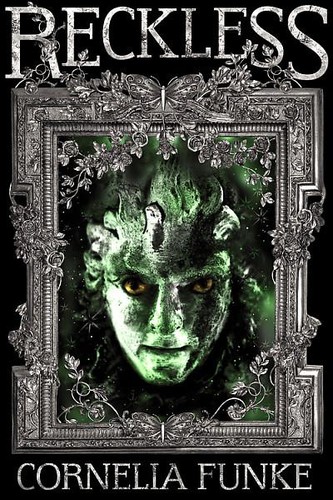
Find Reckless Cornelia Funke in PDF, EPUB, ebook, audiobook, print, or library editions.
Reckless
Reckless
11 books in catalog
Richly detailed fantasy fiction for children and young adults often explores the magical boundlessness of literature itself, turning the physical act of reading into an active gateway between parallel realities. The internationally celebrated Inkheart series transformed contemporary youth fantasy by presenting stories where characters can literally be read out of books into the real world, while human readers are pulled into dangerous written realms. Cornelia Funke built this immersive universe following years of work as a dedicated book illustrator and social worker in Hamburg, combining visual artistry with a deep understanding of young people facing genuine adversity.
Her internationally acclaimed bibliography has sold well over 20 million copies worldwide and has been translated into more than 50 languages, establishing her among Germany's most influential children's fiction authors. By centering resilient young protagonists who navigate loss, displacement, and complex ethical dilemmas, her narrative worlds build a bridge between everyday struggles and magical landscapes without reducing moral challenges to simple binaries.
Born on December 10, 1958, in Dorsten, North Rhine-Westphalia (Westphalia), Germany, Cornelia Maria Funke grew up surrounded by countryside water castles, factory chimneys, and coal mines as the eldest of four children. As a child who initially dreamed of becoming an astronaut, her path to professional storytelling developed gradually through her interest in education and visual arts. After completing a degree in pedagogy, she worked for three years as a social worker focused on children from marginalized urban backgrounds, an experience that permanently shaped her empathetic approach to character development. Seeking a creative transition, she subsequently studied book illustration at the Hamburg State College of Design, beginning a career as a graphic designer and illustrator for children's books.
Her entry into creative writing arose directly from her dissatisfaction with the narratives she was hired to illustrate. Feeling that many available children's books lacked imaginative depth, magic, and authentic conflict, she decided to author her own stories starting in the late 1980s, beginning with illustrated tales such as Cornelia Funke erzählt von Bücherfressern, Dachbodengespenstern und anderen Helden. She established a strong national readership across Germany throughout the 1990s with engaging chapter books and fantasy adventures, including early installments of her ghost-hunting series like The Ghosthunters and the Incredibly Revolting Ghost: The Ghosthunters, Book 1 and Ghosthunters and the Totally Moldy Baroness!.
Her global commercial and critical breakthrough occurred in 2002 with the English language release of The Thief Lord. The English publication came about after a young German girl living in Great Britain recommended the author to publisher Barry Cunningham at the Chicken House imprint. Upon publication, The Thief Lord achieved immediate international acclaim, spending 19 weeks on the New York Times bestseller list. This international success was quickly followed in 2004 by the English translation of Dragon Rider, an epic quest following a silver dragon and an orphaned boy, which remained on the New York Times bestseller list for an extraordinary 78 weeks.
Her global standing expanded further with the release of Inkheart in 2003, launching a celebrated trilogy that continued with Inkspell in 2005 and Inkdeath in 2007. The immense cultural impact of her work led to her selection in 2005 by Time magazine for the Time 100 list of the world's most influential people. Her literary works have inspired major cinematic adaptations, including a 2008 feature film adaptation of Inkheart starring Brendan Fraser and Helen Mirren. In 2010, she published Reckless, opening the darker MirrorWorld series inspired by 19th-century aesthetics and folklore. Over her career, she has lived in Germany, California, and Tuscany, Italy, while expanding her creative work to include an audio label and collaborative artist retreats.
Funke's literary approach is widely recognized for its tactile, atmospheric prose and what critics describe as bibliographic magic, wherein physical books, printing presses, binding, and reading acts serve as primary narrative forces. Rather than treating books merely as passive objects, her narratives emphasize the materiality and power of the written word. Her writing carries a distinct European aesthetic that embraces historical textures, urban geography, folklore, and moral complexity rather than sentimental heroism.
A fundamental theme across her body of work is the resilience of children confronted by adult fallibility, displacement, and grief. Informed by her background in social pedagogy, she portrays young characters who must rely on their own resourcefulness, solidarity, and moral agency rather than relying on omnipotent adult protectors. She frequently employs meta-fictional elements, such as stories embedded within stories, examining both the creative empowerment and the potential danger of summoning fiction into reality. Her collaborations also include co-authoring the dark fantasy novelization Pan's Labyrinth: The Labyrinth of the Faun, demonstrating her talent for dark fairy tales.
11 books in catalog
Richly detailed fantasy fiction for children and young adults often explores the magical boundlessness of literature itself, turning the physical act of reading into an active gateway between parallel realities. The internationally celebrated Inkheart series transformed contemporary youth fantasy by presenting stories where characters can literally be read out of books into the real world, while human readers are pulled into dangerous written realms. Cornelia Funke built this immersive universe following years of work as a dedicated book illustrator and social worker in Hamburg, combining visual artistry with a deep understanding of young people facing genuine adversity.
Her internationally acclaimed bibliography has sold well over 20 million copies worldwide and has been translated into more than 50 languages, establishing her among Germany's most influential children's fiction authors. By centering resilient young protagonists who navigate loss, displacement, and complex ethical dilemmas, her narrative worlds build a bridge between everyday struggles and magical landscapes without reducing moral challenges to simple binaries.
Born on December 10, 1958, in Dorsten, North Rhine-Westphalia (Westphalia), Germany, Cornelia Maria Funke grew up surrounded by countryside water castles, factory chimneys, and coal mines as the eldest of four children. As a child who initially dreamed of becoming an astronaut, her path to professional storytelling developed gradually through her interest in education and visual arts. After completing a degree in pedagogy, she worked for three years as a social worker focused on children from marginalized urban backgrounds, an experience that permanently shaped her empathetic approach to character development. Seeking a creative transition, she subsequently studied book illustration at the Hamburg State College of Design, beginning a career as a graphic designer and illustrator for children's books.
Her entry into creative writing arose directly from her dissatisfaction with the narratives she was hired to illustrate. Feeling that many available children's books lacked imaginative depth, magic, and authentic conflict, she decided to author her own stories starting in the late 1980s, beginning with illustrated tales such as Cornelia Funke erzählt von Bücherfressern, Dachbodengespenstern und anderen Helden. She established a strong national readership across Germany throughout the 1990s with engaging chapter books and fantasy adventures, including early installments of her ghost-hunting series like The Ghosthunters and the Incredibly Revolting Ghost: The Ghosthunters, Book 1 and Ghosthunters and the Totally Moldy Baroness!.
Her global commercial and critical breakthrough occurred in 2002 with the English language release of The Thief Lord. The English publication came about after a young German girl living in Great Britain recommended the author to publisher Barry Cunningham at the Chicken House imprint. Upon publication, The Thief Lord achieved immediate international acclaim, spending 19 weeks on the New York Times bestseller list. This international success was quickly followed in 2004 by the English translation of Dragon Rider, an epic quest following a silver dragon and an orphaned boy, which remained on the New York Times bestseller list for an extraordinary 78 weeks.
Her global standing expanded further with the release of Inkheart in 2003, launching a celebrated trilogy that continued with Inkspell in 2005 and Inkdeath in 2007. The immense cultural impact of her work led to her selection in 2005 by Time magazine for the Time 100 list of the world's most influential people. Her literary works have inspired major cinematic adaptations, including a 2008 feature film adaptation of Inkheart starring Brendan Fraser and Helen Mirren. In 2010, she published Reckless, opening the darker MirrorWorld series inspired by 19th-century aesthetics and folklore. Over her career, she has lived in Germany, California, and Tuscany, Italy, while expanding her creative work to include an audio label and collaborative artist retreats.
Funke's literary approach is widely recognized for its tactile, atmospheric prose and what critics describe as bibliographic magic, wherein physical books, printing presses, binding, and reading acts serve as primary narrative forces. Rather than treating books merely as passive objects, her narratives emphasize the materiality and power of the written word. Her writing carries a distinct European aesthetic that embraces historical textures, urban geography, folklore, and moral complexity rather than sentimental heroism.
A fundamental theme across her body of work is the resilience of children confronted by adult fallibility, displacement, and grief. Informed by her background in social pedagogy, she portrays young characters who must rely on their own resourcefulness, solidarity, and moral agency rather than relying on omnipotent adult protectors. She frequently employs meta-fictional elements, such as stories embedded within stories, examining both the creative empowerment and the potential danger of summoning fiction into reality. Her collaborations also include co-authoring the dark fantasy novelization Pan's Labyrinth: The Labyrinth of the Faun, demonstrating her talent for dark fairy tales.