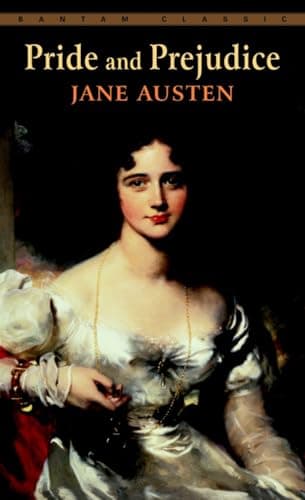
Love is in the air when five sisters discover that a wealthy and eligible bachelor is suddenly within reach. But it is his friend, the haughty Mr. Darcy, who becomes smitten. Unfortunately for him, the object of his affection is not so easily swayed.
One of the most popular characters in English literature, Elizabeth Bennet is intelligent, witty, well-spoken and ahead of her time. If the terrible rumors about Mr. Darcy are true, he doesn’t stand a chance. Yet not all gossip is to be believed when marriage, money, and reputations are on the line. Will Elizabeth and Mr. Darcy circumvent her haste, his ego, and society’s expectations to find love?
Written more than two centuries ago, Jane Austen’s enduring story of manners, family, and love continues to delight new generations of readers.
The title names the two flaws, but the trick is where they live: in you. Austen's narration stays so close to Elizabeth that you absorb her misjudgments of Darcy and Wickham and only revise them when she does, a technique critics point to as the engine of the whole book. The famous love story also sits on hard ground. An entailed estate and five daughters mean the women here genuinely need to marry, which is why the ironic opening line lands as a joke about economics, not courtship. Readers split on whether the payoff is worth the pace. Many praise the wit and a slow-burn romance that feels earned; others find long stretches of balls and dinners tedious and the romance more sensible than passionate. Both camps are describing the same book accurately.
Early notice in 1813 was favorable but modest, with one early reader calling it the fashionable novel. Nineteenth-century opinion split, with admirers on one side and famous detractors who thought Austen's range narrow on the other. Later critics have read the book's attention to money and marriage as serious economic observation, not light romance.
Add to your library to track progress and write reviews

6 books in catalog
English fiction at the turn of the nineteenth century gained a distinctly realistic character through comic novels depicting ordinary people in everyday life, as best seen in Pride and Prejudice. The novelist Jane Austen, born on December 16, 1775, in Steventon, Hampshire, produced six major novels that interpret, critique, and comment upon the English landed gentry at the end of the eighteenth century.
Born the seventh child of the country clergyman Rev. George Austen and his wife Cassandra, Jane Austen spent her first twenty-five years at Steventon Rectory, where she began writing as a teenager. After moving to Bath in 1801 and later residing in Southampton following her father's death in 1805, she eventually settled at Chawton with her mother and elder sister Cassandra. Austen published four novels during her lifetime—Sense and Sensibility in 1811, Pride and Prejudice in 1813, Mansfield Park in 1814, and Emma in 1815—all published anonymously. She died in Winchester on July 18, 1817.
Six months after her death in 1817, her novels Northanger Abbey and Persuasion were published together in a posthumous edition. Her brother Henry Thomas Austen contributed a prefatory 'Biographical Notice' that named Jane Austen publicly for the first time as the author of all her published works. Further biographical detail reached the public in 1870 when her nephew James Edward Austen-Leigh published A Memoir of Jane Austen.
Austen's narratives frequently focus on the economic and social dependence of women on marriage to secure financial stability and social standing. Her sharp social commentary, realistic characterizations, and masterful use of irony serve as implicit critiques of late eighteenth-century novels of sensibility. By grounding her stories in the domestic realities of the English middle and upper classes, her writing marks an important transition toward nineteenth-century literary realism.
Find Pride and Prejudice Jane Austen in PDF, EPUB, ebook, audiobook, print, or library editions.