§Synopsis
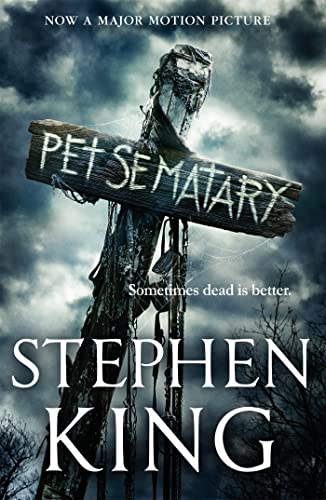
01Death is the one finality that a man of science like Dr. Louis Creed is trained to manage, yet never truly accept. When the Creed family moves to the rural town of Ludlow, Maine, they seek a reprieve from the frantic pace of Chicago, only to find that the quiet of the woods carries a different, more ancient kind of weight. The narrative hinges on the tension between the clinical reality of mortality and the desperate, human urge to bypass it, exploring how grief acts as a corrosive force on the rational mind long before any supernatural elements manifest.
At the heart of the story lies a profound moral dilemma introduced by the Creeds' elderly neighbor, Jud Crandall: is it better to endure the clean pain of loss or to seek a remedy in ground that has gone "sour"? This is not merely a story about what lurks in the shadows, but an examination of the psychological machinery of a father forced to decide where the boundary of "forever" truly lies. It is a study of the seductive nature of forbidden knowledge and the heavy price of refusing to say goodbye.
The Geography of the Beyond
King constructs a tiered supernatural landscape that mirrors the human discomfort with death. First, there is the "Pet Sematary" itself—a poignant, man-made circle where the town's children have processed their grief for generations. It is a place of order, innocence, and necessary endings. However, beyond the brambles and a treacherous "deadfall" lies a second, older burial ground. This space is defined by an oppressive atmosphere and a history that predates local memory, governed by its own internal logic. The setting functions as a physical manifestation of the subconscious, where the rules of the natural world begin to fray and the "sour ground" exerts a psychic pull on those who discover it.
Rationality vs. Folklore: The Creed Dynamic
The character development centers on Louis Creed’s transition from a modern, secular physician to a man haunted by concepts his medical training cannot categorize. His relationship with Jud Crandall is the novel's pivotal axis; Jud serves as a surrogate father figure who provides Louis with a dangerous sense of belonging in Ludlow, eventually sharing the town’s darkest secrets. Meanwhile, the domestic friction between Louis and his wife, Rachel—who harbors a deep-seated, traumatic phobia of death—creates a household where mortality is a forbidden topic. This silence leaves the family vulnerable, as their lack of a shared language for grief makes the allure of a supernatural shortcut nearly impossible to resist.
Subverting the Forbidden Resurrection Trope
While the novel utilizes the classic "Monkey’s Paw" trope—the idea that bringing something back comes with a terrible price—King enriches it by focusing on the mechanics of temptation. The story subverts the typical ghost story by grounding the horror in the psychological reality of parental anxiety and the "what if" scenarios that plague every protector. Instead of a malevolent external force simply attacking the family, the conflict is internal and participatory. The stakes are not just physical safety, but the preservation of the soul and the acceptance of the natural order. The narrative posits that the greatest tragedy is not death itself, but the human hubris that believes death is a problem to be solved.
§Our take
The horror in Pet Sematary is not a conventional monster story; it is the bad arithmetic of a parent who believes he can undo death. King deliberately rebuilds The Monkey's Paw around grief, with the Creeds' inability to discuss mortality honestly giving the supernatural its charge. The opening is the price of admission: a long domestic stretch, heavy backstory and repeated interior monologue. Readers who stay tend to find the unease pays off in the second half.
The critical verdict is split. Kirkus called it a short story stretched too far, predictable and repetitive; the Guardian's James Smythe later praised the slow build, lack of an obvious villain and subtle menace. SYFY WIRE admired the grief but found the prose overwritten and faulted the novel's treatment of Native American and disabled characters. King thought the book so disturbing he shelved it, though he published it in 1983 partly to meet a Doubleday contract. The warning is fair: this is parental anguish, not tidy supernatural fun.
§Themes
- Grief as seduction
- When loss becomes intolerable, Louis treats a forbidden remedy as a practical option.
- The family that can't say it
- The Creeds avoid honest talk about death, leaving fear and guilt to fester.
- A doctor out of bounds
- Louis's medical training gives him confidence in exactly the territory where reason stops working.
- No villain, only choices
- The dread accumulates through roads, woods, burial grounds and Jud's history rather than a conventional antagonist.
- Monkey's Paw logic
- The dead do not return safely, and the horror lies in the temptation to make them return.
§How it was received
Kirkus disliked the 1983 book, calling it a short story stretched too far, with predictable turns, repetitive family drama and interior monologue, though it praised its dark atmosphere. The Guardian's James Smythe argued in 2013 that the slow build, lack of an obvious villain and subtle menace were major strengths; SYFY WIRE later praised the portrayal of parental grief but criticized overwritten prose and the handling of Native American and disabled characters. It was a New York Times bestseller on release despite King's doing no publicity.
§Read it if
- You want horror driven by parental grief, guilt and terrible decisions rather than a conventional villain
- You can tolerate a slow domestic opening and repeated interior monologue
- You want a King novel with a grim argument about grief and the limits of rational control
§Skip it if
- You need brisk forward momentum. The extended setup and backstory are common early exits.
- Graphic child or animal death will be too much. This is not a book for the squeamish.
§Before you start
- Reading experience
- The first part crawls through domestic life and backstory before the overt horror begins, so the book demands patience and a strong stomach for grief.
- Content notes
- A toddler dies in a road accident, and the death and its aftermath drive the central plot; A pet cat is killed early in the book, which animal lovers may find especially painful; Violence includes murder, a murder-suicide in a backstory section and the violent deaths of several characters; Parental grief, guilt and a bleak ending run throughout the novel; One character carries childhood trauma from a sister's slow, painful death from illness; The novel includes criticized portrayals of Native American and disabled characters.
§Common questions
- Is Pet Sematary based on a true story?
- Partly. King lived in 1979 beside a busy road and a children's pet cemetery in Orrington, Maine; his daughter's cat was killed, and the experience fed the novel's central what-if.
- Is Pet Sematary part of a series?
- No. It shares King's Maine universe and references other books, but it can be read on its own.
- Is it really King's scariest book?
- King has called it his most frightening book. That is his verdict, not a settled ranking among readers or critics.
§If you liked this
- The Monkey's Paw by W. W. Jacobs — The tale King deliberately remade: a wish grants the return of the dead at a terrible price.
- Cujo by Stephen King — Another small-Maine threat to a child, making it a natural companion for readers weighing different kinds of King dread.
- Carrie by Stephen King — A fair first-King comparison, though one library reader found Pet Sematary far more unsettling.
- The Shining by Stephen King — King's other great novel of a father coming apart under pressure, with an isolated hotel in place of the Maine woods.
Sources
- Wikipedia
- Kirkus Reviews
- The Guardian (James Smythe, 'Rereading Stephen King', Feb 21 2013), reposted on Goodreads
- Mental Floss (Matthew Jackson, 7 Mar 2019)
- KQED Pop (Rae Alexandra, Apr 2019, updated Aug 2022)
- SYFY WIRE (Sara Century, 5 Apr 2019)
- NBC News Think (Meredith Clark, 5 Apr 2019)
- Worlds Without End
Track this book
Add to your library to track progress and write reviews