Blending social satire, speculative fiction, and emotional resonance, short story collections and experimental novels have reshaped modern fiction through distinct tragicomic voices and surreal settings. The novel Lincoln in the Bardo received the 2017 Man Booker Prize for its innovative construction of historical excerpts and theatrical ghost monologues surrounding Abraham Lincoln's mourning of his son.
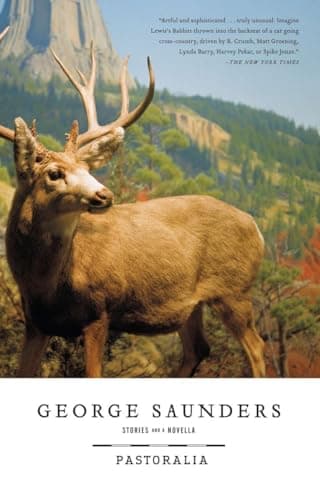
George Saunders gained broad literary recognition through acclaimed collections such as Tenth of December and Pastoralia, establishing a distinct approach to exploring corporate bureaucracy, human vulnerability, and moral choices.
Career & Background
Born on December 2, 1958, in Amarillo, Texas, George Saunders was raised in a working-class community in south Chicago. He earned a Bachelor of Science degree in geophysical engineering from the Colorado School of Mines before working in diverse environments, including the oil fields of Sumatra, Indonesia, a Texas slaughterhouse, and an environmental engineering firm in Rochester, New York.
Saunders went on to complete a Master of Fine Arts in creative writing at Syracuse University, studying under author Tobias Wolff. He joined the faculty of Syracuse University's creative writing program, where he continues to teach. His fiction began appearing regularly in The New Yorker in 1992, leading to his debut story collection, CivilWarLand in Bad Decline, in 1996. Over his career, he has earned fellowships from the Guggenheim Foundation, the Lannan Foundation, and a MacArthur Fellowship in 2006, alongside induction into the American Academy of Arts and Letters in 2018.
Writing Style & Themes
Saunders's fiction consistently examines the absurdities of contemporary labor, consumer culture, and institutional pressure placed upon everyday working-class figures. His narratives frequently take place in themed environments, simulated historical reenactments, and near-future corporate landscapes, using dark humor to highlight underlying human grief and desire for connection.
Stylistically, his work relies on fragmented narrative perspectives, invented corporate dialects, colloquial speech, and rapid shifts between comedy and tragedy. In Lincoln in the Bardo, this style expanded into a multi-voiced narrative structure, while stories like Vigil and Pastoralia maintain a focused examination of character integrity, regret, and empathy under systemic constraint.
Major Works
- Lincoln in the Bardo — A 2017 historical novel detailing President Abraham Lincoln's grief following the death of his son Willie, which won the 2017 Booker Prize and adapted its multi-character narrative into a 166-actor audio edition.
- Tenth of December — A 2013 short story collection exploring class, compassion, and mortality, which was named a National Book Award finalist and won the 2013 Folio Prize and PEN/Malamud Award.
- Pastoralia — A 2000 short fiction collection featuring satirical stories about employees forced into absurd, degrading roles within simulated historical theme parks and corporate landscapes.
- Vigil — A short story showcasing the author's signature focus on emotional observation, moral dilemmas, and human relationships.