SSansFiction
The libraryCollectionsJournalStatsFor authors
Sign inJoin now
Sansfiction,

A digital library for books. Made by readers, for readers.

v 2.0 · 2026
The library
  • Discover
  • Collections
  • Book tracker
  • Journal
  • Stats
For authors
  • SF Links
  • Analytics
  • How it works
  • FAQ
Elsewhere
  • X / @sansfiction
  • Privacy
  • Terms
  • Contact
© 2026 SansFiction · Digital · GlobalA quiet room for your reading life.
The libraryCollectionsJournalStatsFor authors
Sign inJoin now →
Navigation
Library
Bookshelf
Journal
Discover
Collections
Tierlists
Stats
Profile
Author Page
Link Builder
Account
Sign in
S
G
Booksafrican americansParable of the Sower
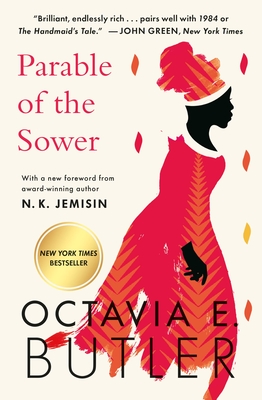
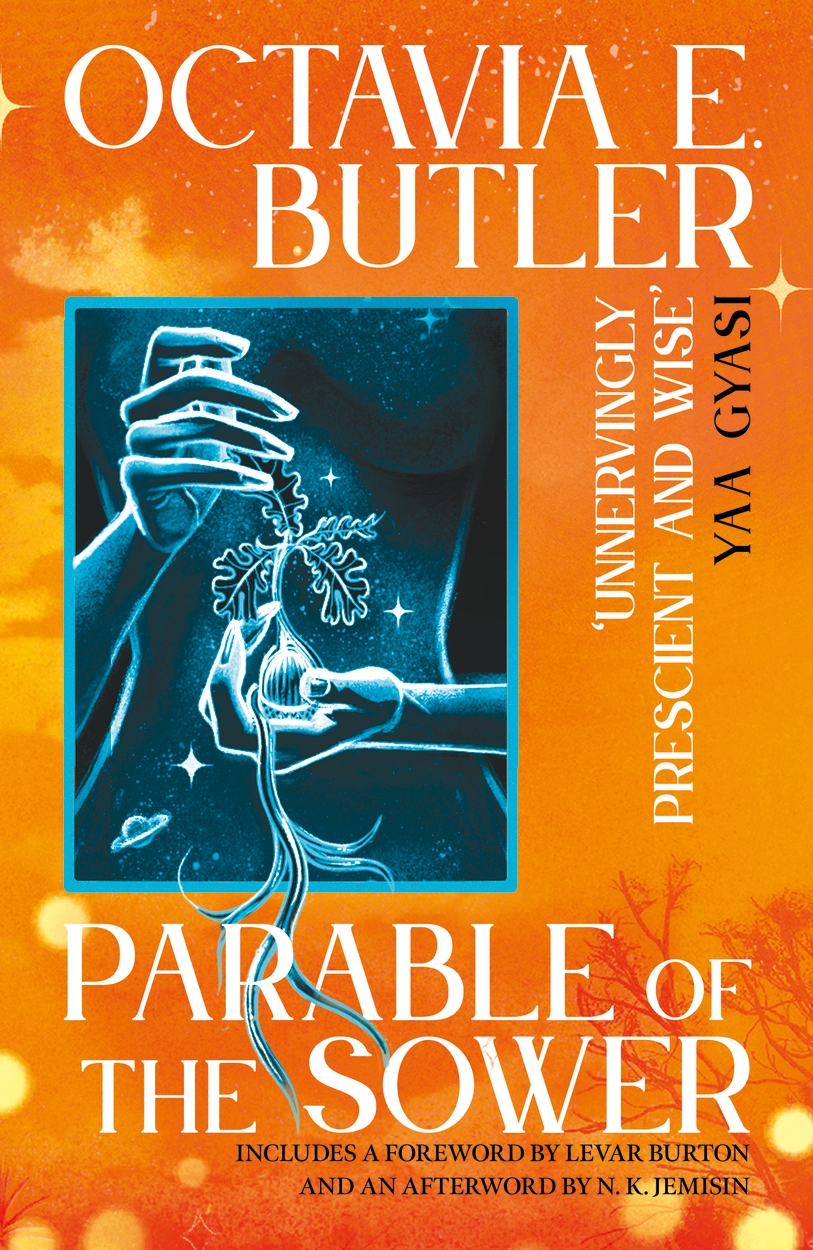
Cover of Parable of the Sower by Octavia E. Butler
№ 1 · Earthseed

Parable of the Sower,

by Octavia E. Butler

Ask AI
Rating4.2/ 5
Ratings778
Pages400
Reading Hours8h
Published2024
LanguageEnglish

§Synopsis

01

From the pioneering New York Times bestselling science fiction author of Kindred.

The radically speculative odyssey of a young Black woman in a post-apocalyptic America and the community she cultivates despite the horrors of climate change and social inequality

The time is 2025. The place is California, where small, walled communities must protect themselves from hordes of desperate scavengers and roaming bands of people addicted to a drug that activates an orgasmic desire to burn, rape, and murder.

When one small community is overrun, Lauren Olamina, an 18-year-old Black woman with the hereditary train of “hyperempathy”—which causes her to feel others’ pain as her own—sets off on foot along the dangerous coastal highways, moving north into the unknown.

§Our take

Parable of the Sower is a slow-burning dystopia that treats hope as work rather than mood. Lauren Olamina is only 15 when she begins her journal, but the voice is already coolly self-possessed, recording violence and survival without lingering on either. That restraint can feel numb, and the early community sections are often slow, yet it also keeps the novel from becoming a spectacle of horror.

Earthseed is the book's risky center: simple enough to carry, rich enough to argue with. Some readers treat "God is change" as a practical ethic for cooperation; others find it preachy or underdeveloped. The strongest case for the book is that its hope is made of logistics, shared work and hard choices, not optimism. Its late recognition has been strange: after a negative 1993 Kirkus verdict, it reached the New York Times bestseller list in 2020.

§Themes

Hope as hard work
Earthseed turns change into a practice of foresight, cooperation and community building rather than a promise that everything will improve.
Pain with no off switch
Lauren's hyperempathy drags her into other people's pain, turning cooperation from a virtue into a necessity.
Collapse in slow motion
Climate strain, scarce water, inequality and corporate power weaken California without erasing every institution.
Belief under examination
Earthseed can read as a practical creed, a rich religious inheritance or a preachy thought experiment, depending on who is reading.
A teenager's flat report
The diary records horror as fact, which some readers find restrained and others find numbing.

§How it was received

Kirkus's 1993 verdict was negative, calling the plot thin and the tone heavy-handed while praising Butler's clear prose, plausible events and rich detail. The novel was a 1994 Nebula Best Novel nominee and a reported 1995 Locus Award runner-up, but it never won a major genre prize. Its New York Times bestseller list arrival came in 2020, nearly three decades after publication.

§Read it if

  • You like dystopian fiction that treats climate, inequality and community as connected problems
  • You want a decisive fifteen-year-old narrator who is self-aware and not especially warm
  • You can tolerate a slow opening and long stretches of travel planning while the story gathers force

§Skip it if

  • You need constant action. The opening and long travel-planning stretches can feel expository and plodding.
  • You want a gentle or conclusive book. This one is violent, bleak and open-ended.

§Before you start

Reading experience
Expect a slow, expository start, long stretches of inventory and planning, and a flat teenage journal voice; many readers say the story picks up once Lauren is on the road.
Reading order
Book 1 of the Parable (Earthseed) duology. Read Parable of the Talents (1998) next; it reframes the story through another narrator and continues from the open ending of Parable of the Sower. Butler planned further volumes but never completed them.
Content notes
Graphic violence, torture, arson and murder tied to drug-driven behavior; Sexual violence and threats of sexual assault; Death of family members and destruction of a community; Racial stigma, addiction, and indentured servitude or debt bondage.

§Common questions

Is Parable of the Sower part of a series?
Yes. It is book 1 of the Parable (Earthseed) duology, followed by Parable of the Talents (1998). Butler planned more books but never completed them.
How old is Lauren in Parable of the Sower?
Lauren is 15 when the journal begins. She is 18 later in the story.
Is it very violent?
Yes. Expect graphic violence, torture, arson, sexual violence and threats of sexual assault, along with family deaths and community destruction. Much of the violence is reported rather than shown in detail.

§If you liked this

  • Parable of the Talents by Octavia E. Butler — The direct sequel, with another narrator and a bleaker mood, continues from Parable of the Sower's open ending.
  • Kindred by Octavia E. Butler — A gentler way into Butler, and the first Butler book readers suggest when Parable of the Sower's bleakness and theology prove too much.
  • The Handmaid's Tale by Margaret Atwood — Readers commonly pair the two as dystopias of comparable social breakdown and bleakness.
  • The Road by Cormac McCarthy — A far more spare road story through collapsed America, while Parable of the Sower keeps arguing over what a community should be.
Sources
  • Wikipedia
  • Kirkus Reviews
  • Publishers Weekly
  • Penguin Random House (Seven Stories 2017 edition listing)
  • SFWA (Nebula Awards)
  • SFWA (Nebula Awards)
  • Wikipedia
  • The Hugo Awards (official)
  • Resilience.org (Hwiccan Review essay, 2025)
  • Biblioklept
  • Religion News Service
  • Goodreads (Sword and Laser book club thread)
  • Goodreads
  • Mount Holyoke College Library (Common Read 2025)
  • WBUR Here & Now
  • Wikipedia
  • Wikipedia

Track this book

Add to your library to track progress and write reviews

§Genres
african americans1apocalyptic fiction1classics1dystopian1fantasy1fiction1general1
§Content Warnings
§Moods
adventurous1challenging1emotional1hopeful1informative1inspiring1reflective1
§Tags
#african american & black1#diverse characters1#female author1#fire/fire injury1

§About the Author

Octavia E. Butler
Octavia E. Butler

5 books in catalog

Speculative fiction exploring power dynamics, human survival, and social transformation through a synthesis of science fiction, mythology, and African American experience marked the career of Octavia E. Butler. Best known for groundbreaking works such as Kindred and Parable of the Sower, Butler became one of the most prominent Black women writing science fiction, earning multiple Hugo, Locus, and Nebula awards during her life.

Career & Background

Born on June 22, 1947, in Pasadena, California, Octavia Estelle Butler was raised by her widowed mother and maternal grandmother after her father passed away. Extremely shy as a child, she found solace in libraries, reading fantasy and writing her own stories after deciding as a teenager that she could craft better fiction than the B-movies she watched on television. She attended Pasadena City College during the Black Power movement in the 1960s and later studied at California State University and the University of California, Los Angeles. While participating in a local writers workshop, she received encouragement from author Harlan Ellison to attend the Clarion Science Fiction Writers Workshop.

By the late 1970s, Butler had published her debut novel Patternmaster in 1976 and established a career as a full-time author. In 1995, she became the first science fiction writer to receive the MacArthur Foundation Grant. Throughout her career, she taught writing workshops and received a PEN Lifetime Achievement Award before eventually relocating to Washington state. Butler passed away in Seattle on February 24, 2006, at age 58 following a stroke. Her papers and literary manuscripts are preserved in the research collection at the Huntington Library in San Marino, California.

Writing Style & Themes

Butler's writing blends hard science fiction concepts with African American spiritualism, mythology, and psychological realism. Her works consistently explore themes of empathy, biological compromise, social hierarchy, and human adaptability under extreme environmental or social stress. Rather than relying on utopian tropes, she examined the difficult concessions required for community survival and the complex dynamics of power, consent, and bodily autonomy.

Major Works

  • Kindred — Published in 1979, this novel follows a modern Black woman involuntarily transported back in time to an antebellum Maryland plantation, directly confronting the brutal realities of American slavery.
  • Dawn — The 1987 opening novel of the Xenogenesis trilogy, depicting a human survivor forced to negotiate humanity's future with an alien species following global nuclear destruction.
  • Parable of the Sower — Published in 1993, this dystopian narrative introduces Lauren Olamina, a young woman navigating societal collapse in a climate-ravaged California while developing a philosophical belief system.
  • Parable of the Talents — The 1998 sequel to Parable of the Sower, continuing Lauren Olamina's story as her community faces religious fanaticism and political oppression in a fragmented future America.
  • Fledgling — Butler's final novel, published in 2005, which reimagines vampire lore through an amnesiac protagonist whose genetically modified symbiosis with humans raises questions of race and interdependence.

§Featured Series

Earthseed

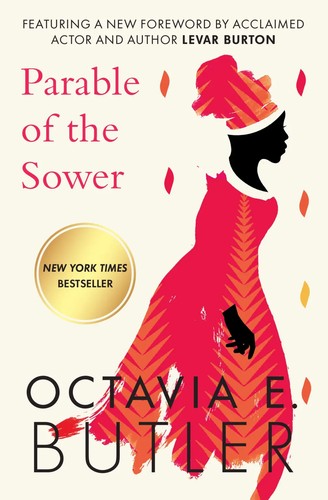
Cover of Parable of the Sower by Octavia E. Butler

Parable of the Sower

Octavia E. Butler, 1993
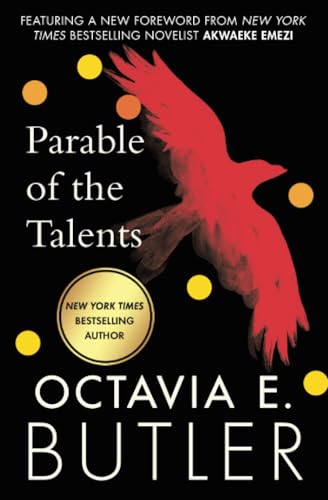
Cover of Parable of the Talents by Octavia E. Butler

Parable of the Talents

Octavia E. Butler, 1993

§Other Editions

Showing 2 of 45 editions
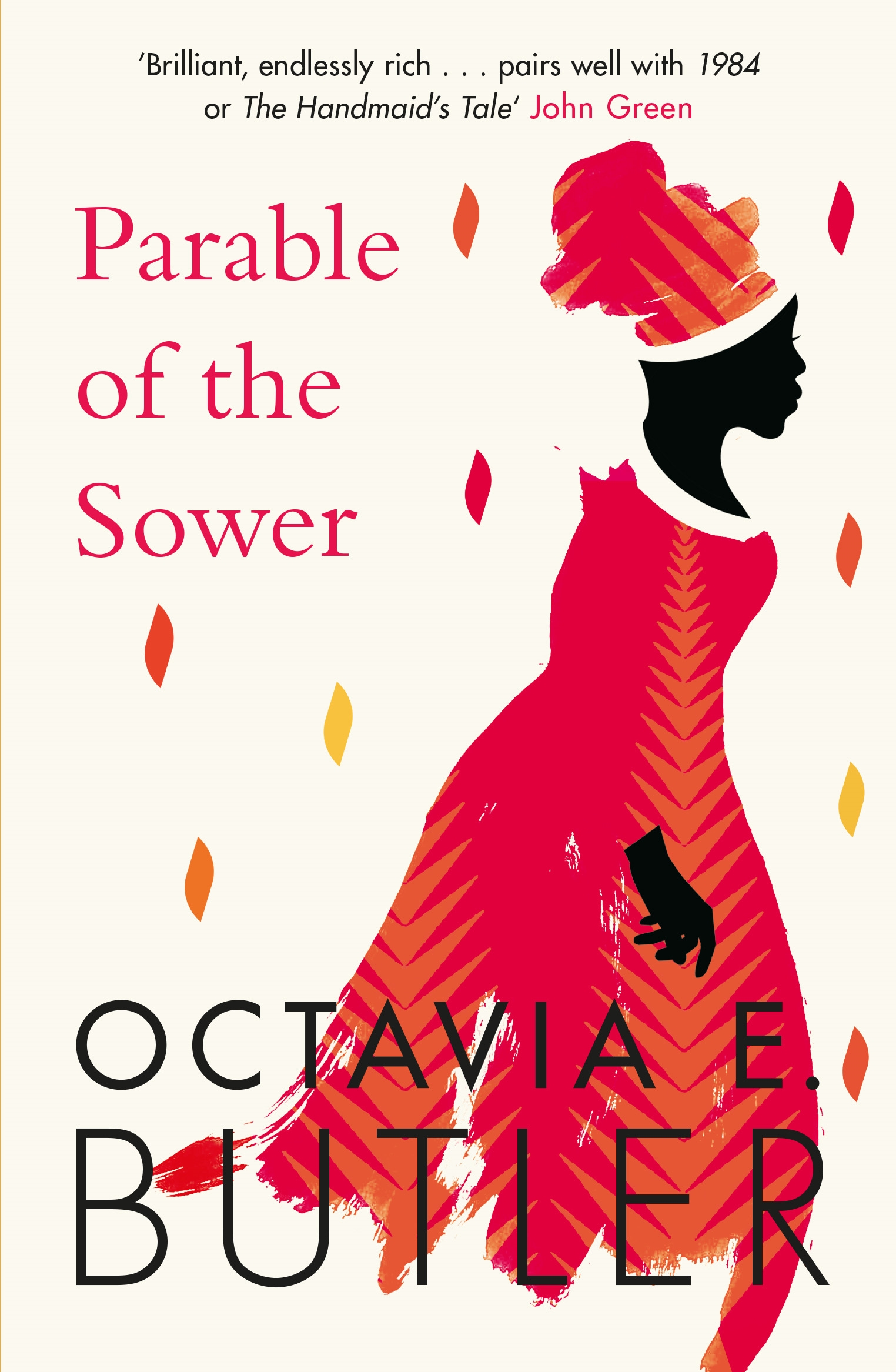
Cover of Parable of the Sower

Parable of the Sower

engebook
Grand Central Publishing20239781538765494
Amazon
Cover of Parable of the Sower

Parable of the Sower

engebook
Headline20149781472214775
Amazon
§Genres
african americans1apocalyptic fiction1classics1dystopian1fantasy1fiction1general1
§Content Warnings
§Moods
adventurous1challenging1emotional1hopeful1informative1inspiring1reflective1
§Tags
#african american & black1#diverse characters1#female author1#fire/fire injury1

Metadata

ISBN-139781035441372
ISBN-101035441378
ASINB0BZHT26LV

Editions and availability

Find Parable of the Sower Octavia E. Butler in PDF, EPUB, ebook, audiobook, print, or library editions.

View on Amazon
Bookshop.orgGoogle Play BooksBarnes & NobleOpen Library

Featured In Lists

Book cover from this collectionBook cover from this collectionBook cover from this collectionBook cover from this collection
Book cover from this collection

Feminism 101

115 books
Book cover from this collectionBook cover from this collectionBook cover from this collectionBook cover from this collection
Book cover from this collection

Mother Horror's 101 Horror Books to Read Before You're Murdered

239 books
Book cover from this collectionBook cover from this collectionBook cover from this collectionBook cover from this collection
Book cover from this collection

Bookshop.org’s 100 Bestselling Books of 2025 (so far)

100 books
Book cover from this collectionBook cover from this collectionBook cover from this collectionBook cover from this collection
Book cover from this collection

Solarpunk: Architectures of Hope

10 books•@sansfictionbot