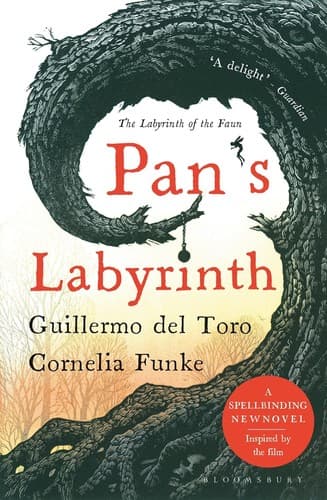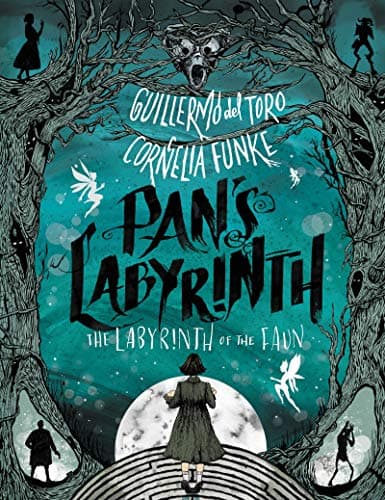
Set against the cold, jagged backdrop of 1944 Spain, this narrative explores the thin, bleeding line between the gruesome realities of post-Civil War fascism and the visceral world of ancient myth. When young Ofelia is moved to a remote mill in the mountains, she finds herself trapped in a dual existence. In one world, her new stepfather, Captain Vidal, wages a brutal campaign against resistance fighters; in the other, an ancient, moss-covered creature awaits her in the shadows of a crumbling labyrinth. The story serves as a meditation on the cost of innocence and the necessity of disobedience when faced with a monstrous reality.
Unlike traditional fairy tales that offer an escape into whimsy, this account treats the supernatural as a mirror to the historical. The forest surrounding the mill is a place of mud, blood, and hidden rebels, while the labyrinth beneath it is a site of rot, ritual, and trial. Ofelia’s journey is not one of simple magic, but of navigating a landscape where the "real" monsters wear immaculate uniforms and the "imaginary" ones demand sacrifices of courage.
The world-building operates on a system of dualism. The "Upper World" is defined by the strict, mechanical order of the Falangist army—ticking pocket watches, sharp blades, and the oppressive silence of the mountains. In contrast, the "Underworld" is organic and decaying, governed by the logic of old-world folklore where names have power and ancient pacts must be honored. This subterranean realm is not a dreamscape but a physical, albeit hidden, extension of the earth, filled with creatures that seem carved from stone and root.
Ofelia’s initial development is centered on her transition from a passive observer of stories to an active participant in a dangerous trial. Her relationship with Captain Vidal is defined by a suffocating hierarchy; he demands total submission, viewing her books as a childish nuisance. Simultaneously, the Faun presents her with three tasks meant to prove her royal lineage. This creates a psychological tension where Ofelia must balance the demands of two authority figures: one who threatens her body and another who tests her soul. Her bond with Mercedes serves as her only anchor in the physical world, representing a quiet, feminine resistance against the loud violence of the Captain’s regime.
The narrative utilizes and subverts the "Three Tasks" trope common in Hero’s Journey archetypes. Rather than gaining artifacts of power, Ofelia’s tasks are designed to confront the grotesque and the forgotten—symbolizing the "swallowing" of the earth and the retrieval of lost truths. The "Wicked Stepfather" trope is elevated from a fairy-tale caricature to a grounded representation of fascist patriarchy, making the stakes literal rather than metaphorical. By weaving together the grim history of the Spanish Maquis with the dark roots of Grimm-style folklore, the story rejects the idea that fantasy is for the faint of heart, instead presenting it as a survival mechanism for those living under the boot of tyranny.
Add to your library to track progress and write reviews
Find Pan's Labyrinth: The Labyrinth of the Faun Guillermo del Toro in PDF, EPUB, ebook, audiobook, print, or library editions.

2 books in catalog
Dark fantasy and gothic horror are reimagined through eerie fairy tales, monstrous symbology, and poetic encounters with the grotesque. Guillermo del Toro, born in Guadalajara, Mexico, in 1964, has created a distinct body of creative work across fiction and film, notably co-authoring the bestselling vampire novel The Strain alongside Chuck Hogan.
His literary output frequently bridges cinematic vision and prose narrative, expanding rich fantastical worlds into written books such as Pan's Labyrinth: The Labyrinth of the Faun, co-authored with Cornelia Funke.
Born in Guadalajara, Jalisco, Mexico, on October 9, 1964, del Toro developed an early fascination with macabre imagery after viewing the 1931 film Frankenstein as a young child. He began his professional career in filmmaking, makeup design, and special effects before expanding into published prose. In 2009, he co-authored The Strain with Chuck Hogan, initiating a trilogy that included The Fall (2010) and The Night Eternal (2011).
Del Toro continued collaborating with prominent authors across multiple genres, publishing the fantasy novel Trollhunters (2015) and The Shape of Water (2018) with Daniel Kraus, followed by The Hollow Ones (2020) with Hogan. His directorial and screenwriting work has garnered widespread acclaim, including Academy Awards for Best Picture and Best Director for The Shape of Water, as well as Best Animated Feature for Pinocchio.
Central to del Toro's storytelling is a profound empathy for monsters, treating creature figures as complex symbols of power and innocence rather than simple antagonists. His writing blends classic gothic fiction, dark folklore, and visceral horror, frequently incorporating Catholic motifs, subterranean underworlds, and insect imagery. Across prose and visual media, his style emphasizes practical craft, dominant atmospheric lighting, and a celebration of human imperfection within terrifying environments.