§Synopsis
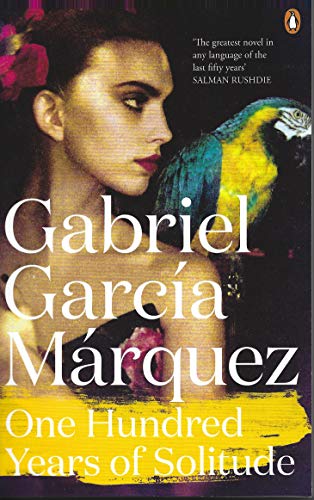
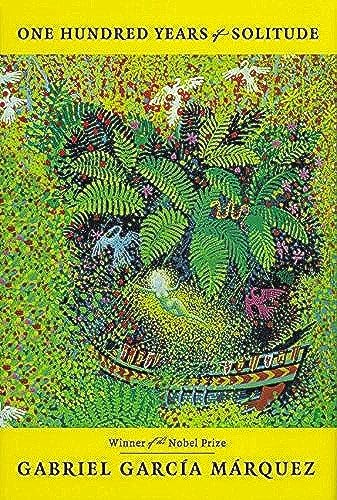
01One of the most influential literary works of our time, One Hundred Years of Solitude remains a dazzling and original achievement by the masterful Gabriel Garcia Marquez, winner of the Nobel Prize in Literature.
One Hundred Years of Solitude tells the story of the rise and fall, birth and death of the mythical town of Macondo through the history of the Buendiá family. Inventive, amusing, magnetic, sad and alive with unforgettable men and women—brimming with truth, compassion, and a lyrical magic that strikes the soul—this novel is a masterpiece in the art of fiction.
§Our take
The novel demands a family tree, and that's the point. García Márquez wrote it in eighteen months while his family lived on credit — he sold the car, his wife arranged credit with the butcher and baker — and the density shows. Gregory Rabassa's translation is the standard English text; García Márquez reportedly said the English was better than his Spanish original. The magic isn't spectacle: the supernatural arrives as part of everyday life and is never explained. Kirkus warned in 1969 that the labyrinthine configurations are at times interminable and the repeated names make characters hard to tell apart. Readers still struggle with the same thing. The Netflix series, filmed in Colombia in Spanish with Colombian actors at the family's request, came only after his death; García Márquez refused to sell screen rights, convinced a film's time limits couldn't do the novel justice. Read the book first.
§Themes
- Cyclical time
- Names and traits repeat across generations until the family's mistakes become its inheritance.
- Magic as ordinary
- The supernatural sits inside the everyday world rather than an invented one, and it is never explained.
- History under the family story
- The Thousand Days' War, the railway, a US fruit company and a massacre of striking workers modelled on the 1928 Banana Massacre arrive alongside the Buendías' private dramas.
- Solitude as self-absorption
- The family's isolation and self-absorption are read as a reflection of the Latin American elite, with love and solidarity arriving late.
§How it was received
Kirkus in 1969 called it luxuriant and splendid but warned the labyrinthine configurations are at times interminable and the repeated names make characters hard to tell apart. Readers still split on whether the repeated names are a design feature or a barrier.
§Read it if
- You want the canonical magical-realist novel where the supernatural is mundane, not spectacular
- You don't mind keeping a family tree handy to track generations of repeating names
- You like history woven into family saga — civil wars, a banana-company massacre, and the railway all land inside the Buendía story
§Skip it if
- You need conventional plot and character arcs; the chronology zigzags and emotional distance is deliberate
- Incest recurs throughout, and the book also includes child marriage and a massacre of striking workers; if that will put you off, skip it
§Before you start
- Reading experience
- Dense, slow starting, and hard to track because family members share the same few names; many readers keep the printed family tree handy.
- Content notes
- Incest and sexual relationships between relatives; Child marriage; Violence including civil-war violence; Massacre of striking workers; Sexuality as a major theme.
§Common questions
- Do I need the family tree?
- Yes. The same few names repeat across generations, and even Kirkus complained in 1969 that characters are hard to tell apart.
- Which translation should I read?
- Gregory Rabassa's English version, the standard translation, which readers generally praise; García Márquez reportedly said it was better than his Spanish original.
- Is the Netflix series faithful?
- It was filmed in Colombia in Spanish with Colombian actors at the family's request; García Márquez had refused to sell screen rights during his lifetime.
§If you liked this
- The Kingdom of This World by Alejo Carpentier — The earlier magical-realist novel that Carpentier wrote and García Márquez built on.
Track this book
Add to your library to track progress and write reviews