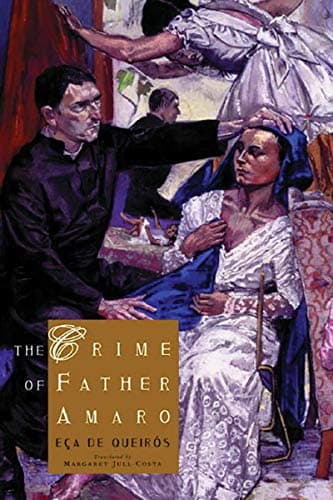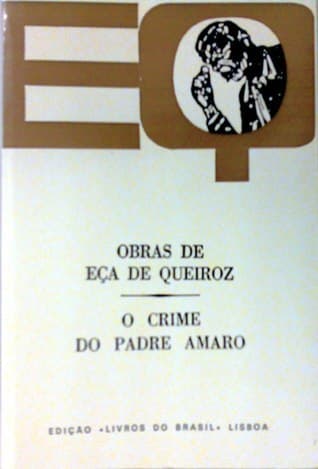
"O Crime do Padre Amaro" apareceu, pela primeira vez, em folhetins, na "Revista Ocidental", em 1875, surgindo em volume no ano seguinte. Sabe-se, no entanto, como Eça de Queiroz apurava de edição para edição as suas obras, alterando-lhes, por vezes substancialmente, o estilo, o enredo e a estrutura.
A fixação do texto e as notas desta edição de "O Crime do Padre Amaro", assim como de todos os títulos subsequentes, são da autoria da Sra. Dra. Helena Cidade Moura, especialista de reconhecido valor no ambito dos estudos queirozianos. A versão tomada como base foi a de 1880, última revista pelo Autor.
Inclui-se também uma carta inédita de Antero de Quental, cujo manuscrito autógrafo incompleto se encontra na posse da Familia Eça de Queiroz e que nos foi amavelmente facultado.
"O Crime do Padre Amaro" apareceu, pela primeira vez, em folhetins, na "Revista Ocidental", em 1875, surgindo em volume no ano seguinte. Sabe-se, no entanto, como Eça de Queiroz apurava de edição para edição as suas obras, alterando-lhes, por vezes substancialmente, o estilo, o enredo e a estrutura.
A fixação do texto e as notas desta edição de "O Crime do Padre Amaro", assim como de todos os títulos subsequentes, são da autoria da Sra. Dra. Helena Cidade Moura, especialista de reconhecido valor no ambito dos estudos queirozianos. A versão tomada como base foi a de 1880, última revista pelo Autor.
Inclui-se também uma carta inédita de Antero de Quental, cujo manuscrito autógrafo incompleto se encontra na posse da Familia Eça de Queiroz e que nos foi amavelmente facultado.
Add to your library to track progress and write reviews
Add to your library to track progress and write reviews
Find O Crime do Padre Amaro Eça de Queirós in PDF, EPUB, ebook, audiobook, print, or library editions.
Find O Crime do Padre Amaro Eça de Queirós in PDF, EPUB, ebook, audiobook, print, or library editions.
1 books in catalog
José Maria Eça de Queirós was a novelist committed to social reform who introduced naturalism and realism to Portugal. He is often considered to be the greatest Portuguese novelist, certainly the leading 19th-century Portuguese novelist whose fame was international. The son of a prominent magistrate, Eça de Queiroz spent his early years with relatives and was sent to boarding school at the age of five. After receiving his degree in law in 1866 from the University of Coimbra, where he read widely French, he settled in Lisbon. There his father, who had since married Eça de Queiroz' mother, made up for past neglect by helping the young man make a start in the legal profession. Eça de Queiroz' real interest lay in literature, however, and soon his short stories - ironic, fantastic, macabre, and often gratuitously shocking - and essays on a wide variety of subjects began to appear in the "Gazeta de Portugal". By 1871 he had become closely associated with a group of rebellious Portuguese intellectuals committed to social and artistic reform and known as the Generation of '70. Eça de Queiroz gave one of a series of lectures sponsored by the group in which he denounced contemporary Portuguese literature as unoriginal and hypocritical. He served as consul, first in Havana (1872-74), then in England, UK - in Newcastle upon Tyne (1874-79) and in Bristol (1879-88). During this time he wrote the novels for which he is best remembered, attempting to bring about social reform in Portugal through literature by exposing what he held to be the evils and the absurdities of the traditional order. His first novel, "O crime do Padre Amaro" (1875; "The Sin of Father Amaro", 1962), describes the destructive effects of celibacy on a priest of weak character and the dangers of fanaticism in a provincial Portuguese town. A biting satire on the romantic ideal of passion and its tragic consequences appears in his next novel, "O Primo Basílio" (1878; "Cousin Bazilio", 1953). Caustic satire characterizes the novel that is generally considered Eça de Queiroz' masterpiece, "Os Maias (1888; "The Maias", 1965), a detailed depiction of upper middle-class and aristocratic Portuguese society. His last novels are sentimental, unlike his earlier work. "A Cidade e as Serras" (1901; "The City and the Mountains", 1955) extols the beauty of the Portuguese countryside and the joys of rural life. Eça de Queiroz was appointed consul in Paris in 1888, where he served until his death. Of his posthumously published works, "Contos" (1902) is a collection of short stories, and "Últimas Páginas" (1912) includes saints' legends. Translations of his works persisted into the second half of the 20th century.
1 books in catalog
José Maria Eça de Queirós was a novelist committed to social reform who introduced naturalism and realism to Portugal. He is often considered to be the greatest Portuguese novelist, certainly the leading 19th-century Portuguese novelist whose fame was international. The son of a prominent magistrate, Eça de Queiroz spent his early years with relatives and was sent to boarding school at the age of five. After receiving his degree in law in 1866 from the University of Coimbra, where he read widely French, he settled in Lisbon. There his father, who had since married Eça de Queiroz' mother, made up for past neglect by helping the young man make a start in the legal profession. Eça de Queiroz' real interest lay in literature, however, and soon his short stories - ironic, fantastic, macabre, and often gratuitously shocking - and essays on a wide variety of subjects began to appear in the "Gazeta de Portugal". By 1871 he had become closely associated with a group of rebellious Portuguese intellectuals committed to social and artistic reform and known as the Generation of '70. Eça de Queiroz gave one of a series of lectures sponsored by the group in which he denounced contemporary Portuguese literature as unoriginal and hypocritical. He served as consul, first in Havana (1872-74), then in England, UK - in Newcastle upon Tyne (1874-79) and in Bristol (1879-88). During this time he wrote the novels for which he is best remembered, attempting to bring about social reform in Portugal through literature by exposing what he held to be the evils and the absurdities of the traditional order. His first novel, "O crime do Padre Amaro" (1875; "The Sin of Father Amaro", 1962), describes the destructive effects of celibacy on a priest of weak character and the dangers of fanaticism in a provincial Portuguese town. A biting satire on the romantic ideal of passion and its tragic consequences appears in his next novel, "O Primo Basílio" (1878; "Cousin Bazilio", 1953). Caustic satire characterizes the novel that is generally considered Eça de Queiroz' masterpiece, "Os Maias (1888; "The Maias", 1965), a detailed depiction of upper middle-class and aristocratic Portuguese society. His last novels are sentimental, unlike his earlier work. "A Cidade e as Serras" (1901; "The City and the Mountains", 1955) extols the beauty of the Portuguese countryside and the joys of rural life. Eça de Queiroz was appointed consul in Paris in 1888, where he served until his death. Of his posthumously published works, "Contos" (1902) is a collection of short stories, and "Últimas Páginas" (1912) includes saints' legends. Translations of his works persisted into the second half of the 20th century.