BooksNever Lie

The search for a "forever home" typically involves measuring room dimensions and checking foundations, but for newlyweds Tricia and Ethan, it begins with an intrusion into a vanished woman’s life. When a violent winter storm strands them at the remote manor of Dr. Adrienne Hale—a renowned psychiatrist who disappeared without a trace four years prior—the house ceases to be a potential investment and becomes a cold, clinical prison. The atmosphere is thick with the residue of unresolved secrets, shifting the narrative from a domestic quest for stability to a study in psychological claustrophobia.
The stakes are immediate: survival against the elements outside and the encroaching history of the house inside. As Tricia discovers a hidden cache of audio transcripts from Dr. Hale’s private sessions, the boundary between the past and the present begins to blur. The narrative examines the fragility of the "perfect couple" facade when placed in a vacuum of isolation, suggesting that the most dangerous secrets are not the ones we keep from strangers, but the ones we whisper to those we supposedly trust.
The setting of the Hale estate serves as more than a backdrop; it functions as a silent protagonist. Situated miles from the nearest neighbor and cut off by a brutal blizzard, the manor represents the "locked-room" trope in its most literal sense. The world-building focuses on the contrast between the warmth of a new marriage and the sterile, unsettling environment of a psychiatrist's home. The house is a repository of professional and personal history, where the clinical nature of Dr. Hale’s work—meticulous notes, recorded sessions, and a hidden office—creates an atmosphere of constant surveillance. This environment enforces a rule of psychological tension: every room holds a confession, and every sound could be an echo of the patients who once sat within these walls.
At the center of the story is the relationship between Tricia and Ethan, a couple still in the "honeymoon phase" whose bond is tested by the weight of their surroundings. Tricia’s character development is rooted in her growing obsession with the missing doctor, a curiosity that borders on the voyeuristic as she begins listening to the cassette tapes. Her initial arc is defined by a transition from a hopeful house-hunter to an amateur investigator, while Ethan’s role as the grounding, protective partner begins to fray under the pressure of the storm. Their dynamic explores the "stranger in the house" motif, not through a literal intruder, but through the realization that neither truly knows the depths of the other’s history when the safety of society is stripped away.
The novel utilizes the "found-footage" device through the medium of Dr. Hale’s patient transcripts, but it subverts the trope by using it to build a parallel timeline. Rather than just providing backstory, the tapes act as a haunting, real-time mirror to the events occurring in the house. This dual-narrative structure allows for a deep dive into the psychiatrist-patient power dynamic, exploring the ethical boundaries of Dr. Hale’s practice. By focusing on the "missing woman" trope without the immediate presence of a body, the story prioritizes psychological dread over physical gore, asking the reader to piece together a puzzle where the most significant pieces are the voices of those who were never meant to be heard.
A major thematic heart of the first half of the book is the moral dilemma regarding privacy versus safety. As Tricia delves into the audio tapes, the narrative poses a difficult question: Is it an act of survival to uncover a missing person’s secrets, or is it a violation that invites danger? The transcripts reveal the dark, often violent impulses of the doctor’s clientele, creating a sense of impending doom that suggests the person responsible for the doctor’s disappearance might be closer than Tricia and Ethan realize. The tension is built not through jump scares, but through the steady, methodical unspooling of professional secrets that were intended to remain buried in the snow.
Add to your library to track progress and write reviews
Find Never Lie Freida McFadden in PDF, EPUB, ebook, audiobook, print, or library editions.
11 books in catalog
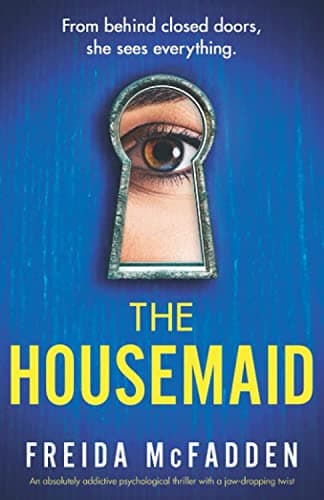
Propelled by tight plotting and sharp suspense, psychological thrillers featuring domestic secrets and rapid twists have become a major fixture on bestseller lists worldwide. The breakout success of The Housemaid established Freida McFadden as a prominent voice in modern mystery fiction, earning top positions across major publishing charts.
Writing under her pen name, McFadden—the pseudonym of physician Sara Cohen—has reached #1 on bestseller lists from the New York Times, Amazon Charts, USA Today, Washington Post, Wall Street Journal, Sunday Times, and Publisher's Weekly. Her works have been translated into more than 45 languages and recognized among Amazon Editors' best books of the year.
Born Sara Cohen on May 1, 1980, in New York City, McFadden studied at Harvard University and Stony Brook University before completing medical training and practicing as a physician. She began her literary career in 2013 by self-publishing medical humor novels alongside dark domestic thrillers, balancing hospital work with fiction writing for nearly a decade.
Her 2022 novel The Housemaid marked a turning point in her publishing career, remaining on global bestseller lists for months and sparking sequels such as The Housemaid Is Watching. Following the adaptation of her work for a Lionsgate feature film starring Amanda Seyfried and Sydney Sweeney, she transitioned to writing full-time. Honored with the International Thriller Writers Award for Best Paperback Original and a Goodreads Choice Award for Best Thriller, McFadden resides with her family and cat in a centuries-old three-story oceanfront home with creaking staircases.
McFadden's thrillers typically center on everyday environments—including suburban homes, high schools, locked hospital wards, and remote properties—where mundane routines conceal hidden motives. Her narratives frequently employ unreliable narrators, short chapters, fast pacing, and late-stage plot twists that recontextualize earlier events.
Drawing directly on her background in medicine, McFadden often incorporates clinical settings and medical procedure details into her psychological suspense. Works like Ward D showcase her use of healthcare environments to generate claustrophobic tension, while standalone thrillers such as The Teacher, Never Lie, and The Boyfriend examine themes of trust, professional ethics, and deception in intimate relationships.