SSansFiction
The libraryCollectionsJournalStatsFor authors
Sign inJoin now
Sansfiction,

A digital library for books. Made by readers, for readers.

v 2.0 · 2026
The library
  • Discover
  • Collections
  • Book tracker
  • Journal
  • Stats
For authors
  • SF Links
  • Analytics
  • How it works
  • FAQ
Elsewhere
  • X / @sansfiction
  • Privacy
  • Terms
  • Contact
© 2026 SansFiction · Digital · GlobalA quiet room for your reading life.
The libraryCollectionsJournalStatsFor authors
Sign inJoin now →
Navigation
Library
Bookshelf
Journal
Discover
Collections
Tierlists
Stats
Profile
Author Page
Link Builder
Account
Sign in
S
G
Booksdonation of organsNever Let Me Go
Cover of Never Let Me Go by Kazuo Ishiguro

Never Let Me Go,

by Kazuo Ishiguro

Ask AI
Rating3.8/ 5
Ratings1,180
Pages282
Reading Hours6h
Published2005
LanguageEnglish

§Synopsis

01

"It was a place of mercurial cliques and mysterious rules where teachers were constantly reminding their charges of how special they were.

Now, years later, Kathy is a young woman. Ruth and Tommy have reentered her life. And for the first time she is beginning to look back at their shared past and understand just what it is that makes them special—and how that gift will shape the rest of their time together."-- Provided by Amazon

§Our take

Ishiguro sets the story in an alternate 1990s England and lets its speculative premise surface only gradually, and the novel's power lives in what the narrator notices and what she doesn't. Kato calls Kathy a broken narrator rather than an unreliable one: she knows her perception is dulled, and the story hints at whole areas she fails to examine. Kirkus praised the craftsmanship, noting the hidden science arrives only as fast as the reader needs it. Publishers Weekly read it as an epic ethical horror in poignant miniature, anchored by the Kathy-Ruth-Tommy triangle and the characters' knowing-without-knowing. Ishiguro himself refuses to say whether the book is bleak or uplifting, and he declines to explain why nobody rebels; the question is deliberately left open. The title comes from a jazz standard on a Bill Evans sleeve, and the novel became his most-read after two abandoned attempts and a first draft written in about nine months.

§Themes

Memory as evasion
Kathy's retrospective narration filters the past through what she can bear to recall.
Science as backdrop
Critics disagree over whether the speculative premise matters or is just backdrop; the human drama sits at the centre either way.
Complicity as survival
The students absorb hard truths in fragments, so acceptance replaces innocence before they can be shocked.
Art and the soul question
Whether the students' art reveals something about their inner lives is among the questions scholars discuss.
Alternate history where biology won
Kato reads the world as a twentieth century shaped by biology instead of nuclear physics, with the students as victims of bombs never dropped.

§How it was received

Kirkus praised the craftsmanship and the way the hidden science is revealed only as fast as the reader needs it. Publishers Weekly described it as an epic ethical horror story told in poignant miniature. Common Sense Media found it unforgettable but less accomplished than The Remains of the Day.

§Read it if

  • You want literary fiction that uses a speculative premise to interrogate memory, silence, and complicity
  • You value quiet, controlled prose that builds devastation through restraint
  • You like books that reward rereading once you know where the withheld science is heading

§Skip it if

  • Slow pacing and repetitive prose make you quit; some readers find it tedious
  • You need characters who fight their fate; the students' acceptance strikes some as implausible or infuriating

§Before you start

Reading experience
Slow-burn narration with gradual revelations; simple prose but dark tone suited for older teens; rewards rereading once the premise is known.
Content notes
Sex, romance and nudity: characters discuss sex, a guardian explains intercourse, a scene briefly describes masturbation; Bleak subject matter: illness and early death; dark and disturbing tone; Minimal violence; no drinking, drugs or strong language.

§Common questions

Is this science fiction or literary fiction?
Critics disagree. One prominent review called it quasi-science-fiction, arguing the science isn't really its subject; Kato calls it science fiction without the trappings. Some readers feel misled by the genre label; others argue the speculative elements are the point.
Why don't the characters try to escape?
Ishiguro deliberately refuses to answer. Kato argues the guardians revealed hard truths in fragments, so the knowledge was always present but unexamined; the students never had the innocence to be shocked.
Is the book bleak or uplifting?
Ishiguro declines to say. Readers are split: some call it one of the most devastating books they've read, others find it cold or boring.

§If you liked this

  • A Number by Caryl Churchill — Kirkus names Caryl Churchill's play as a resemblance to Ishiguro's novel.
  • Brave New World by Aldous Huxley — Kirkus hears echoes of Huxley's novel, and of 1984, in Ishiguro's book.
  • The Remains of the Day by Kazuo Ishiguro — Ishiguro's earlier novel; Common Sense says this one is less accomplished, Publishers Weekly places it alongside his restrained, atmospheric work.
Sources
  • Wikipedia
  • Kirkus Reviews
  • Publishers Weekly
  • Common Sense Media
  • Literary Hub
  • The American Interest (Norihiro Kato, 1 March 2011)
  • Goodreads

Track this book

Add to your library to track progress and write reviews
§Genres
donation of organs1dystopian1fiction1friendship1genre fiction1literary1literature1
§Content Warnings
§Moods
adventurous1challenging1dark1emotional1hopeful1mysterious1reflective1
§Tags
#bullying1#diverse characters1#infertility1#loveable characters1#not diverse characters1#plot driven1

§About the Author

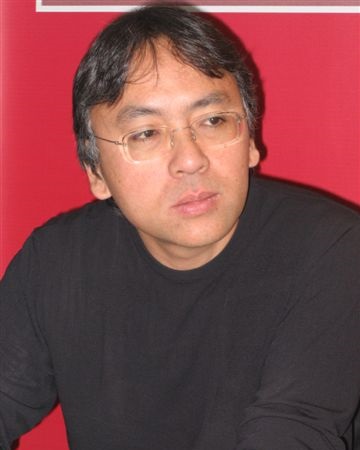
Kazuo Ishiguro
Kazuo Ishiguro

7 books in catalog

Explorations of memory, self-deception, and the passage of time define one of modern literature's most distinctive bodies of fiction, highlighted by the Booker Prize-winning novel The Remains of the Day. Kazuo Ishiguro, a British novelist of Japanese origin born in Nagasaki in 1954, has written acclaimed works spanning historical fiction, dystopian science fiction, and fantasy.

Career & Background

Ishiguro moved to England with his family in 1960. He completed his Bachelor's degree at the University of Kent in 1978 and earned a Master's degree from the University of East Anglia's creative writing program in 1980. After becoming a British citizen in 1982, he established himself as a full-time author based in London. His debut novel, A Pale View of Hills, won the 1982 Winifred Holtby Memorial Prize, followed by An Artist of the Floating World, which won the 1986 Whitbread Prize. His third novel, The Remains of the Day, won the 1989 Man Booker Prize and was adapted into an acclaimed film, while The Unconsoled received the 1995 Cheltenham Prize. In 2008, The Times ranked him 32nd on their list of "The 50 Greatest British Writers Since 1945". In 2017, he received the Nobel Prize in Literature, awarded by the Swedish Academy for uncovering "the abyss beneath our illusory sense of connection with the world".

Writing Style & Themes

Writing primarily in the first person, Ishiguro frequently employs unreliable narrators whose understated reflections gradually reveal deeper psychological truths, regret, and personal reckoning. His characters often grapple with historical shifts, societal obligations, and the fragility of human memory, whether situated in post-World War II Japan, interwar Britain, or speculative settings. Books such as Never Let Me Go and Klara and the Sun incorporate speculative elements like cloning and artificial intelligence to examine empathy, mortality, and what it means to be human.

Major Works

  • A Pale View of Hills — Published in 1982, Ishiguro's debut novel explores memory and trauma in post-World War II Nagasaki through the recollections of a Japanese woman living in England, winning the 1982 Winifred Holtby Memorial Prize.
  • An Artist of the Floating World — Set in post-1945 Japan, this 1986 novel won the Whitbread Prize and depicts an aging painter reflecting on his career, ideology, and changing societal values.
  • The Remains of the Day — Awarded the 1989 Man Booker Prize, this novel details the life and buried emotions of an English butler looking back on decades of service to an aristocratic employer.
  • The Unconsoled — This surreal 1995 novel won the Cheltenham Prize and follows a renowned pianist navigating an unfamiliar European city amidst confusing expectations and shifting deadlines.
  • Never Let Me Go — A dystopian 2005 novel that examines love, ethics, and human identity through the lives of students raised at a specialized boarding school.
  • The Buried Giant — A New York Times bestseller set in post-Arthurian Britain, blending fantasy elements with an investigation of collective memory and forgotten history.
  • Klara and the Sun — A speculative novel told from the perspective of an Artificial Friend who observes human emotion, love, and loss with meticulous devotion.
§Genres
donation of organs1dystopian1fiction1friendship1genre fiction1literary1literature1
§Content Warnings
§Moods
adventurous1challenging1dark1emotional1hopeful1mysterious1reflective1
§Tags
#bullying1#diverse characters1#infertility1#loveable characters1#not diverse characters1#plot driven1

Metadata

ISBN-139780739457955
ISBN-100739457950

Editions and availability

Find Never Let Me Go Kazuo Ishiguro in PDF, EPUB, ebook, audiobook, print, or library editions.

Bookshop.orgGoogle Play BooksBarnes & NobleOpen Library

Featured In Lists

Book cover from this collectionBook cover from this collectionBook cover from this collectionBook cover from this collection
Book cover from this collection

The Esquire 75 Best Sci-Fi Books of All Time

74 books
Book cover from this collectionBook cover from this collectionBook cover from this collectionBook cover from this collection
Book cover from this collection

100 New York Times Best Books of the 21st Century

100 books
Book cover from this collectionBook cover from this collectionBook cover from this collectionBook cover from this collection
Book cover from this collection

Readers Pick Their 100 Best Books of the 21st Century

100 books
Book cover from this collectionBook cover from this collectionBook cover from this collectionBook cover from this collection
Book cover from this collection

TrueLit’s 100 Best Books of the Quarter Century

99 books