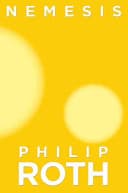
In 'the stifling heat of equatorial Newark', a terrifying epidemic is raging, threatening the children of the New Jersey city with maiming, paralysis, life-long disability, even death. This is the startling and surprising theme of Roth's wrenching new book: a wartime polio epidemic in the summer of 1944 and the effect it has on a closely-knit, family-oriented Newark community and its children. At the centre of Nemesis is a vigorous, dutiful, twenty-three-year old playground director, Bucky Cantor, a javelin thrower and a weightlifter, who is devoted to his charges and disappointed with himself because his weak eyes have excluded him from serving in the war alongside his contemporaries. Focusing on Cantor's dilemmas as polio begins to ravage his playground - and on the everyday realities he faces - Roth leads us through every inch of emotion such a pestilence can breed: the fear, the panic, the anger, the bewilderment, the suffering, and the pain. Moving between the smouldering, malodorous streets of besieged Newark and Indian Hill, a pristine children's summer camp high in the Poconos - whose 'mountain air was purified of all contaminants' - Roth depicts a decent, energetic man with the best intentions struggling in his own private war against the epidemic. Roth is tenderly exact at every point about Cantor's passage into personal disaster and no less exact about the condition of childhood. Through this story runs the dark question that haunts all four of Roth's late short novels, Everyman, Indignation, The Humbling, and now, Nemesis: what choices fatally shape a life? How powerless is each of us up against the force of circumstances?
Add to your library to track progress and write reviews
Find Nemesis Philip Roth in PDF, EPUB, ebook, audiobook, print, or library editions.
9 books in catalog
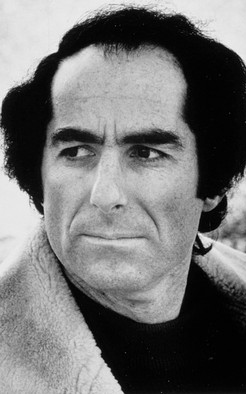
Exploring American identity, Jewish middle-class life, personal ethics, and mortality, twentieth-century American fiction frequently drew on local setting and autobiography to interrogate culture. Philip Roth became one of the most widely read postwar American novelists through his incisive portrayals of personal turmoil, starting with his acclaimed debut collection Goodbye, Columbus and followed by his bestselling 1969 novel Portnoy's Complaint.
Born in Newark, New Jersey, in 1933 to first-generation Jewish immigrant parents, Roth was raised in a middle-class enclave and graduated from Weequahic High School in 1950. He earned a bachelor's degree in English from Bucknell University, where he was elected to Phi Beta Kappa, followed by a master's degree in English literature from the University of Chicago. While in Chicago, he met his first wife, Margaret Martinson, and began publishing short fiction and essays in periodicals such as the Chicago Review and The New Yorker. His debut collection, Goodbye, Columbus (1959), won the U.S. National Book Award for Fiction and brought him immediate national attention.
Roth's fiction is known for its intensely autobiographical quality, sharp comic dialogue, and formal blurring between reality and fiction. Frequently setting his stories in his hometown of Newark, he examined Jewish-American identity, family duties, sexuality, aging, and the friction between traditional and contemporary morals. He frequently employed literary alter egos, such as Nathan Zuckerman, to explore the complexities of artistic creation and personal memory through a sensual, ingenious prose style.