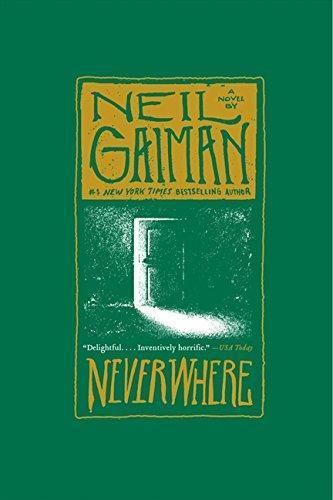
In the soot-stained labyrinth of London Below, the Marquis de Carabas is a man who deals in favors, secrets, and an unwavering sense of self-importance. However, following the chaotic events of his previous adventures, he finds himself stripped of his most vital asset: his coat. This is no mere garment of "wet street at midnight" hues; it is a repository of impossible pockets and the very foundation of his carefully cultivated persona. Without it, the Marquis is merely a man—a vulnerability he cannot afford in a world where reputation is the only currency that matters.
The quest to retrieve his property leads him through the grime and eccentricity of the subterranean city, from the floating markets to the dangerous territories of the Mushroom people. Reclaiming the coat is not just a matter of vanity, but a desperate maneuver to regain his footing in a social hierarchy built on shadows and leverage. As he navigates a series of transactional encounters, the Marquis is forced to confront the reality that even the most resourceful rogue eventually finds a debt he cannot pay alone, especially when the trail leads toward the more terrifying, forgotten corners of the Underside.
The setting serves as a secondary character, operating on a logic of "the cracks between." London Below is a realm where the discarded people and places of the surface world coalesce into a functional, albeit dangerous, society. The world-building relies on the concept of the Barter System; nothing is free, and every interaction is a negotiation. The atmosphere is thick with the scent of damp stone and ancient magic, governed by the "Market" rules where violence is tempered by a strict, if labyrinthine, social etiquette.
The narrative focuses on the deconstruction of the Marquis’s cool exterior. Usually the master of every situation, his lack of the coat acts as a physical and psychological handicap. This arc explores the protagonist's initial struggle with humility; for the first time, he must navigate London Below without his "armor," forcing him to rely on raw wit rather than the gadgets and prestige his coat provided. The introduction of his brother, Peregrine, shifts the dynamic from a simple retrieval mission to a study in sibling rivalry and the resentment that comes from being outshined by one's own flesh and blood.
Gaiman utilizes the "Quest for the Lost Artifact" trope but subverts it by making the object of desire a piece of clothing that defines the protagonist’s social class. While most urban fantasy rogues are defined by their weapons or magical prowess, the Marquis is defined by his style and his ability to "belong" in high-stakes environments. The story also leans into the "Urban Gothic" trope, using the subterranean setting to highlight the moral ambiguities of its characters, where "good" and "evil" are far less relevant than "useful" and "indebted."
In the soot-stained labyrinth of London Below, the Marquis de Carabas is a man who deals in favors, secrets, and an unwavering sense of self-importance. However, following the chaotic events of his previous adventures, he finds himself stripped of his most vital asset: his coat. This is no mere garment of "wet street at midnight" hues; it is a repository of impossible pockets and the very foundation of his carefully cultivated persona. Without it, the Marquis is merely a man—a vulnerability he cannot afford in a world where reputation is the only currency that matters.
The quest to retrieve his property leads him through the grime and eccentricity of the subterranean city, from the floating markets to the dangerous territories of the Mushroom people. Reclaiming the coat is not just a matter of vanity, but a desperate maneuver to regain his footing in a social hierarchy built on shadows and leverage. As he navigates a series of transactional encounters, the Marquis is forced to confront the reality that even the most resourceful rogue eventually finds a debt he cannot pay alone, especially when the trail leads toward the more terrifying, forgotten corners of the Underside.
The setting serves as a secondary character, operating on a logic of "the cracks between." London Below is a realm where the discarded people and places of the surface world coalesce into a functional, albeit dangerous, society. The world-building relies on the concept of the Barter System; nothing is free, and every interaction is a negotiation. The atmosphere is thick with the scent of damp stone and ancient magic, governed by the "Market" rules where violence is tempered by a strict, if labyrinthine, social etiquette.
The narrative focuses on the deconstruction of the Marquis’s cool exterior. Usually the master of every situation, his lack of the coat acts as a physical and psychological handicap. This arc explores the protagonist's initial struggle with humility; for the first time, he must navigate London Below without his "armor," forcing him to rely on raw wit rather than the gadgets and prestige his coat provided. The introduction of his brother, Peregrine, shifts the dynamic from a simple retrieval mission to a study in sibling rivalry and the resentment that comes from being outshined by one's own flesh and blood.
Gaiman utilizes the "Quest for the Lost Artifact" trope but subverts it by making the object of desire a piece of clothing that defines the protagonist’s social class. While most urban fantasy rogues are defined by their weapons or magical prowess, the Marquis is defined by his style and his ability to "belong" in high-stakes environments. The story also leans into the "Urban Gothic" trope, using the subterranean setting to highlight the moral ambiguities of its characters, where "good" and "evil" are far less relevant than "useful" and "indebted."
Add to your library to track progress and write reviews
Find Neil Gaiman's How the Marquis Got His Coat Back Neil Gaiman in PDF, EPUB, ebook, audiobook, print, or library editions.
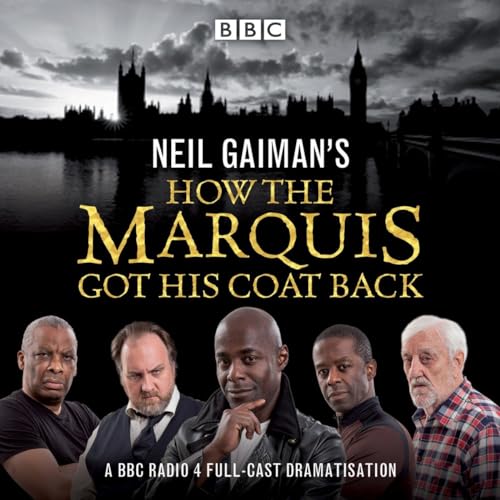

44 books in catalog
Groundbreaking dark fantasy comic books and dark, whimsical prose fiction have reshaped speculative literature, most famously through the comic book series The Sandman. English author Neil Gaiman, born Neil Richard Gaiman on 10 November 1960, created this influential series before publishing widely acclaimed fantasy novels including Stardust, American Gods, Coraline, and The Graveyard Book.
Born Neil Richard Gaiman in Portchester, Hampshire, UK, he spent much of his childhood reading in public libraries, where he discovered the works of C.S. Lewis, J.R.R. Tolkien, Edgar Allan Poe, Ursula K. LeGuin, and G.K. Chesterton. He began his professional career in journalism before transitioning into comic book writing in the late 1980s, gaining prominence with Black Orchid in 1988 and launching The Sandman series for DC Comics' Vertigo imprint in 1989. Over the subsequent decades, he expanded into writing novels, short fiction, audio theatre, screenplays, and films, eventually taking up residence in the United States near Minneapolis.
His fiction has earned widespread critical recognition, receiving Hugo, Nebula, and Bram Stoker awards. In 2008, he published The Graveyard Book, becoming the first author to win both the American Newbery Medal and the British Carnegie Medal for the same work. In 2013, his novel The Ocean at the End of the Lane was voted Book of the Year in the British National Book Awards. His extensive bibliography and media adaptations continued to draw major critical attention through 2017 and beyond.
Gaiman's literary work is noted for combining imaginative fantasy with a darkly humorous tone, fusing modern settings with classical mythology, folklore, and fairy tale motifs. His stories frequently explore themes of memory, childhood innocence, ancient gods navigating contemporary society, and the fundamental power of stories. Across all age categories, his narratives balance gothic atmosphere with warm human empathy and sharp observational wit.

44 books in catalog
Groundbreaking dark fantasy comic books and dark, whimsical prose fiction have reshaped speculative literature, most famously through the comic book series The Sandman. English author Neil Gaiman, born Neil Richard Gaiman on 10 November 1960, created this influential series before publishing widely acclaimed fantasy novels including Stardust, American Gods, Coraline, and The Graveyard Book.
Born Neil Richard Gaiman in Portchester, Hampshire, UK, he spent much of his childhood reading in public libraries, where he discovered the works of C.S. Lewis, J.R.R. Tolkien, Edgar Allan Poe, Ursula K. LeGuin, and G.K. Chesterton. He began his professional career in journalism before transitioning into comic book writing in the late 1980s, gaining prominence with Black Orchid in 1988 and launching The Sandman series for DC Comics' Vertigo imprint in 1989. Over the subsequent decades, he expanded into writing novels, short fiction, audio theatre, screenplays, and films, eventually taking up residence in the United States near Minneapolis.
His fiction has earned widespread critical recognition, receiving Hugo, Nebula, and Bram Stoker awards. In 2008, he published The Graveyard Book, becoming the first author to win both the American Newbery Medal and the British Carnegie Medal for the same work. In 2013, his novel The Ocean at the End of the Lane was voted Book of the Year in the British National Book Awards. His extensive bibliography and media adaptations continued to draw major critical attention through 2017 and beyond.
Gaiman's literary work is noted for combining imaginative fantasy with a darkly humorous tone, fusing modern settings with classical mythology, folklore, and fairy tale motifs. His stories frequently explore themes of memory, childhood innocence, ancient gods navigating contemporary society, and the fundamental power of stories. Across all age categories, his narratives balance gothic atmosphere with warm human empathy and sharp observational wit.
London Below, The World of Neverwhere