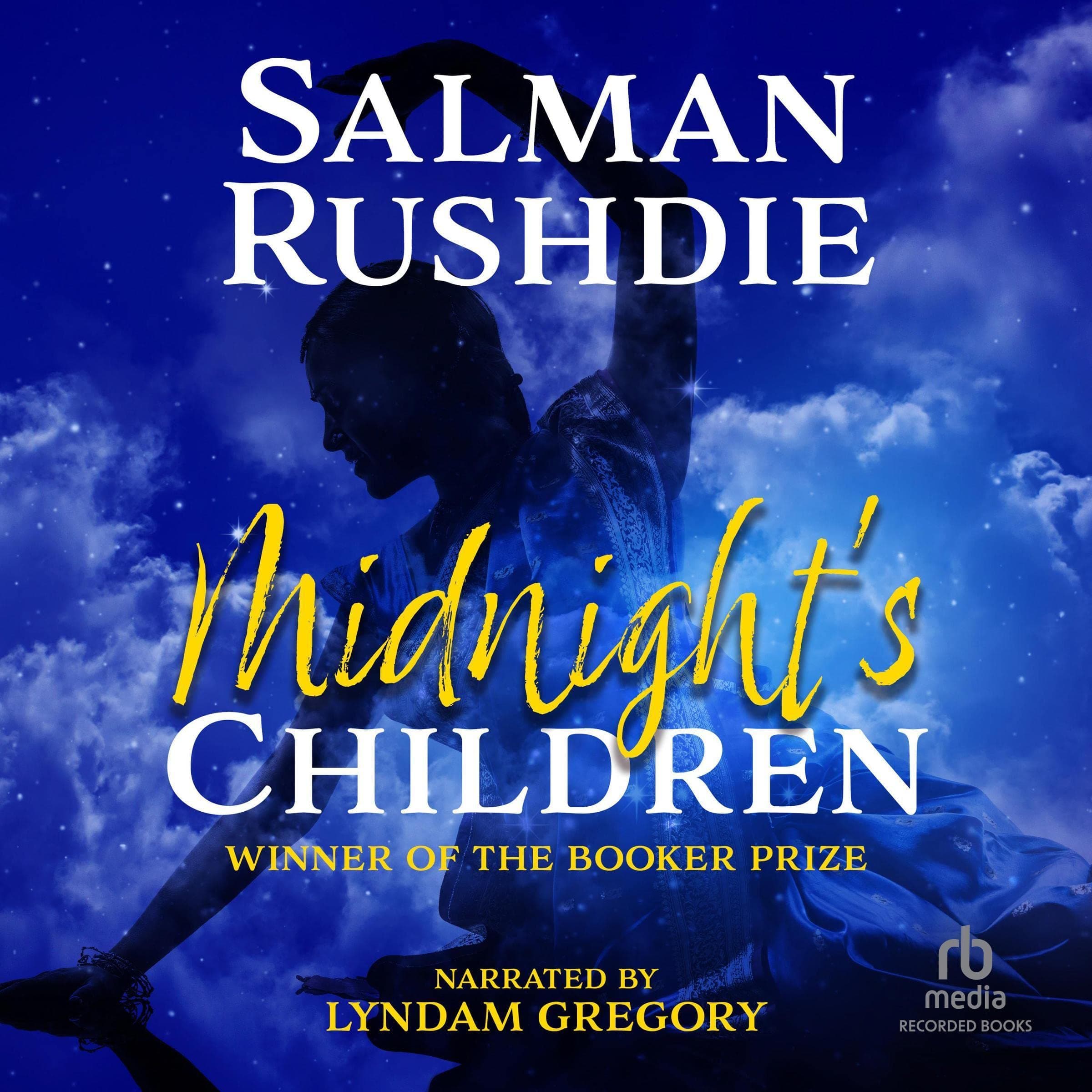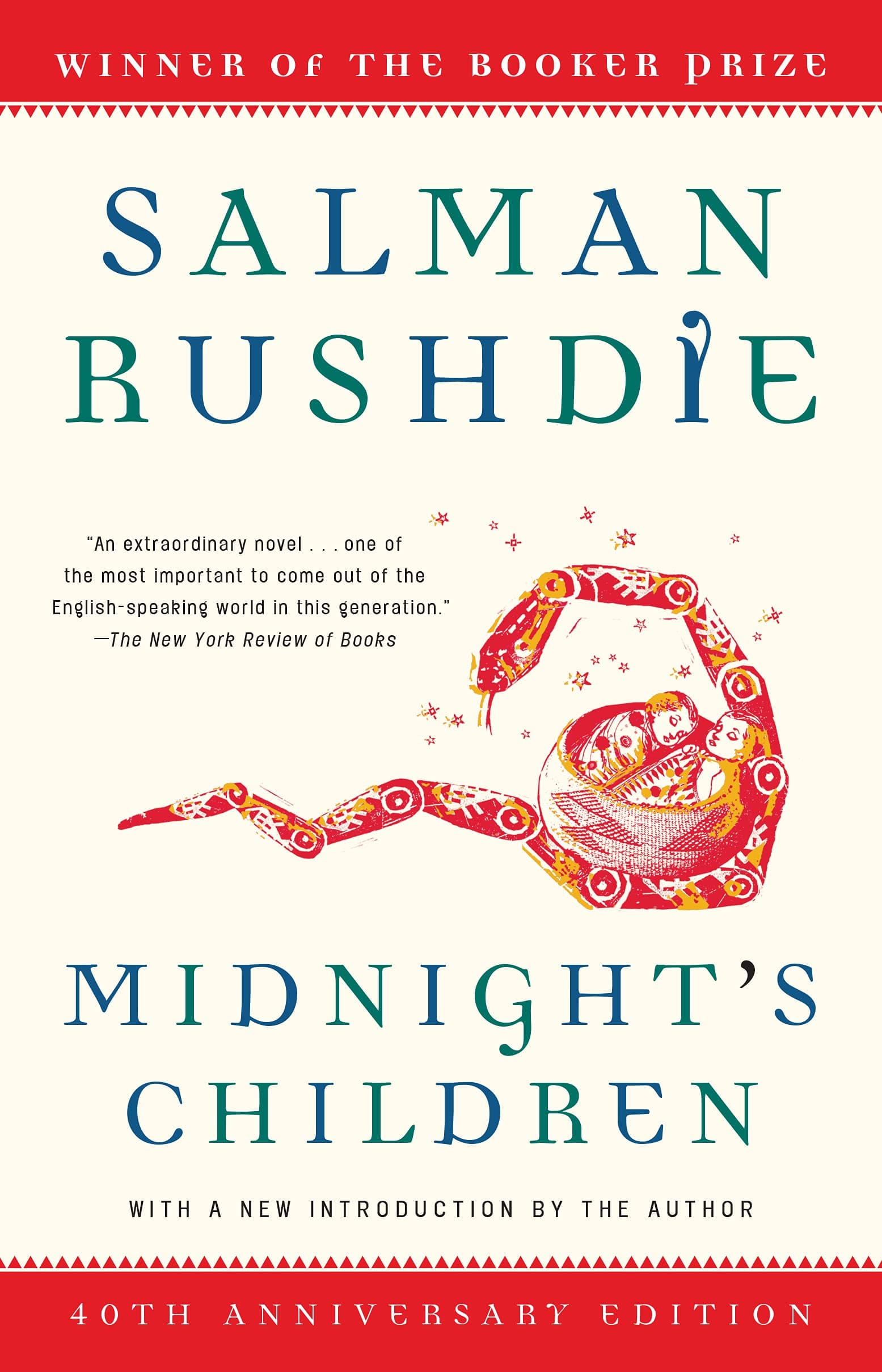
Midnight's Children is a 1981 novel by author Salman Rushdie. It portrays India's transition from British colonial rule to independence and the partition of India. It is considered an example of postcolonial, postmodern, and magical realist literature. The story is told by its chief protagonist, Saleem Sinai, and is set in the context of actual historical events. The style of preserving history with fictional accounts is self-reflexive.
Midnight's Children won both the Booker Prize and the James Tait Black Memorial Prize in 1981. It was awarded the "Booker of Bookers" Prize and the best all-time prize winners in 1993 and 2008 to celebrate the Booker Prize 25th and 40th anniversary.In 2003, the novel was listed on the BBC's The Big Read poll of the UK's "best-loved novels". It was also added to the list of Great Books of the 20th Century, published by Penguin Books.
Contains: Midnight's Children (2/2)
Midnight's Children is a 1981 novel by author Salman Rushdie. It portrays India's transition from British colonial rule to independence and the partition of India. It is considered an example of postcolonial, postmodern, and magical realist literature. The story is told by its chief protagonist, Saleem Sinai, and is set in the context of actual historical events. The style of preserving history with fictional accounts is self-reflexive.
Midnight's Children won both the Booker Prize and the James Tait Black Memorial Prize in 1981. It was awarded the "Booker of Bookers" Prize and the best all-time prize winners in 1993 and 2008 to celebrate the Booker Prize 25th and 40th anniversary.In 2003, the novel was listed on the BBC's The Big Read poll of the UK's "best-loved novels". It was also added to the list of Great Books of the 20th Century, published by Penguin Books.
Contains: Midnight's Children (2/2)
Add to your library to track progress and write reviews
Add to your library to track progress and write reviews
Find Midnight's Children Salman Rushdie in PDF, EPUB, ebook, audiobook, print, or library editions.
Find Midnight's Children Salman Rushdie in PDF, EPUB, ebook, audiobook, print, or library editions.

9 books in catalog
Multilayered allegorical storytelling set against the backdrop of post-colonial history and cultural crossroads defines some of the most influential fiction of the late twentieth century, epitomized by the Booker Prize-winning novel Midnight's Children. Written by Salman Rushdie, this landmark narrative uses surreal devices and historical framing to chronicle India's transition to independence through the life of a child born at the exact moment of the nation's birth.
Rushdie was born in 1947 in Bombay (now Mumbai) into a Kashmiri Muslim family shortly before Indian independence. At age fourteen, he moved to England to attend Rugby School and later studied history at King's College, Cambridge, graduating in 1968. He made his literary debut with the science fiction novel Grimus in 1975 before achieving widespread acclaim with his second novel, Midnight's Children, which won the Booker Prize in 1981 and was later selected on two separate occasions as the best novel in the prize's history.
Following the success of his 1983 novel Shame, Rushdie published The Satanic Verses in 1988, an ambitious work exploring immigration and faith that provoked severe political backlash, blasphemy allegations, and death threats, forcing him into living under police protection for several years. Over a career spanning five decades, he has published fourteen novels, non-fiction collections, and children's literature, including Haroun and the Sea of Stories. Elected a fellow of the Royal Society of Literature in 1983 and knighted in 2007 for services to literature, he released the memoir Knife: Meditations After an Attempted Murder in 2024 following a violent assault on stage in 2022.
Rushdie's writing style is primarily characterized by magical realism intertwined with historical fiction, marked by surreal characters, brooding humor, allegorical structures, and an energetic narrative tone. Much of his fiction is set on the Indian subcontinent, drawing deeply upon its complex political landscapes, religious traditions, and post-colonial shifts.
A central theme running through his body of work is the exploration of cultural displacement and the complex connections, disruptions, and migrations between the Eastern and Western worlds. His characters frequently navigate dual identities, fractured memories, and global political forces, embodying the friction and synthesis that occur when disparate cultures collide.
9 books in catalog
Multilayered allegorical storytelling set against the backdrop of post-colonial history and cultural crossroads defines some of the most influential fiction of the late twentieth century, epitomized by the Booker Prize-winning novel Midnight's Children. Written by Salman Rushdie, this landmark narrative uses surreal devices and historical framing to chronicle India's transition to independence through the life of a child born at the exact moment of the nation's birth.
Rushdie was born in 1947 in Bombay (now Mumbai) into a Kashmiri Muslim family shortly before Indian independence. At age fourteen, he moved to England to attend Rugby School and later studied history at King's College, Cambridge, graduating in 1968. He made his literary debut with the science fiction novel Grimus in 1975 before achieving widespread acclaim with his second novel, Midnight's Children, which won the Booker Prize in 1981 and was later selected on two separate occasions as the best novel in the prize's history.
Following the success of his 1983 novel Shame, Rushdie published The Satanic Verses in 1988, an ambitious work exploring immigration and faith that provoked severe political backlash, blasphemy allegations, and death threats, forcing him into living under police protection for several years. Over a career spanning five decades, he has published fourteen novels, non-fiction collections, and children's literature, including Haroun and the Sea of Stories. Elected a fellow of the Royal Society of Literature in 1983 and knighted in 2007 for services to literature, he released the memoir Knife: Meditations After an Attempted Murder in 2024 following a violent assault on stage in 2022.
Rushdie's writing style is primarily characterized by magical realism intertwined with historical fiction, marked by surreal characters, brooding humor, allegorical structures, and an energetic narrative tone. Much of his fiction is set on the Indian subcontinent, drawing deeply upon its complex political landscapes, religious traditions, and post-colonial shifts.
A central theme running through his body of work is the exploration of cultural displacement and the complex connections, disruptions, and migrations between the Eastern and Western worlds. His characters frequently navigate dual identities, fractured memories, and global political forces, embodying the friction and synthesis that occur when disparate cultures collide.