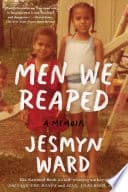
Named one of the Best Books of the Century by New York Magazine Two-time National Book Award winner Jesmyn Ward (Salvage the Bones, Sing, Unburied, Sing) contends with the deaths of five young men dear to her, and the risk of being a black man in the rural South. “We saw the lightning and that was the guns; and then we heard the thunder and that was the big guns; and then we heard the rain falling and that was the blood falling; and when we came to get in the crops, it was dead men that we reaped.” -Harriet Tubman In five years, Jesmyn Ward lost five young men in her life-to drugs, accidents, suicide, and the bad luck that can follow people who live in poverty, particularly black men. Dealing with these losses, one after another, made Jesmyn ask the question: Why? And as she began to write about the experience of living through all the dying, she realized the truth-and it took her breath away. Her brother and her friends all died because of who they were and where they were from, because they lived with a history of racism and economic struggle that fostered drug addiction and the dissolution of family and relationships. Jesmyn says the answer was so obvious she felt stupid for not seeing it. But it nagged at her until she knew she had to write about her community, to write their stories and her own. Jesmyn grew up in poverty in rural Mississippi. She writes powerfully about the pressures this brings, on the men who can do no right and the women who stand in for family in a society where the men are often absent. She bravely tells her story, revisiting the agonizing losses of her only brother and her friends. As the sole member of her family to leave home and pursue higher education, she writes about this parallel American universe with the objectivity distance provides and the intimacy of utter familiarity. A brutal world rendered beautifully, Jesmyn Ward's memoir will sit comfortably alongside Edwidge Danticat's Brother, I'm Dying, Tobias Wolff's This Boy's Life, and Maya Angelou's I Know Why the Caged Bird Sings.
Add to your library to track progress and write reviews

3 books in catalog
Set in rural coastal Mississippi, contemporary fiction depicting working-class Black families facing environmental disasters, systemic poverty, and personal loss has reshaped Southern literature. Jesmyn Ward established her reputation through novels and creative nonfiction grounded in the Gulf Coast region, becoming the first woman and first Black American author to win the National Book Award for Fiction twice. Her second novel, Salvage the Bones, captures twelve days surrounding Hurricane Katrina through the eyes of a pregnant teenager in a Mississippi town, while Sing, Unburied, Sing weaves a road narrative across Mississippi with ghost stories and intergenerational trauma.
Beyond her fiction, Ward writes candid memoirs and essays addressing grief, systemic racism, and community resilience in the American South. Her memoir, Men We Reaped: A Memoir, examines the deaths of five young Black men in her hometown, including her younger brother, combining intimate family history with social analysis.
Ward was born on April 1, 1977, and grew up in DeLisle, Mississippi, along the Gulf Coast. She attended Stanford University, earning a Bachelor of Arts in 1999 and a Master of Arts in 2000, followed by a Master of Fine Arts from the University of Michigan in 2005. Shortly after her graduation from Michigan, Hurricane Katrina flooded her family home in Mississippi. Ward held a Wallace Stegner Fellowship at Stanford University from 2008 to 2010 and served as the John and Renée Grisham Writer in Residence at the University of Mississippi. In 2014, she joined the faculty at Tulane University, where she became a professor of English and Andrew W. Mellon Professor in the Humanities. She received a MacArthur Fellowship in 2017.
Ward's writing combines lyrical prose with an authentic voice, frequently set in the fictional coastal Mississippi town of Bois Sauvage or real Gulf Coast communities. Her narratives center on marginalized Black communities, exploring familial love, survival, addiction, incarceration, and the enduring impacts of poverty and racism. Through poetic description and intense emotional realism, her work incorporates elements of folklore, history, and haunting spiritual presence to examine how past hardships continue to shape present lives.