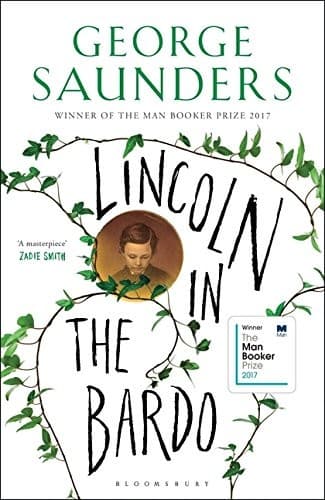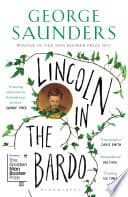
February 1862. The Civil War is less than one year old. The fighting has begun in earnest, and the nation has begun to realize it is in for a long, bloody struggle. Meanwhile, President Lincoln's beloved eleven-year-old son, Willie, lies upstairs in the White House, gravely ill. In a matter of days, despite predictions of a recovery, Willie dies and is laid to rest in a Georgetown cemetery. "My poor boy, he was too good for this earth," the president says at the time. "God has called him home." Newspapers report that a grief-stricken Lincoln returns, alone, to the crypt several times to hold his boy's body. From that seed of historical truth, George Saunders spins a story of familial love and loss that breaks free of its historical framework into a supernatural realm both hilarious and terrifying. Willie Lincoln finds himself in a strange purgatory where ghosts mingle, gripe, commiserate, quarrel, and enact bizarre acts of penance. Within this transitional state -- called, in the Tibetan tradition, the bardo -- a monumental struggle erupts over young Willie's soul.
Add to your library to track progress and write reviews
Find Lincoln in the Bardo George Saunders in PDF, EPUB, ebook, audiobook, print, or library editions.

4 books in catalog
Blending social satire, speculative fiction, and emotional resonance, short story collections and experimental novels have reshaped modern fiction through distinct tragicomic voices and surreal settings. The novel Lincoln in the Bardo received the 2017 Man Booker Prize for its innovative construction of historical excerpts and theatrical ghost monologues surrounding Abraham Lincoln's mourning of his son.
George Saunders gained broad literary recognition through acclaimed collections such as Tenth of December and Pastoralia, establishing a distinct approach to exploring corporate bureaucracy, human vulnerability, and moral choices.
Born on December 2, 1958, in Amarillo, Texas, George Saunders was raised in a working-class community in south Chicago. He earned a Bachelor of Science degree in geophysical engineering from the Colorado School of Mines before working in diverse environments, including the oil fields of Sumatra, Indonesia, a Texas slaughterhouse, and an environmental engineering firm in Rochester, New York.
Saunders went on to complete a Master of Fine Arts in creative writing at Syracuse University, studying under author Tobias Wolff. He joined the faculty of Syracuse University's creative writing program, where he continues to teach. His fiction began appearing regularly in The New Yorker in 1992, leading to his debut story collection, CivilWarLand in Bad Decline, in 1996. Over his career, he has earned fellowships from the Guggenheim Foundation, the Lannan Foundation, and a MacArthur Fellowship in 2006, alongside induction into the American Academy of Arts and Letters in 2018.
Saunders's fiction consistently examines the absurdities of contemporary labor, consumer culture, and institutional pressure placed upon everyday working-class figures. His narratives frequently take place in themed environments, simulated historical reenactments, and near-future corporate landscapes, using dark humor to highlight underlying human grief and desire for connection.
Stylistically, his work relies on fragmented narrative perspectives, invented corporate dialects, colloquial speech, and rapid shifts between comedy and tragedy. In Lincoln in the Bardo, this style expanded into a multi-voiced narrative structure, while stories like Vigil and Pastoralia maintain a focused examination of character integrity, regret, and empathy under systemic constraint.