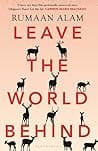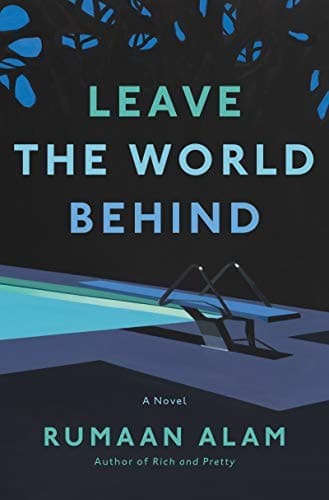
Amanda and Clay head out to a remote corner of Long Island expecting a vacation: a quiet reprieve from life in New York City, quality time with their teenage son and daughter, and a taste of the good life in the luxurious home they’ve rented for the week. But a late-night knock on the door breaks the spell. Ruth and G. H. are an older black couple—it’s their house, and they’ve arrived in a panic. They bring the news that a sudden blackout has swept the city. But in this rural area—with the TV and internet now down, and no cell phone service—it’s hard to know what to believe.
Should Amanda and Clay trust this couple—and vice versa? What happened back in New York? Is the vacation home, isolated from civilization, a truly safe place for their families? And are they safe from one another?
Add to your library to track progress and write reviews
Find Leave the World Behind Rumaan Alam in PDF, EPUB, ebook, audiobook, print, or library editions.

1 books in catalog
Suspenseful domestic tension, apocalyptic foreboding, and sharp social observation converge in fiction that examines the hidden fractures of modern life, most notably in the acclaimed novel Leave the World Behind. Written by Rumaan Alam, this psychological thriller blends high-stakes societal collapse with intimate character studies to probe how race, class, and privilege dictate human behavior during an unpredictable crisis.
Alam's breakout work garnered widespread critical recognition, becoming a finalist for the National Book Award and a New York Times bestseller before being adapted into a major Netflix feature film starring Julia Roberts, Ethan Hawke, and Mahershala Ali. His fiction consistently transforms familiar narrative setups—such as vacation home intruders or complex parenting arrangements—into incisive critiques of contemporary security, money, and power.
Born on August 9, 1977, to Bangladeshi immigrant parents who came to the United States in the early 1970s, Alam grew up in a suburb of Washington, D.C., raised alongside three siblings by his father, an architect, and his mother, a pediatrician. He pursued higher education at Oberlin College, where he studied creative writing and graduated in 1999. Following graduation, he moved to New York City to launch his career in media and publishing, initially working at Condé Nast in Brooklyn while developing his artistic sensibilities.
Over the next two decades, Alam established himself within the New York literary landscape, writing design articles, journalism, and personal essays for publications such as The Wall Street Journal, New York Magazine, The New Yorker, and The New York Times, alongside short stories in journals like StoryQuarterly, Crazyhorse, and Meridian. He balanced freelance assignments and late-night creative writing sessions while raising two sons with his husband, later taking on a role as editor of special projects at The New York Times Book Review. Alam published his debut novel, Rich and Pretty, in 2016, followed by That Kind of Mother in 2018, before achieving widespread commercial and critical success with his third novel.
Alam's narrative craft is characterized by a precise balance of genre tropes and acute psychological realism. In his early novels, he focused on close interpersonal relationships, exploring female friendship, motherhood, and family dynamics within affluent settings. With Leave the World Behind, which he drafted in a fevered three-week period, he incorporated suspenseful thriller mechanics—such as isolated settings, mysterious blackouts, and uninvited visitors—to destabilize his characters' comfortable assumptions.
A central theme across Alam's body of work is the quiet influence of wealth and social status on daily decisions and human connections. His prose scrutinizes the subtle anxieties of privilege, the unspoken dynamics of class envy, and the illusion of security built around material comfort. By stripping away technological infrastructure and societal norms in his suspense fiction, Alam forces characters to confront racial tensions, existential terror, and the limits of individual self-reliance.