Exploring the psychological fractures caused by industrialisation and rigid social conventions, groundbreaking twentieth-century English fiction transformed modern literature through candid portrayals of human desire and interpersonal conflict. David Herbert Lawrence, writing as D.H. Lawrence, established his reputation with his semi-autobiographical novel Sons and Lovers, which examined intense family dynamics and working-class life in a Nottinghamshire mining community.
Beyond his early psychological realism, Lawrence produced a vast body of work spanning novels, poetry, short stories, plays, travel writing, and literary criticism. His willingness to confront taboos directly brought severe censorship throughout his career, most notably surrounding his late work Lady Chatterley's Lover, while establishing him as an uncompromising critic of modern alienation.
Career & Background
Born on September 11, 1885, in Eastwood, Nottinghamshire, Lawrence was the fourth child of an ill-educated coal miner father and an educated, refined mother whose fraught marriage profoundly influenced his writing. Educated at Beauvale Board School, Nottingham High School, and University College, Nottingham, he worked as a teacher before pursuing writing full-time after his early poetry and fiction gained attention in London. In 1912, he met Frieda Weekley, with whom he moved abroad, beginning decades of travel across Europe, Ceylon, Australia, the United States, and Mexico.
During World War I, Lawrence faced official surveillance and hostility in England, prompting a period of voluntary exile after 1919. This international mobility enriched his non-fiction, including the travel book Sea and Sardinia, as well as novels like Aaron's Rod. Throughout these years of exile, Lawrence struggled against tuberculosis while maintaining an energetic output across multiple genres until his death on March 2, 1930, in Vence, France.
Writing Style & Themes
Lawrence's collected works represent an extended reflection upon the dehumanising effects of modernity and industrialisation. Rather than relying on traditional plot conventions, his prose champions spontaneity, emotional health, vitality, human sexuality, and physical instinct as vital responses to a mechanized, overly rationalized society.
His artistic technique evolved from structured descriptive realism into a spontaneous free-verse poetic mode and highly instinctual narrative form. In both fiction and prose essays, Lawrence used acute sensory detail to explore personal relationships, social alienation, and the enduring tension between human nature and modern industrial culture.
Major Works
- Sons and Lovers — Published in 1913, this semi-autobiographical novel explores emotional conflict and intense familial relationships in a coal-mining town.
- The Rainbow — Published in 1915, this novel traces three generations of the Brangwen family before being banned for its radical portrayal of sexuality.
- Women in Love — Published in 1920 as a sequel to The Rainbow, this novel examines human connection and social decline through the lives of two sisters.
- Sea and Sardinia — Published in 1921, this travel narrative records Lawrence's observations of landscapes and island culture during a journey through Sardinia.
- Aaron's Rod — Published in 1922, this novel follows an English musician who leaves his family and industrial hometown to travel through post-war Italy.
- The Fox — Published in 1922, this novella details the psychological and emotional disruption caused by a soldier's arrival at a quiet rural farm.
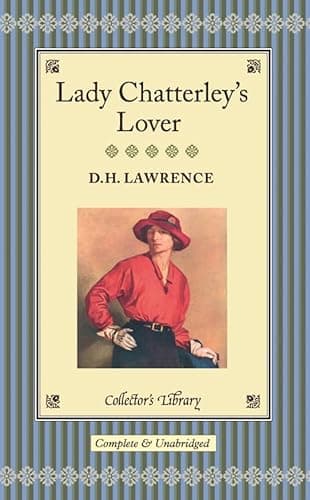
- Lady Chatterley's Lover — First published in 1928, this famous novel depicts an upper-class woman's affair with her husband's gamekeeper and faced extensive censorship.