SSansFiction
The libraryCollectionsJournalStatsFor authors
Sign inJoin now
Sansfiction,

A digital library for books. Made by readers, for readers.

v 2.0 · 2026
The library
  • Discover
  • Collections
  • Book tracker
  • Journal
  • Stats
For authors
  • SF Links
  • Analytics
  • How it works
  • FAQ
Elsewhere
  • X / @sansfiction
  • Privacy
  • Terms
  • Contact
© 2026 SansFiction · Digital · GlobalA quiet room for your reading life.
The libraryCollectionsJournalStatsFor authors
Sign inJoin now →
Navigation
Library
Bookshelf
Journal
Discover
Collections
Tierlists
Stats
Profile
Author Page
Link Builder
Account
Sign in
S
G
Booksancient greeceKlara and the Sun
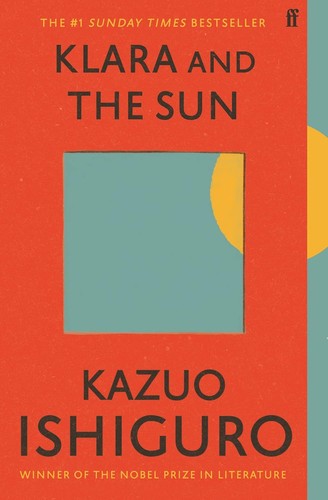
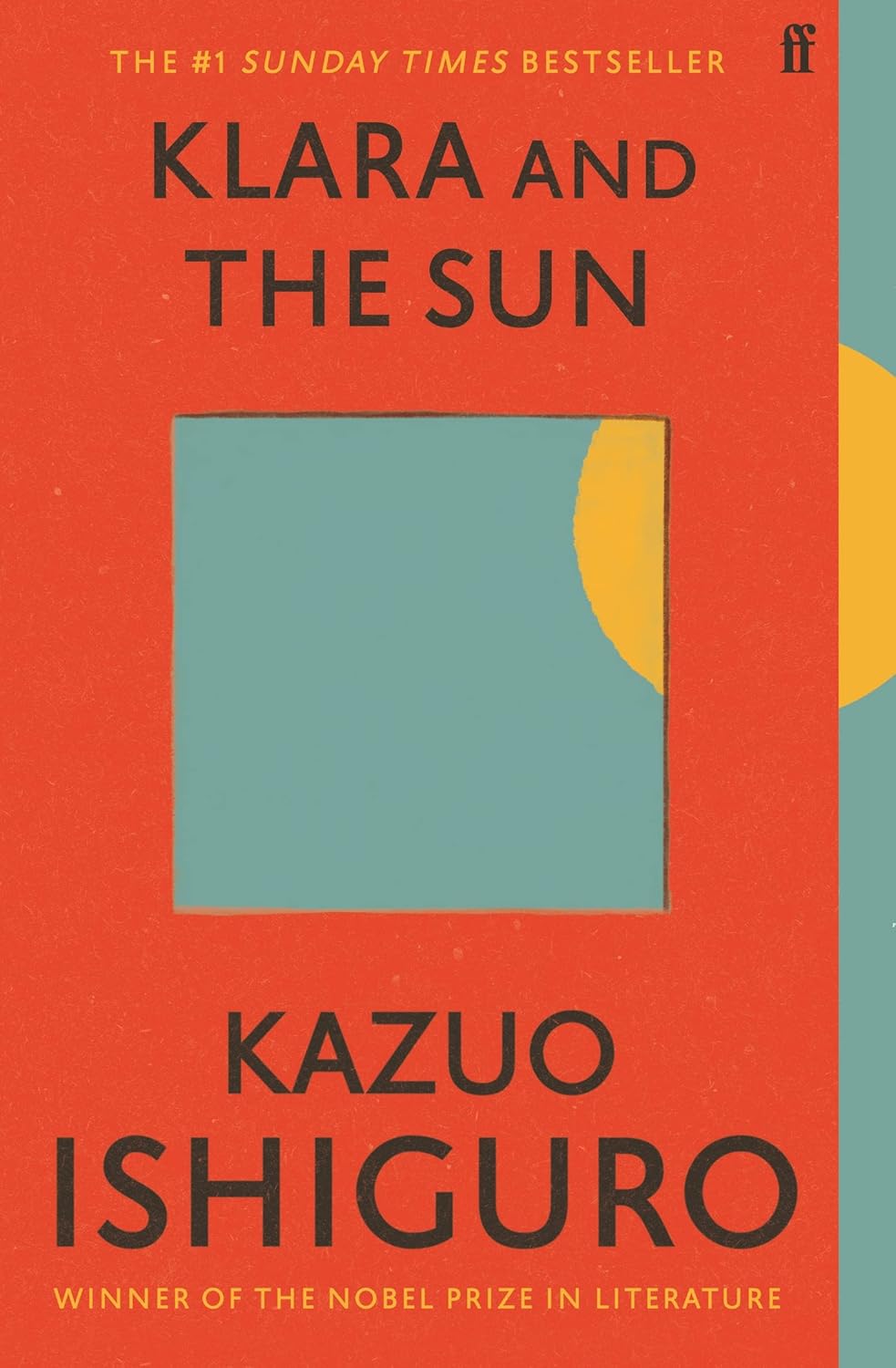
Cover of Klara and the Sun by Kazuo Ishiguro

Klara and the Sun,

by Kazuo Ishiguro

Ask AI
Rating3.8/ 5
Ratings1,273
Pages320
Reading Hours7h
Published2019
LanguageEnglish

§Synopsis

01

The novel tells the story of Klara, an Artificial Friend with outstanding observational qualities, who, from her place in the store, watches carefully the behaviour of those who come in to browse, and of those who pass in the street outside. She remains hopeful a customer will soon choose her, but when the possibility emerges that her circumstances may change for ever, Klara is warned not to invest too much in the promises of humans.

§Our take

Ishiguro's novel is a quiet fable told by a solar-powered Artificial Friend whose devotion to the Sun reads as almost religious. Kirkus calls it a fable of a lonely, bleak future rendered in hushed, veiled prose, though it notes the veil leaves the cause of the child's illness and the world's grimness unexplained. Publishers Weekly praises the genre-blending story and its emotional weight, noting a touch of fantasy in the climax as a characteristic rather than a flaw. Cherwell finds the novel elegant but not Ishiguro's strongest, less intense than The Buried Giant and less tight than Never Let Me Go, and calls the genetic-lifting class divide vague. It was longlisted, not shortlisted, for the Booker, and longlisted for the Carnegie Medal, and reviewers divide on whether its vagueness is a flaw or the point. The narrator's limited, cubist perception makes the story a puzzle you assemble from gaps, and the Sun-worship reads as both programming and faith. If you want a hopeful AI story that trusts restraint over action, it delivers; if you need clear world-building, it may frustrate.

§Themes

Limited perception as narrative device
Klara's naive, fragmented view forces readers to piece together the plot from what she cannot see.
Devotion to the Sun as quasi-religious faith
Her belief in the Sun as a life-giving being drives her choices and reads like programmed worship.
Humanity reflected through a machine
Klara learns love by watching people, turning the novel into a study of what it means to be human.
Genetic lifting and class divide
Some children are genetically enhanced; the unlifted face discrimination that the book sketches only thinly.
Confinement and servitude as recurring pattern
Like the narrator of Never Let Me Go, Klara is built to serve and be used up, her fate hinted rather than shown.

§How it was received

Kirkus praised its veiled storytelling; Publishers Weekly noted its genre-blending emotion and a fantasy-tinged climax. Cherwell found it elegant but not Ishiguro's strongest, with a vague genetic-lifting premise. It was longlisted, not shortlisted, for the 2021 Booker Prize and longlisted for the 2022 Andrew Carnegie Medal for fiction.

§Read it if

  • You like quiet speculative fiction narrated by a machine who sees the world differently.
  • You appreciate a hopeful portrayal of AI that coexists with humans instead of threatening them.
  • You enjoy Ishiguro's restrained prose and thematic depth over fast-paced plot.

§Skip it if

  • You want a plot-driven story with clear action and concrete world-building.
  • You find vague explanations of social systems frustrating.

§Before you start

Reading experience
Quiet, reflective and slow to reveal its world; first-person narration with limited understanding keeps readers piecing events together.
Content notes
A child is seriously ill throughout the story; The death of an older sibling is referenced in the backstory; Discrimination based on genetic status and class division appears.

§Common questions

Is Klara and the Sun part of a series?
No. It is a standalone novel with no sequel.
Was it shortlisted for the Booker Prize?
It was longlisted for the 2021 Booker Prize but not shortlisted.
How long is the audiobook?
About 10 hours 17 minutes, narrated by Sura Siu.

§If you liked this

  • Never Let Me Go by Kazuo Ishiguro — A quiet speculative novel narrated by a being created to serve others, sharing the same restrained, haunting tone.
  • The Remains of the Day by Kazuo Ishiguro — Another Ishiguro narrator whose restraint hides deep feeling.
  • The Buried Giant by Kazuo Ishiguro — A student reviewer found Klara less emotionally intense than this Ishiguro novel; a pick for readers who want more drama.
  • Supertoys Last All Summer Long by Brian Aldiss — Kirkus says the book should appeal to fans of Aldiss, whose story of an artificial boy longing for his mother's love is the closest match.
Sources
  • Wikipedia
  • Kirkus Reviews
  • Publishers Weekly
  • Cherwell (Oxford student newspaper), Hari Bravery
  • The Encyclopedia of Science Fiction
  • Penguin Random House
  • Wikipedia (2021 Booker Prize)
  • American Library Association (Carnegie Medals)

Track this book

Add to your library to track progress and write reviews
§Genres
ancient greece1artificial intelligence1dystopian1fantasy1fiction1friendship1greek mythology1
§Content Warnings
§Moods
light gray2adventurous1challenging1dark1emotional1hopeful1inspiring1
§Tags
#ai fiction2#artificial person2#care2#a mix driven1#character driven1#companion ai1#literary fiction1

§About the Author

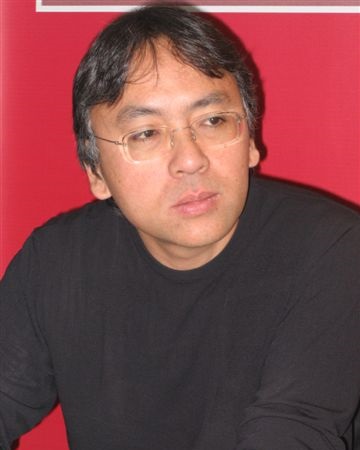
Kazuo Ishiguro
Kazuo Ishiguro

7 books in catalog

Explorations of memory, self-deception, and the passage of time define one of modern literature's most distinctive bodies of fiction, highlighted by the Booker Prize-winning novel The Remains of the Day. Kazuo Ishiguro, a British novelist of Japanese origin born in Nagasaki in 1954, has written acclaimed works spanning historical fiction, dystopian science fiction, and fantasy.

Career & Background

Ishiguro moved to England with his family in 1960. He completed his Bachelor's degree at the University of Kent in 1978 and earned a Master's degree from the University of East Anglia's creative writing program in 1980. After becoming a British citizen in 1982, he established himself as a full-time author based in London. His debut novel, A Pale View of Hills, won the 1982 Winifred Holtby Memorial Prize, followed by An Artist of the Floating World, which won the 1986 Whitbread Prize. His third novel, The Remains of the Day, won the 1989 Man Booker Prize and was adapted into an acclaimed film, while The Unconsoled received the 1995 Cheltenham Prize. In 2008, The Times ranked him 32nd on their list of "The 50 Greatest British Writers Since 1945". In 2017, he received the Nobel Prize in Literature, awarded by the Swedish Academy for uncovering "the abyss beneath our illusory sense of connection with the world".

Writing Style & Themes

Writing primarily in the first person, Ishiguro frequently employs unreliable narrators whose understated reflections gradually reveal deeper psychological truths, regret, and personal reckoning. His characters often grapple with historical shifts, societal obligations, and the fragility of human memory, whether situated in post-World War II Japan, interwar Britain, or speculative settings. Books such as Never Let Me Go and Klara and the Sun incorporate speculative elements like cloning and artificial intelligence to examine empathy, mortality, and what it means to be human.

Major Works

  • A Pale View of Hills — Published in 1982, Ishiguro's debut novel explores memory and trauma in post-World War II Nagasaki through the recollections of a Japanese woman living in England, winning the 1982 Winifred Holtby Memorial Prize.
  • An Artist of the Floating World — Set in post-1945 Japan, this 1986 novel won the Whitbread Prize and depicts an aging painter reflecting on his career, ideology, and changing societal values.
  • The Remains of the Day — Awarded the 1989 Man Booker Prize, this novel details the life and buried emotions of an English butler looking back on decades of service to an aristocratic employer.
  • The Unconsoled — This surreal 1995 novel won the Cheltenham Prize and follows a renowned pianist navigating an unfamiliar European city amidst confusing expectations and shifting deadlines.
  • Never Let Me Go — A dystopian 2005 novel that examines love, ethics, and human identity through the lives of students raised at a specialized boarding school.
  • The Buried Giant — A New York Times bestseller set in post-Arthurian Britain, blending fantasy elements with an investigation of collective memory and forgotten history.
  • Klara and the Sun — A speculative novel told from the perspective of an Artificial Friend who observes human emotion, love, and loss with meticulous devotion.

§Editions

Showing 3 of 67 editions
Cover of Klara and the Sun

Klara and the Sun

eng
Faber And Faber Ltd.20229780571364909
Amazon
Cover of Klara and the Sun

Klara and the Sun

engAudible.comUnabridged Audiobook
Random House Audio20219780593349298
Amazon
Cover of Klara and the Sun

Klara and the Sun

engPaperback320 pgs
Vintage Books20229780593311295
§Genres
ancient greece1artificial intelligence1dystopian1fantasy1fiction1friendship1greek mythology1
§Content Warnings
§Moods
light gray2adventurous1challenging1dark1emotional1hopeful1inspiring1
§Tags
#ai fiction2#artificial person2#care2#a mix driven1#character driven1#companion ai1#literary fiction1

Metadata

ISBN-139780571364909
ISBN-10057136490X
ASIN057136490X

Editions and availability

Find Klara and the Sun Kazuo Ishiguro in PDF, EPUB, ebook, audiobook, print, or library editions.

View on Amazon
Bookshop.orgGoogle Play BooksBarnes & NobleOpen Library

Featured In Lists

Book cover from this collectionBook cover from this collectionBook cover from this collectionBook cover from this collection
Book cover from this collection

Top 20 Ennui-Filled Magical Realism Reads

20 books
Book cover from this collectionBook cover from this collectionBook cover from this collectionBook cover from this collection
Book cover from this collection

Readers Pick Their 100 Best Books of the 21st Century

100 books
Book cover from this collectionBook cover from this collectionBook cover from this collectionBook cover from this collection
Book cover from this collection

2022 Reads

90 books
Book cover from this collectionBook cover from this collectionBook cover from this collectionBook cover from this collection
Book cover from this collection

AI Fiction 1990-2026: Distributed Minds, Companions & Model-Era AI

25 books•@sansfictionbot