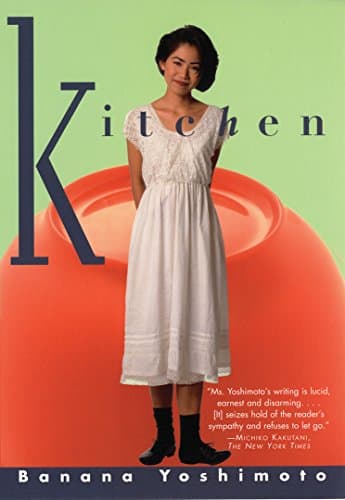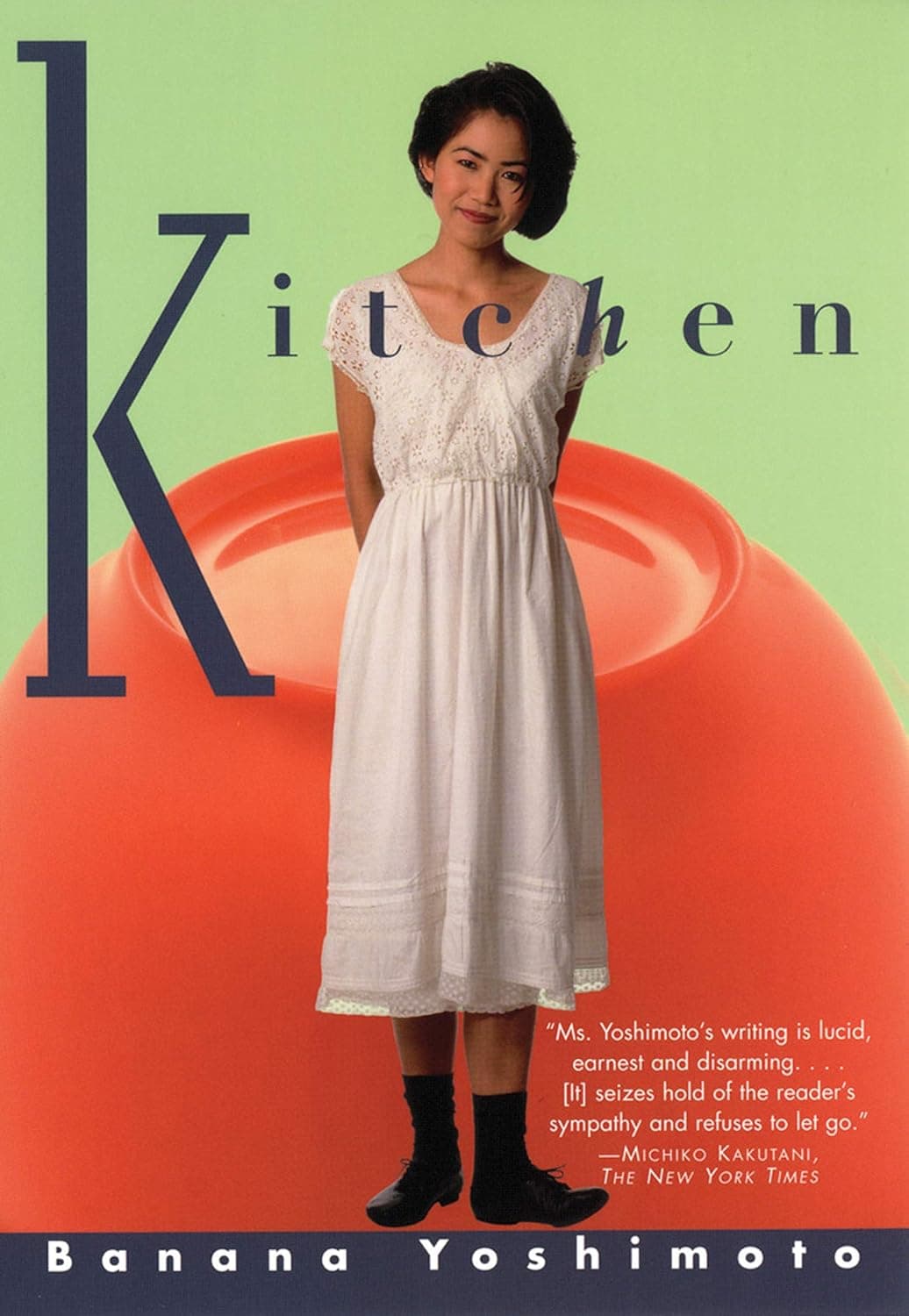
With the publication of Kitchen, the dazzling English-language debut that is still her best-loved book, the literary world realized that Banana Yoshimoto was a young writer of enduring talent whose work has quickly earned a place among the best of contemporary Japanese literature. Kitchen is an enchantingly original book that juxtaposes two tales about mothers, love, tragedy, and the power of the kitchen and home in the lives of a pair of free-spirited young women in contemporary Japan. Mikage, the heroine, is an orphan raised by her grandmother, who has passed away. Grieving, Mikage is taken in by her friend Yoichi and his mother (who is really his cross-dressing father) Eriko. As the three of them form an improvised family that soon weathers its own tragic losses, Yoshimoto spins a lovely, evocative tale with the kitchen and the comforts of home at its heart.
In a whimsical style that recalls the early Marguerite Duras, Kitchen and its companion story, Moonlight Shadow, are elegant tales whose seeming simplicity is the ruse of a very special writer whose voice echoes in the mind and the soul.
“Lucid, earnest and disarming . . . [It] seizes hold of the reader’s sympathy and refuses to let go.” —Michiko Kakutani, The New York Times
Add to your library to track progress and write reviews
Find Kitchen Banana Yoshimoto in PDF, EPUB, ebook, audiobook, print, or library editions.

1 books in catalog
Contemporary Japanese fiction experienced an explosive cultural phenomenon during the late 1980s following the publication of the debut novella Kitchen. Banana Yoshimoto wrote the novella while working as a waitress, launching a prolific career that brought her narrative focus on youth, grief, and emotional recovery to an international readership.
Born Mahoko Yoshimoto on July 24, 1964, in Tokyo, she grew up in a progressive creative family led by her father, the influential critic and poet Takaaki Yoshimoto. She studied literature at the Nihon University Division of Arts, where she earned her degree before adopting the pen name Banana Yoshimoto. Her literary debut arrived with Kitchen, which earned the Kaien Newcomer Writers Prize in 1987 and the Izumi Kyoka Literary Prize in 1988, rapidly generating widespread media interest termed Banana mania.
Yoshimoto continued her early acclaim with novels and short story collections such as Tugumi, which received the Yamamoto Shugoro Literary Prize in 1989, and Amrita, which won the Murasaki-shikibu Prize in 1995. Her popularity extended across international borders, earning multiple awards in Italy, including the Scanno Literary Prize in 1993, the Fendissime Literary Prize in 1996, the Maschera d'Argento Prize in 1999, and the Capri Award in 2011. Her literary works have been translated into more than thirty countries.
Yoshimoto's narrative style is characterized by concise prose, gentle pacing, and character-driven plots centered on contemporary youth, existential isolation, and recovery from trauma. Her stories often examine transient emotional moments and understated human connections, balancing tragedy with quiet resilience. By highlighting non-traditional family structures and sudden friendships, her prose captures fragile moments of personal transformation.