SSansFiction
The libraryCollectionsJournalStatsFor authors
Sign inJoin now
Sansfiction,

A digital library for books. Made by readers, for readers.

v 2.0 · 2026
The library
  • Discover
  • Collections
  • Book tracker
  • Journal
  • Stats
For authors
  • SF Links
  • Analytics
  • How it works
  • FAQ
Elsewhere
  • X / @sansfiction
  • Privacy
  • Terms
  • Contact
© 2026 SansFiction · Digital · GlobalA quiet room for your reading life.
The libraryCollectionsJournalStatsFor authors
Sign inJoin now →
Navigation
Library
Bookshelf
Journal
Discover
Collections
Tierlists
Stats
Profile
Author Page
Link Builder
Account
Sign in
S
G
BooksclassicsKindred
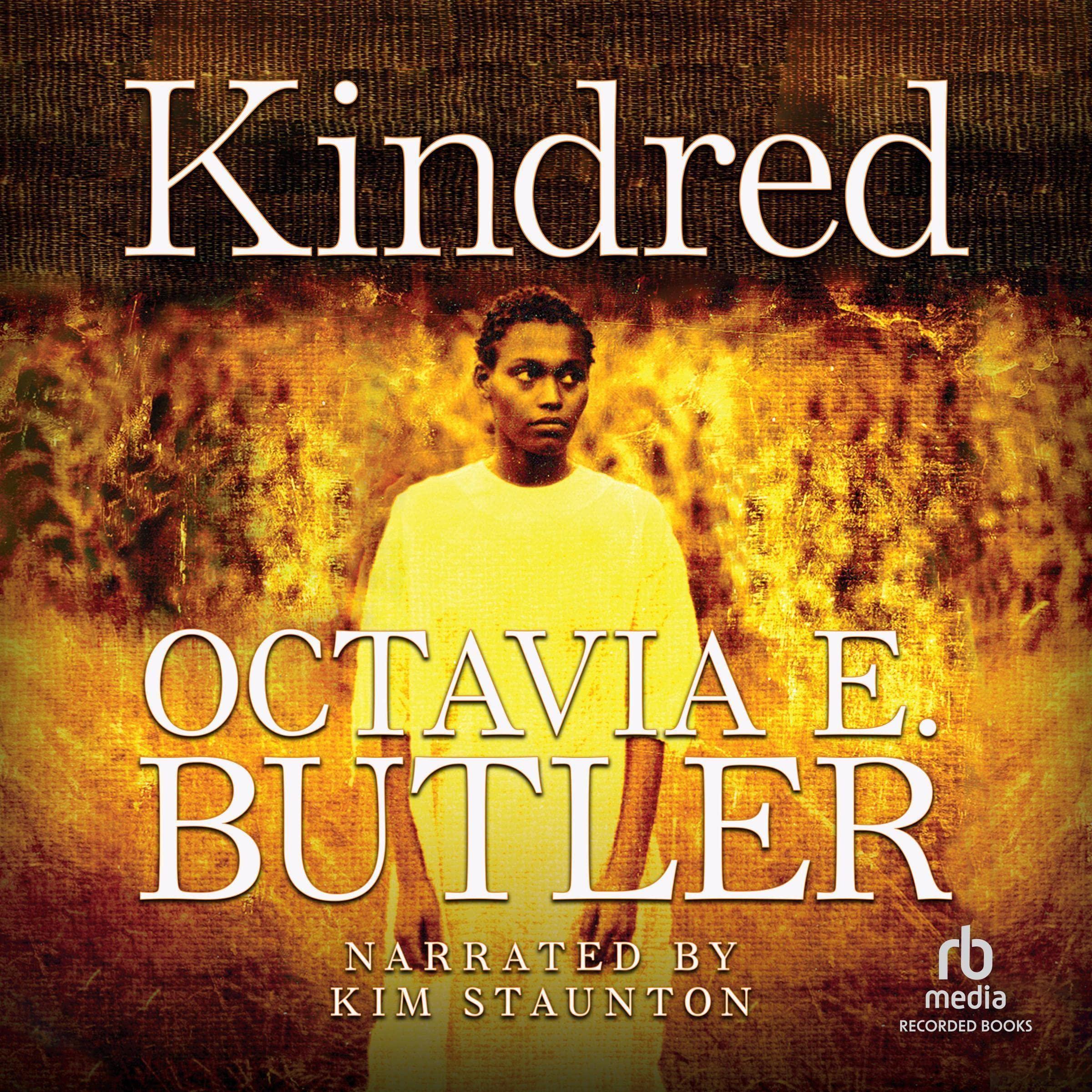
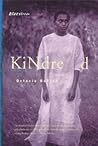
Cover of Kindred by Octavia E. Butler

Kindred,

by Octavia E. Butler

Ask AI
Rating4.4/ 5
Ratings618
Pages288
Reading Hours6h
Published1979
LanguageEnglish

§Synopsis

01

"Dana's 26th birthday celebration ends when she's ripped from 1976 California and thrust onto a Maryland slave plantation in 1815. Her mission: keep alive the white boy who will grow up to assault her ancestor—because without him, she'll never be born.

Every trip back grows more dangerous. Dana feels the lash, wears the chains, endures the daily terror that defined millions of lives. She can't just read about slavery's horrors—she lives them, bleeds from them, nearly breaks under them.

Butler doesn't let you observe from a safe distance. You're trapped in Dana's skin as she navigates impossible choices: submit to survive, or resist and risk everything. You'll feel her desperation as she fights to preserve her humanity while the plantation's brutality threatens to consume her."-- Provided by Amazon

§Our take

Butler called Kindred grim fantasy rather than science fiction, because the time travel has no scientific explanation, and that matters to how it works: Dana travels not to change history but to protect it, which turns the plot into a moral trap rather than a puzzle. The real engine is her bond with Rufus. Butler makes his cruelty hard to sit with precisely because Dana knows him from childhood and is repeatedly forced to protect him, and readers still argue over how much sympathy the book asks for.

The prose is fast and plain, which is why Kirkus thought it would reach well beyond science-fiction readers and why it became a staple of school and community reading programmes. It is a distressing book, but an unusually direct way into what slavery did to people on both sides of it.

§Themes

Genre blending
Butler called it grim fantasy because the time travel has no scientific basis, and critics place it variously in science fiction, neo-slave narrative, fantasy, and initiation novel.
Making slavery felt
A modern Black woman is pulled into early 19th-century Maryland, so the reader experiences the system through a character who knows it only as history.
Historical memory
Scholars read the 1976 setting as linking the nation's celebration of its past to unresolved racial conflict, and slavery's trauma as a repressed part of collective memory.
Kinship in the title
The title points both to literal blood ties across generations and to chosen community and obligation.
Dana and Rufus
Dana is forced to protect a boy she watches grow into a violent man, which makes their bond the novel's hardest and most argued-over element.

§How it was received

Kirkus's 1979 review called the prose fast and compelling, saying the book would appeal well beyond science-fiction readers. Over the decades it became a staple of college and high-school courses and community-wide read programs. The 2022 FX/Hulu series drew mixed to negative reactions, with critics arguing the time-travel element was underused and fans saying Butler's themes were lost; it was cancelled after one season.

§Read it if

  • You want fast, gripping prose on a heavy subject, even if you don't usually read science fiction
  • You want a novel that puts a modern sensibility inside the history of slavery
  • You value a resourceful, morally complicated heroine facing impossible choices

§Skip it if

  • Sexual violence and brutal depictions of slavery are too much for you right now.
  • You need the time travel explained; Butler deliberately leaves it as an unexplained device.

§Before you start

Reading experience
Pacing is fast and compelling but emotionally heavy, alternating between 1976 Los Angeles and a Maryland plantation.
Content notes
Slavery and racial violence, including beatings and racial slurs; Rape and attempted rape, sexual coercion and assault; Suicide and self-harm; Graphic violence, including a stabbing; A distressing read throughout, though Butler said she softened the harshest violence from her sources.

§Common questions

Is Kindred part of a series?
No, it's a stand-alone novel; Butler's best-selling book and not part of her Patternist series.
Why did Butler write Kindred?
She wrote it partly in response to a young Black Power activist who criticized older generations for submitting to white power, wanting to show what endurance costs.
What adaptations exist?
There's a 2001 audio drama, a 2017 graphic novel adapted by Damian Duffy and John Jennings, and an FX/Hulu series that premiered in December 2022 and was cancelled after one season.

§If you liked this

  • Beloved by Toni Morrison — Both treat slavery's trauma and memory within the neo-slave narrative tradition.
  • Slaughterhouse-Five by Kurt Vonnegut — Both use time displacement to confront historical atrocity.
  • Wild Seed by Octavia E. Butler — Butler's next novel, returning to the Patternist universe, and also about power, bondage and survival across generations.
  • The Underground Railroad by Colson Whitehead — A speculative-fiction treatment of American slavery.
  • The Water Dancer by Ta-Nehisi Coates — Slavery plus a speculative element of memory and travel.
Sources
  • Wikipedia
  • Kirkus Reviews
  • Common Sense Media
  • Mental Floss
  • NPR (via KAXE)
  • Wikipedia
  • Blavity
  • Bustle

Track this book

Add to your library to track progress and write reviews

§Genres
classics1fantasy1fiction1general1literature1science fiction1time travel1
§Content Warnings
§Moods
emotional2adventurous1challenging1dark1informative1medium-paced1mysterious1
§Tags
#diverse characters1#not diverse characters1#plot driven1#racial slurs1

§About the Author

Octavia E. Butler
Octavia E. Butler

5 books in catalog

Speculative fiction exploring power dynamics, human survival, and social transformation through a synthesis of science fiction, mythology, and African American experience marked the career of Octavia E. Butler. Best known for groundbreaking works such as Kindred and Parable of the Sower, Butler became one of the most prominent Black women writing science fiction, earning multiple Hugo, Locus, and Nebula awards during her life.

Career & Background

Born on June 22, 1947, in Pasadena, California, Octavia Estelle Butler was raised by her widowed mother and maternal grandmother after her father passed away. Extremely shy as a child, she found solace in libraries, reading fantasy and writing her own stories after deciding as a teenager that she could craft better fiction than the B-movies she watched on television. She attended Pasadena City College during the Black Power movement in the 1960s and later studied at California State University and the University of California, Los Angeles. While participating in a local writers workshop, she received encouragement from author Harlan Ellison to attend the Clarion Science Fiction Writers Workshop.

By the late 1970s, Butler had published her debut novel Patternmaster in 1976 and established a career as a full-time author. In 1995, she became the first science fiction writer to receive the MacArthur Foundation Grant. Throughout her career, she taught writing workshops and received a PEN Lifetime Achievement Award before eventually relocating to Washington state. Butler passed away in Seattle on February 24, 2006, at age 58 following a stroke. Her papers and literary manuscripts are preserved in the research collection at the Huntington Library in San Marino, California.

Writing Style & Themes

Butler's writing blends hard science fiction concepts with African American spiritualism, mythology, and psychological realism. Her works consistently explore themes of empathy, biological compromise, social hierarchy, and human adaptability under extreme environmental or social stress. Rather than relying on utopian tropes, she examined the difficult concessions required for community survival and the complex dynamics of power, consent, and bodily autonomy.

Major Works

  • Kindred — Published in 1979, this novel follows a modern Black woman involuntarily transported back in time to an antebellum Maryland plantation, directly confronting the brutal realities of American slavery.
  • Dawn — The 1987 opening novel of the Xenogenesis trilogy, depicting a human survivor forced to negotiate humanity's future with an alien species following global nuclear destruction.
  • Parable of the Sower — Published in 1993, this dystopian narrative introduces Lauren Olamina, a young woman navigating societal collapse in a climate-ravaged California while developing a philosophical belief system.
  • Parable of the Talents — The 1998 sequel to Parable of the Sower, continuing Lauren Olamina's story as her community faces religious fanaticism and political oppression in a fragmented future America.
  • Fledgling — Butler's final novel, published in 2005, which reimagines vampire lore through an amnesiac protagonist whose genetically modified symbiosis with humans raises questions of race and interdependence.

§Other Editions

Showing 2 of 30 editions
Cover of Kindred

Kindred

engAudible.comUnabridged Audiobook
Recorded Books20079781436116961
Amazon
Cover of Kindred

Kindred

engebook
Headline Publishing Group19799781472214829
§Genres
classics1fantasy1fiction1general1literature1science fiction1time travel1
§Content Warnings
§Moods
emotional2adventurous1challenging1dark1informative1medium-paced1mysterious1
§Tags
#diverse characters1#not diverse characters1#plot driven1#racial slurs1

Metadata

ISBN-139780739447789
ISBN-100739447785
ASINB002V1BKKK

Editions and availability

Find Kindred Octavia E. Butler in PDF, EPUB, ebook, audiobook, print, or library editions.

View on Amazon
Bookshop.orgGoogle Play BooksBarnes & NobleOpen Library

Featured In Lists

Book cover from this collectionBook cover from this collectionBook cover from this collectionBook cover from this collection
Book cover from this collection

The Esquire 75 Best Sci-Fi Books of All Time

74 books
Book cover from this collectionBook cover from this collectionBook cover from this collectionBook cover from this collection
Book cover from this collection

The 31 Best Fantasy Books Everyone Should Read

30 books
Book cover from this collectionBook cover from this collectionBook cover from this collectionBook cover from this collection
Book cover from this collection

Top 20 Ennui-Filled Magical Realism Reads

20 books
Book cover from this collectionBook cover from this collectionBook cover from this collectionBook cover from this collection
Book cover from this collection

Mother Horror's 101 Horror Books to Read Before You're Murdered

239 books