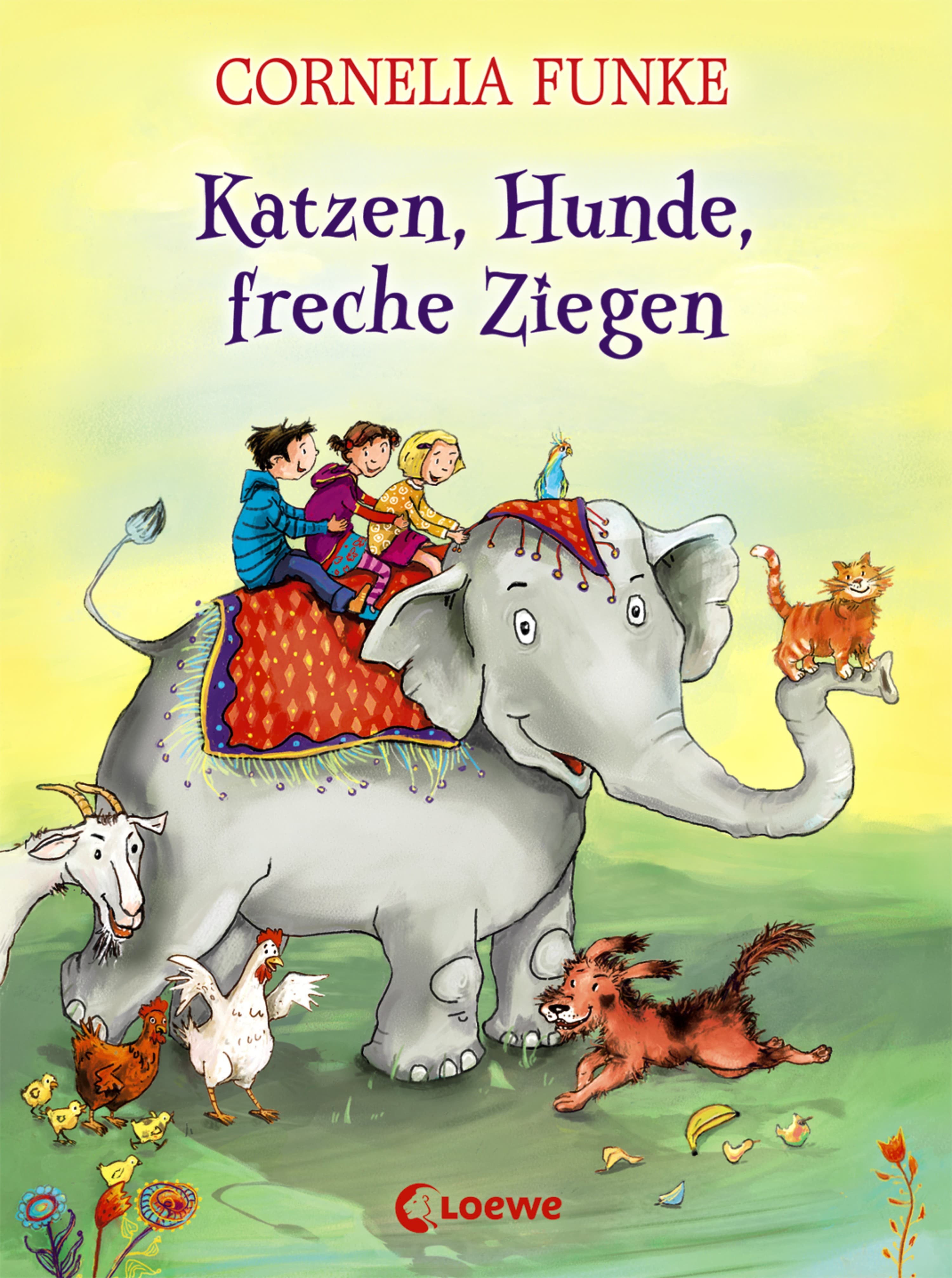

Cornelia Funke shifts the narrative lens away from human protagonists to explore the internal lives and social hierarchies of domestic and captive animals. Through a set of distinct perspectives, the collection examines the friction between instinctual desires for freedom and the structured environments imposed by human society. Whether it is a circus elephant questioning the monotony of her routine or a domestic dog grappling with the arrival of a feline rival, the stories focus on the moments where animals decide to reclaim their own agency.
The stakes are centered on emotional territory and the physical boundaries of the animals' worlds. Funke explores how curiosity drives characters to break out of their established roles, often leading to a clash between the safety of the known and the unpredictable nature of the "outside." The narrative maintains a balance between lighthearted observation and the genuine stress of navigating changing social dynamics within a household or a performance troupe.
The setting oscillates between the structured, repetitive environment of the circus and the quiet, territorial bounds of a family home. The atmosphere is grounded in reality but heightened by the vivid internal monologues of the animal protagonists. In this world, the primary "laws" are those of human expectation—the trick to be performed, the house rules to be followed—and the narrative tension arises when these laws are quietly or loudly defied. The environment is described through sensory details specific to each species, making the familiar human world feel alien and vast.
The initial character arcs focus on the disruption of the "status quo." For Bella, development begins with the psychological realization that her life is a loop, prompting a transition from a passive performer to an active explorer. For Tiger, the arc is centered on the insecurity of the domestic pack. His relationship with his owner is the anchor of his identity, and the introduction of a rival forces him to navigate feelings of jealousy and protective instinct. These dynamics establish a foundation for exploring how animals handle shifts in their social hierarchy.
Funke utilizes the "Secret Life of Animals" trope but strips away much of the saccharine sentimentality often found in the genre. Instead of animals existing solely for human benefit, they are portrayed with distinct personal motivations that often run counter to human convenience. The collection also plays with the "Great Escape" trope on a miniature scale, where a simple walk into a city becomes a high-stakes journey of self-discovery, highlighting the vast gap between an animal's potential and their confined reality.
Cornelia Funke shifts the narrative lens away from human protagonists to explore the internal lives and social hierarchies of domestic and captive animals. Through a set of distinct perspectives, the collection examines the friction between instinctual desires for freedom and the structured environments imposed by human society. Whether it is a circus elephant questioning the monotony of her routine or a domestic dog grappling with the arrival of a feline rival, the stories focus on the moments where animals decide to reclaim their own agency.
The stakes are centered on emotional territory and the physical boundaries of the animals' worlds. Funke explores how curiosity drives characters to break out of their established roles, often leading to a clash between the safety of the known and the unpredictable nature of the "outside." The narrative maintains a balance between lighthearted observation and the genuine stress of navigating changing social dynamics within a household or a performance troupe.
The setting oscillates between the structured, repetitive environment of the circus and the quiet, territorial bounds of a family home. The atmosphere is grounded in reality but heightened by the vivid internal monologues of the animal protagonists. In this world, the primary "laws" are those of human expectation—the trick to be performed, the house rules to be followed—and the narrative tension arises when these laws are quietly or loudly defied. The environment is described through sensory details specific to each species, making the familiar human world feel alien and vast.
The initial character arcs focus on the disruption of the "status quo." For Bella, development begins with the psychological realization that her life is a loop, prompting a transition from a passive performer to an active explorer. For Tiger, the arc is centered on the insecurity of the domestic pack. His relationship with his owner is the anchor of his identity, and the introduction of a rival forces him to navigate feelings of jealousy and protective instinct. These dynamics establish a foundation for exploring how animals handle shifts in their social hierarchy.
Funke utilizes the "Secret Life of Animals" trope but strips away much of the saccharine sentimentality often found in the genre. Instead of animals existing solely for human benefit, they are portrayed with distinct personal motivations that often run counter to human convenience. The collection also plays with the "Great Escape" trope on a miniature scale, where a simple walk into a city becomes a high-stakes journey of self-discovery, highlighting the vast gap between an animal's potential and their confined reality.
Add to your library to track progress and write reviews
Find Katzen, Hunde, freche Ziegen Cornelia Funke in PDF, EPUB, ebook, audiobook, print, or library editions.
7 books in catalog
7 books in catalog