№ 1 · If You Give...
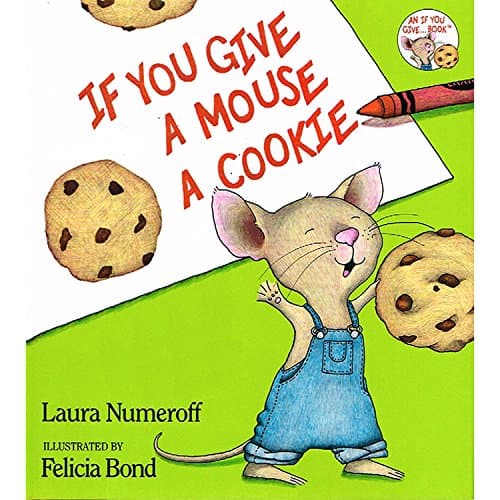
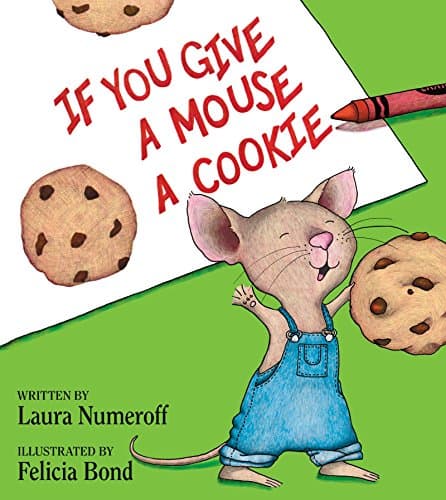
If you take a mouse to school, he'll ask you for your lunch box. When you give him your lunch box, he'll want a sandwich to go in it. And so begins this wonderful childrens' story, based on the lovable character from "If You Give a Mouse a Cookie."
If you take a mouse to school, he'll ask you for your lunch box. When you give him your lunch box, he'll want a sandwich to go in it. And so begins this wonderful childrens' story, based on the lovable character from "If You Give a Mouse a Cookie."
Add to your library to track progress and write reviews
Add to your library to track progress and write reviews
Find If You Give a Mouse a Cookie Big Book Laura Joffe Numeroff in PDF, EPUB, ebook, audiobook, print, or library editions.
Find If You Give a Mouse a Cookie Big Book Laura Joffe Numeroff in PDF, EPUB, ebook, audiobook, print, or library editions.

1 books in catalog
Circular cause-and-effect storytelling became a staple of modern picture book literature through a popular picture book series that begins with a simple, hospitable offering to a small animal. Author Laura Joffe Numeroff established this humorous narrative structure with her 1985 classic If You Give a Mouse a Cookie, which expanded into an enduring franchise of picture books featuring playful chain-reaction dilemmas. Her stories connect escalating child-centered requests with whimsical consequences, introducing young readers to foundational concepts of logic, sequence, and comedic rhythm.
Beyond her flagship franchise, Numeroff has written and illustrated dozens of original stories for early readers, spanning humorous character studies and relatable childhood experiences. Her work has reached millions of families and school classrooms, generating dozens of reprints, bestseller list entries, and charitable contributions to children's literacy causes.
Born on July 14, 1953, in Brooklyn, New York, Numeroff grew up as the youngest of three daughters in a household filled with art, music, and literature. By nine years old, she knew she wanted to pursue writing as a lifelong vocation. She attended Pratt Institute in Brooklyn, graduating with a degree in communications. Upon graduation, she secured a publishing contract for her debut children's book, Amy for Short, which was published by Macmillan in 1975.
Following her debut, Numeroff authored and self-illustrated several early children's titles through the late 1970s and early 1980s, including Phoebe Dexter Has Harriet Peterson's Sniffles, Walter, The Ugliest Sweater, and Beatrice Doesn't Want To. Her career reached widespread national prominence in 1985 with the publication of If You Give a Mouse a Cookie, illustrated by Felicia Bond. In addition to her writing, Numeroff has lectured at schools across California and donated a portion of her book royalties to First Book, a national nonprofit organization supporting children's literacy. She later moved to Los Angeles, California.
Numeroff's primary narrative technique relies on cumulative, circular logic where a seemingly simple gesture triggers an elaborate sequence of requests and activities. This predictable yet surprise-filled structure helps young children anticipate story turns, recognize cause-and-effect relationships, and practice narrative comprehension. Her prose maintains a light, reassuring tone that balances runaway comedic momentum with comforting resolution.
Her thematic focus centers on quintessential childhood emotions, daily struggles, and playful routines. In stories outside her circular series, such as The Chicken Sisters and Laura Numeroff's 10-Step Guide to Living with Your Monster, she uses gentle humor to explore independence, creative problem-solving, and nonconformity. Whether writing about energetic animals or reluctant children, her works emphasize warmth, patience, and visual playfulness.
1 books in catalog
Circular cause-and-effect storytelling became a staple of modern picture book literature through a popular picture book series that begins with a simple, hospitable offering to a small animal. Author Laura Joffe Numeroff established this humorous narrative structure with her 1985 classic If You Give a Mouse a Cookie, which expanded into an enduring franchise of picture books featuring playful chain-reaction dilemmas. Her stories connect escalating child-centered requests with whimsical consequences, introducing young readers to foundational concepts of logic, sequence, and comedic rhythm.
Beyond her flagship franchise, Numeroff has written and illustrated dozens of original stories for early readers, spanning humorous character studies and relatable childhood experiences. Her work has reached millions of families and school classrooms, generating dozens of reprints, bestseller list entries, and charitable contributions to children's literacy causes.
Born on July 14, 1953, in Brooklyn, New York, Numeroff grew up as the youngest of three daughters in a household filled with art, music, and literature. By nine years old, she knew she wanted to pursue writing as a lifelong vocation. She attended Pratt Institute in Brooklyn, graduating with a degree in communications. Upon graduation, she secured a publishing contract for her debut children's book, Amy for Short, which was published by Macmillan in 1975.
Following her debut, Numeroff authored and self-illustrated several early children's titles through the late 1970s and early 1980s, including Phoebe Dexter Has Harriet Peterson's Sniffles, Walter, The Ugliest Sweater, and Beatrice Doesn't Want To. Her career reached widespread national prominence in 1985 with the publication of If You Give a Mouse a Cookie, illustrated by Felicia Bond. In addition to her writing, Numeroff has lectured at schools across California and donated a portion of her book royalties to First Book, a national nonprofit organization supporting children's literacy. She later moved to Los Angeles, California.
Numeroff's primary narrative technique relies on cumulative, circular logic where a seemingly simple gesture triggers an elaborate sequence of requests and activities. This predictable yet surprise-filled structure helps young children anticipate story turns, recognize cause-and-effect relationships, and practice narrative comprehension. Her prose maintains a light, reassuring tone that balances runaway comedic momentum with comforting resolution.
Her thematic focus centers on quintessential childhood emotions, daily struggles, and playful routines. In stories outside her circular series, such as The Chicken Sisters and Laura Numeroff's 10-Step Guide to Living with Your Monster, she uses gentle humor to explore independence, creative problem-solving, and nonconformity. Whether writing about energetic animals or reluctant children, her works emphasize warmth, patience, and visual playfulness.
If You Give...
If You Give...