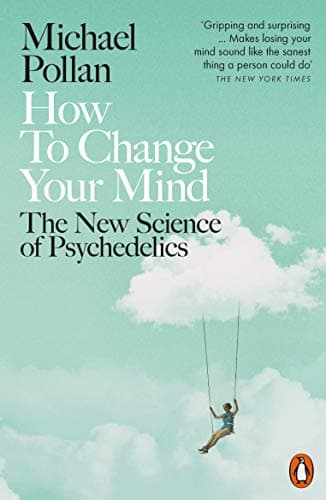
When Michael Pollan set out to research how LSD and psilocybin (the active ingredient in magic mushrooms) are being used to provide relief to people suffering from difficult-to-treat conditions such as depression, addiction and anxiety, he did not intend to write what is undoubtedly his most personal book. But upon discovering how these remarkable substances are improving the lives not only of the mentally ill but also of healthy people coming to grips with the challenges of everyday life, he decided to explore the landscape of the mind in the first person as well as the third. Thus began a singular adventure into various altered states of consciousness, along with a dive deep into both the latest brain science and the thriving underground community of psychedelic therapists. Pollan sifts the historical record to separate the truth about these mysterious drugs from the myths that have surrounded them since the 1960s, when a handful of psychedelic evangelists inadvertently catalyzed a powerful backlash against what was then a promising field of research.
Add to your library to track progress and write reviews
Find How to Change Your Mind The New Science of Psychedelics Michael Pollan in PDF, EPUB, ebook, audiobook, print, or library editions.

3 books in catalog
Examining the complex intersections of nature, culture, agriculture, and human consciousness has reshaped modern understanding of food systems and mind-altering plants. Journalist, activist, and professor Michael Pollan has spent over three decades writing about the places where the human and natural worlds meet: on our plates, in our farms and gardens, in the built environment, and within our minds. Through best-selling books and investigative reporting, his work examines how human choices and natural systems continuously shape one another.
Pollan earned his bachelor's degree from Bennington College in 1977, studied at Oxford University, and completed a master's degree in English at Columbia University in 1981. He served as executive editor and contributing editor at Harper's Magazine and became a long-time contributing writer for The New York Times Magazine in 1995. In academia, he served for many years as the Knight Professor of Journalism at the UC Berkeley Graduate School of Journalism and co-founded the UC Berkeley Center for the Science of Psychedelics in 2020. He also serves as the Lewis K. Chan Arts Lecturer and professor at Harvard University, bringing investigative rigor to both teaching and writing.
Pollan's literary technique combines investigative journalism, historical analysis, personal memoir, and scientific reporting. Rather than adopting an authoritative posture, he frequently introduces readers to a central cognitive dilemma by placing himself directly inside the inquiry—such as evaluating the ethics of eating meat while dining at a steakhouse. His work routinely traces how plants, animals, and natural compounds co-evolve with human desire, exploring the historical and cultural forces behind dietary habits, architectural choices, and alterations of human consciousness.