In what is widely hailed as the best of his many novels, Charles Bukowski details the long, lonely years of his own hardscrabble youth in the raw voice of alter ego Henry Chinaski. From a harrowingly cheerless childhood in Germany through acne-riddled high school years and his adolescent discoveries of alcohol, women, and the Los Angeles Public Library's collection of D. H. Lawrence, Ham on Rye offers a crude, brutal, and savagely funny portrait of an outcast's coming-of-age during the desperate days of the Great Depression.

In what is widely hailed as the best of his many novels, Charles Bukowski details the long, lonely years of his own hardscrabble youth in the raw voice of alter ego Henry Chinaski. From a harrowingly cheerless childhood in Germany through acne-riddled high school years and his adolescent discoveries of alcohol, women, and the Los Angeles Public Library's collection of D. H. Lawrence, Ham on Rye offers a crude, brutal, and savagely funny portrait of an outcast's coming-of-age during the desperate days of the Great Depression.
Add to your library to track progress and write reviews
Find Ham on Rye Charles Bukowski in PDF, EPUB, ebook, audiobook, print, or library editions.

2 books in catalog
Depicting the gritty reality of urban life through unfiltered poetry and prose, the underground literary canon includes iconic collections like Notes of a Dirty Old Man and semi-autobiographical novels detailing the struggles of working-class survival. Charles Bukowski built an extensive body of work that spans thousands of poems, hundreds of short stories, and six novels, resulting in more than 60 books published during and after his lifetime.
His candid explorations of low-income existence and physical hardship reshaped late twentieth-century American fiction and poetry, earning wide recognition for directness and refusal to gloss over the harsher aspects of daily life.
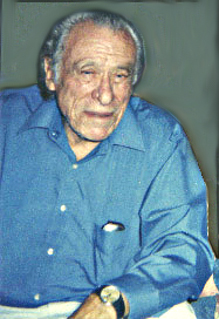
Born Heinrich Karl Bukowski in Andernach, Germany, on August 16, 1920, to an American soldier father and a German mother, he relocated to the United States at a young age and grew up in Los Angeles, California. He attended Los Angeles City College from 1939 to 1941 before leaving school to travel across the country, spending time in New York, Philadelphia, and New Orleans while seeking to establish himself as a writer. After stepping away from writing around 1946, he spent a decade taking menial jobs—including work as a dishwasher and postal worker—and drinking heavily. Following a severe bleeding ulcer, he returned to writing in the mid-1950s, grounding his narrative voice in firsthand experiences of labor and financial instability.
Bukowski spent most of his adult life residing in Los Angeles, an environment whose physical geography and social atmosphere deeply informed his writing. As a prolific author in underground publishing, he gradually cultivated a dedicated audience through small-press journals and newspaper columns before reaching wider national and international notice. His reputation grew steadily over the decades, leading Time magazine in 1986 to call Bukowski a laureate of American lowlife. He continued publishing prolifically until his death on March 9, 1994, in San Pedro, California.
Bukowski's literary style is defined by graphic imagery, explicit language, and a direct, conversational rhythm that shuns traditional poetic embellishment. His work places consistent emphasis on the ordinary lives of poor Americans, the routine drudgery of low-paying jobs, heavy alcohol consumption, complicated relationships with women, and the creative process of writing itself. Critics noted a nothing-to-lose truthfulness in his prose and verse, observing that he presented autobiographical reflections without attempting to depict his alter egos as heroic or virtuous.
While some contemporary reviewers found his violent images and blunt depictions of sex and alcohol abuse provocative, others identified a satirical critique of traditional machismo underlying his routine themes. By pairing dark humor with a transparent focus on urban blights, social alienation, and personal vulnerability, his writing established a distinct voice in post-war American literature.

2 books in catalog
Depicting the gritty reality of urban life through unfiltered poetry and prose, the underground literary canon includes iconic collections like Notes of a Dirty Old Man and semi-autobiographical novels detailing the struggles of working-class survival. Charles Bukowski built an extensive body of work that spans thousands of poems, hundreds of short stories, and six novels, resulting in more than 60 books published during and after his lifetime.
His candid explorations of low-income existence and physical hardship reshaped late twentieth-century American fiction and poetry, earning wide recognition for directness and refusal to gloss over the harsher aspects of daily life.
Born Heinrich Karl Bukowski in Andernach, Germany, on August 16, 1920, to an American soldier father and a German mother, he relocated to the United States at a young age and grew up in Los Angeles, California. He attended Los Angeles City College from 1939 to 1941 before leaving school to travel across the country, spending time in New York, Philadelphia, and New Orleans while seeking to establish himself as a writer. After stepping away from writing around 1946, he spent a decade taking menial jobs—including work as a dishwasher and postal worker—and drinking heavily. Following a severe bleeding ulcer, he returned to writing in the mid-1950s, grounding his narrative voice in firsthand experiences of labor and financial instability.
Bukowski spent most of his adult life residing in Los Angeles, an environment whose physical geography and social atmosphere deeply informed his writing. As a prolific author in underground publishing, he gradually cultivated a dedicated audience through small-press journals and newspaper columns before reaching wider national and international notice. His reputation grew steadily over the decades, leading Time magazine in 1986 to call Bukowski a laureate of American lowlife. He continued publishing prolifically until his death on March 9, 1994, in San Pedro, California.
Bukowski's literary style is defined by graphic imagery, explicit language, and a direct, conversational rhythm that shuns traditional poetic embellishment. His work places consistent emphasis on the ordinary lives of poor Americans, the routine drudgery of low-paying jobs, heavy alcohol consumption, complicated relationships with women, and the creative process of writing itself. Critics noted a nothing-to-lose truthfulness in his prose and verse, observing that he presented autobiographical reflections without attempting to depict his alter egos as heroic or virtuous.
While some contemporary reviewers found his violent images and blunt depictions of sex and alcohol abuse provocative, others identified a satirical critique of traditional machismo underlying his routine themes. By pairing dark humor with a transparent focus on urban blights, social alienation, and personal vulnerability, his writing established a distinct voice in post-war American literature.