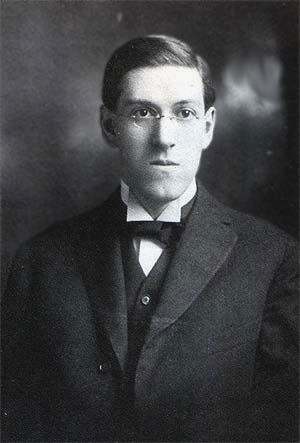
The creation of a vast lore surrounding ancient, alien entities and forbidden grimoires redefined twentieth-century weird fiction and supernatural horror. Howard Phillips Lovecraft, born in Providence, Rhode Island, pioneered a distinct branch of speculative narrative centered on human insignificance within an indifferent cosmos. His interconnected stories, most famously showcased in works like At the Mountains of Madness, established a mythology where mortal curiosity leads to psychological devastation rather than enlightenment.
Career & Background
Howard Phillips Lovecraft spent most of his life in New England, primarily residing in Providence, Rhode Island. Born on August 20, 1890, to Winfield Scott Lovecraft and Sarah Susan Phillips Lovecraft, he was largely raised by his mother, aunts, and his maternal grandfather, Whipple V. Phillips, who encouraged his early intellectual pursuits. Although lifelong poor health prevented him from attending college, Lovecraft pursued self-education in astronomy, chemistry, and classical literature. In 1914, he joined the United Amateur Press Association, an organization that reconnected him to creative writing and introduced him to key correspondents such as Robert E. Howard, Clark Ashton Smith, and Frank Belknap Long. Following a brief marriage to Sonia Greene in New York City from 1924 to 1926, Lovecraft returned to Providence. Throughout his career, he earned a precarious living as a ghostwriter and editor, placing his own horror and science fiction in pulp magazines like Weird Tales. Though his readership remained modest during his lifetime before his death on March 15, 1937, his posthumous reputation grew immensely.
Writing Style & Themes
Lovecraft's core thematic contribution was cosmic horror, founded on the premise that human life is inconsequential to an incomprehensible and alien universe. His fiction challenged the optimistic, human-centered values of the Enlightenment, Romanticism, and traditional Christianity. Protagonists in his tales frequently achieve the mirror-opposite of traditional gnosis or mysticism, suffering severe psychological breakdown upon glimpsing ultimate reality. A central pillar of his lore is the Cthulhu Mythos, featuring human-nullifying entities and forbidden texts such as the fictional grimoire Necronomicon. Drawing literary inspiration from Gothic fiction and Edgar Allan Poe, Lovecraft combined atmospheric, adjective-dense prose with meticulous pseudoscientific realism to heighten the unsettling nature of his weird tales.
Major Works
- At the Mountains of Madness — A seminal novella following an Antarctic expedition that discovers the ancient, terrifying ruins of an extraterrestrial civilization.
- Dagon and Other Macabre Tales — A foundational collection of early short stories exploring ocean horrors and the beginnings of cosmic dread.
- Tales for a Stormy Night: A Pandora's Box of Classic Chillers — An anthology gathering classic horror and weird fiction stories from influential authors of the genre.