Margaret Mitchell's monumental epic of the South won a Pulitzer Prize, gave rise to the most popular motion picture of our time, and inspired a sequel that became the fastest selling novel of the century. It is one of the most popular books ever written: more than 28 million copies of the book have been sold in more than 37 countries. Today, more than 60 years after its initial publication, its achievements are unparalleled, and it remains the most revered American saga and the most beloved work by an American writer...
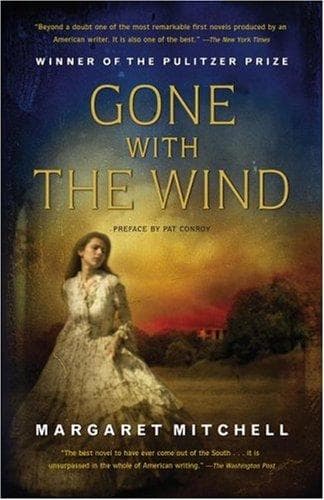
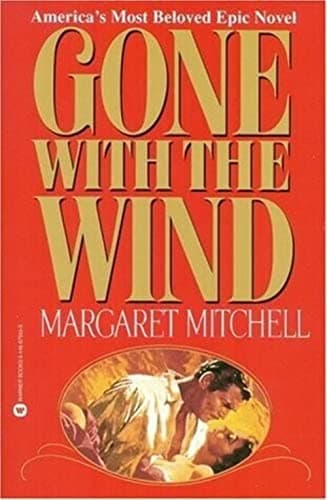
Margaret Mitchell's monumental epic of the South won a Pulitzer Prize, gave rise to the most popular motion picture of our time, and inspired a sequel that became the fastest selling novel of the century. It is one of the most popular books ever written: more than 28 million copies of the book have been sold in more than 37 countries. Today, more than 60 years after its initial publication, its achievements are unparalleled, and it remains the most revered American saga and the most beloved work by an American writer...
Add to your library to track progress and write reviews
Add to your library to track progress and write reviews
Find Gone with the Wind, Part 1 Margaret Mitchell in PDF, EPUB, ebook, audiobook, print, or library editions.
Find Gone with the Wind, Part 1 Margaret Mitchell in PDF, EPUB, ebook, audiobook, print, or library editions.

2 books in catalog
The American Civil War and Reconstruction era provided the backdrop for one of the most widely read historical novels in twentieth-century fiction, Gone with the Wind. Written by Margaret Mitchell, the book explores southern life, wartime disruption, and social transformation through the experiences of its central characters in Georgia.
Margaret Mitchell was born on November 8, 1900, in Atlanta, Georgia, into a family deeply tied to the history of the American South. Her ancestral roots in Georgia extended back generations; her forebears fought in the American Revolution and the War of 1812, while her grandfather served in the Civil War. Raised on family stories of wartime struggles and local history, Mitchell attended Smith College in Massachusetts before returning to Atlanta, where she pursued a journalism career writing features for The Atlanta Journal in the 1920s.
In 1926, after an ankle injury left her temporarily immobilized, Mitchell began drafting the manuscript that would become Gone with the Wind. She worked quietly on the novel over several years, sharing the draft with few people until a publisher acquired it. Upon its publication in 1936, the novel became an unprecedented commercial success, earning the National Book Award for Most Distinguished Novel of 1936 and the Pulitzer Prize for Fiction in 1937. Mitchell passed away on August 16, 1949, after being struck by an automobile in Atlanta. Posthumous releases later brought her early novella Lost Laysen and collections of her journalism to public light.
Mitchell's narrative style reflects her background in journalism, combining direct pacing with detailed historical scene setting. Drawing on oral histories and family recollections gathered during her youth in Atlanta, she depicted the antebellum period, the destruction wrought by military conflict, and the economic realignments of the Reconstruction era.
Her work prominently explores themes of survival, adaptability, social shift, and personal determination under extreme hardship. Through the character of Scarlett O'Hara, Mitchell examined the choices individuals make when faced with the collapse of their accustomed social order, creating a story that achieved enduring global readership and inspired a landmark 1939 film adaptation.
2 books in catalog
The American Civil War and Reconstruction era provided the backdrop for one of the most widely read historical novels in twentieth-century fiction, Gone with the Wind. Written by Margaret Mitchell, the book explores southern life, wartime disruption, and social transformation through the experiences of its central characters in Georgia.
Margaret Mitchell was born on November 8, 1900, in Atlanta, Georgia, into a family deeply tied to the history of the American South. Her ancestral roots in Georgia extended back generations; her forebears fought in the American Revolution and the War of 1812, while her grandfather served in the Civil War. Raised on family stories of wartime struggles and local history, Mitchell attended Smith College in Massachusetts before returning to Atlanta, where she pursued a journalism career writing features for The Atlanta Journal in the 1920s.
In 1926, after an ankle injury left her temporarily immobilized, Mitchell began drafting the manuscript that would become Gone with the Wind. She worked quietly on the novel over several years, sharing the draft with few people until a publisher acquired it. Upon its publication in 1936, the novel became an unprecedented commercial success, earning the National Book Award for Most Distinguished Novel of 1936 and the Pulitzer Prize for Fiction in 1937. Mitchell passed away on August 16, 1949, after being struck by an automobile in Atlanta. Posthumous releases later brought her early novella Lost Laysen and collections of her journalism to public light.
Mitchell's narrative style reflects her background in journalism, combining direct pacing with detailed historical scene setting. Drawing on oral histories and family recollections gathered during her youth in Atlanta, she depicted the antebellum period, the destruction wrought by military conflict, and the economic realignments of the Reconstruction era.
Her work prominently explores themes of survival, adaptability, social shift, and personal determination under extreme hardship. Through the character of Scarlett O'Hara, Mitchell examined the choices individuals make when faced with the collapse of their accustomed social order, creating a story that achieved enduring global readership and inspired a landmark 1939 film adaptation.