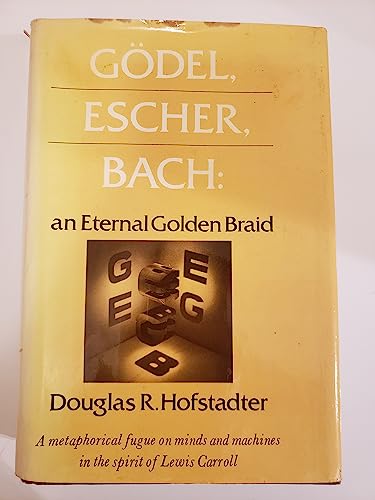
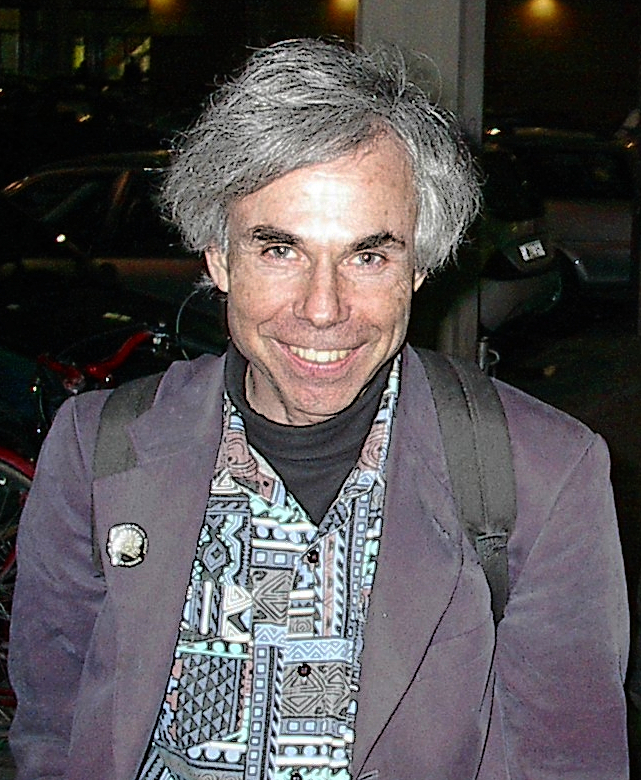
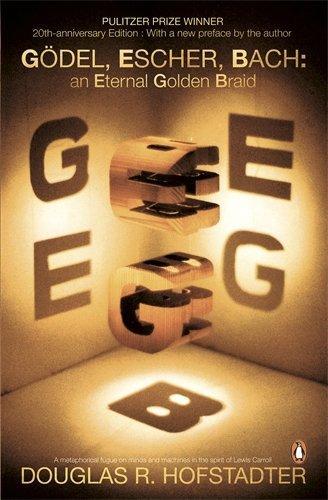
Interweaving philosophy, cognitive science, mathematics, and music, the Pulitzer Prize-winning book Gödel, Escher, Bach: An Eternal Golden Braid offers a profound exploration of human consciousness, self-reference, and cognitive processing. Douglas R. Hofstadter, an American scholar of cognitive science, physics, and comparative literature, established himself through this foundational text as a pioneering thinker on how symbolic systems give rise to mind, perception, and meaning.
Career & Background
Born in New York City in 1945, Douglas R. Hofstadter completed a B.S. in mathematics at Stanford University in 1965 before pursuing graduate studies in physics at the University of Oregon, earning his M.S. in 1972 and his Ph.D. in 1975. He subsequently joined Indiana University Bloomington, where he served as College of Arts and Sciences Distinguished Professor of Cognitive Science and Comparative Literature and as Director of the Center for Research on Concepts and Cognition. In addition to his university research in artificial intelligence, high-level perception, and creative analogy-making, Hofstadter communicated complex scientific concepts to broad audiences through his long-running column for Scientific American.
Writing Style & Themes
Hofstadter's writing is distinguished by its playful structural forms, recursive dialogues, ambigrams, and intricate analogies designed to illustrate complex formal systems. His academic and literary inquiry focuses on the nature of the self, consciousness, artificial intelligence, translation, and discovery in physics and mathematics. As documented in Wikipedia records through 2021, his interdisciplinary perspective spans both cognitive science and comparative literature. Hofstadter has also engaged deeply with foundational texts in computation and intelligence, including contributing a major preface to Andrew Hodges's seminal volume Alan Turing: the enigma.
Major Works
- Gödel, Escher, Bach: an Eternal Golden Braid — First published in 1979, this acclaimed work—also rendered as Gödel, Escher, Bach: An Eternal Golden Braid—won both the Pulitzer Prize for general nonfiction and a National Book Award for Science. It explores how cognitive self-awareness and mind emerge from recursive formal structures.
- I Am a Strange Loop — Published in 2007, this book expands upon Hofstadter's theories of consciousness and personal identity, winning the Los Angeles Times Book Prize for Science and Technology.
- Alan Turing: the enigma — Reflecting his deep commitment to the history and philosophy of artificial intelligence, Hofstadter provided a key preface for this definitive biography of computer science pioneer Alan Turing.