§Synopsis
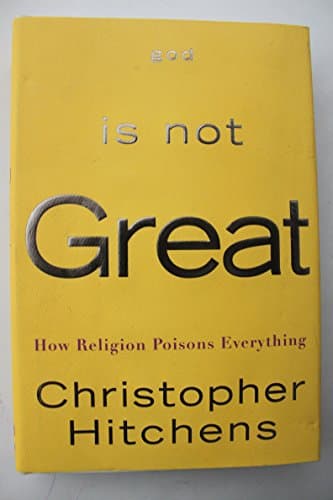
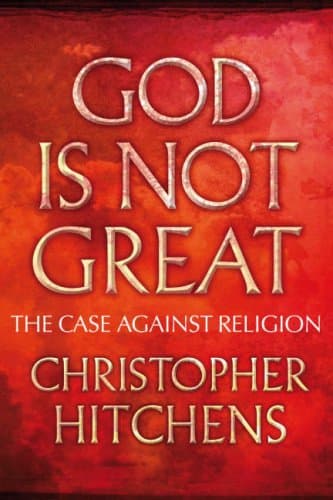
01"A case against religion and a description of the ways in which religion is man-made"--Provided by the publisher.
"A case against religion and a description of the ways in which religion is man-made"--Provided by the publisher.
Add to your library to track progress and write reviews
Find God Is Not Great: The Case Against Religion Christopher Hitchens in PDF, EPUB, ebook, audiobook, print, or library editions.
5 books in catalog
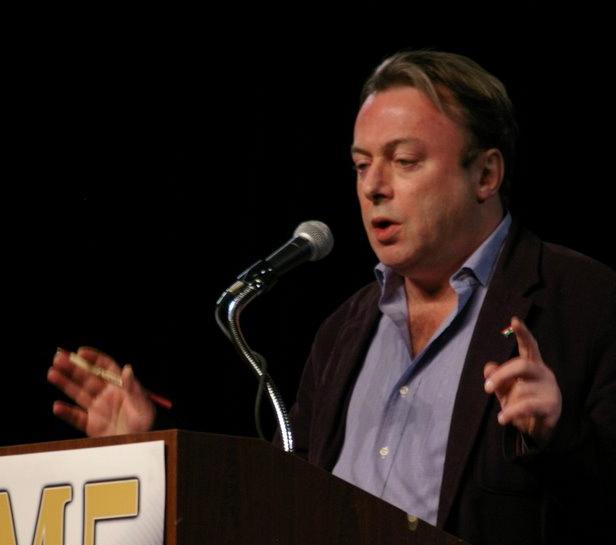
Polemics, political reportage, and biting literary criticism define a four-decade career of public intellectual commentary, most prominently displayed in the bestseller God Is Not Great: The Case Against Religion. Christopher Hitchens authored and edited more than twenty books and pamphlets, examining theology, foreign policy, and literary figures with sharp rhetoric and philosophical skepticism.
Known as one of the prominent figures of New Atheism, Hitchens formulated an epistemological razor stating that what can be asserted without evidence can also be dismissed without evidence. His writings ranged from rigorous foreign correspondence to personal reflection, offering readers incisive analysis across journalism and literature.
Born in Portsmouth, England, in 1949, Christopher Eric Hitchens was the son of a British naval officer and a former Wren. He attended Balliol College at the University of Oxford, graduating in 1970 with a degree in philosophy, politics, and economics. He began his journalism career in London, writing for publications such as the Times Higher Education Supplement, the New Statesman, the Daily Express, and the Times Literary Supplement. In 1981, Hitchens emigrated to the United States. He subsequently became a prominent columnist and editor for American and British periodicals, contributing regular columns to The Nation from 1982 to 2002 and serving as a contributing editor for Vanity Fair from 1992 until his death. His reporting also appeared regularly in Slate, The Atlantic, Harper's, World Affairs, and Free Inquiry.
Alongside his full-time journalism, Hitchens held academic positions, serving as a visiting professor of liberal studies at the New School in New York City and as the I.F. Stone professor at the Graduate School of Journalism at the University of California, Berkeley. Throughout his career, his political perspectives evolved from early socialist activism to controversial stances later in life, including his support for the 2003 invasion of Iraq. A father of three children, Hitchens became a naturalized United States citizen in 2007. He continued writing and traveling extensively for foreign reporting until his death from cancer in December 2011 at the age of 62.
Hitchens was distinguished by a forceful, eloquent style grounded in classic literary prose and argumentative precision. His work repeatedly confronted state power, religious orthodoxy, and totalitarian ideology, producing trenchant critiques of prominent public figures including Mother Teresa and Henry Kissinger. His literary criticism reflected wide-ranging erudition, frequently engaging with figures such as George Orwell and highlighting classic literature.
His rhetorical methodology often rested on rigorous evidentiary demands, popularizing the principle that assertions made without evidence require no evidence to refute. Whether writing autobiographical memoirs, essay collections, or investigative political books, Hitchens combined personal anecdote with historical context, producing polemical prose designed to challenge accepted orthodoxy.