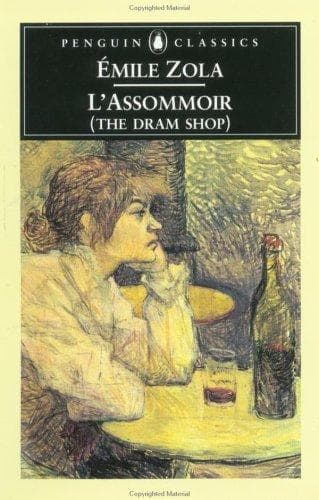
The twenty-volume novel sequence Les Rougon-Macquart remains among the most detailed social examinations of nineteenth-century France, tracing the hereditary and environmental influences on a single family under the Second Empire. French journalist and novelist Émile Zola established the school of literary naturalism through this massive undertaking and earlier works, examining working-class life, industry, and social corruption with uncompromising frankness.
Career & Background
Born in Paris in 1840 and raised in Aix-en-Provence, Zola worked at a Paris publishing house during the 1860s while developing his voice as a journalist and fiction writer. In 1867, he published Thérèse Raquin, a gruesome psychological novel that put his theories of deterministic heredity and environment into practice. Between 1871 and 1893, he wrote his twenty-novel cycle, achieving both immense sales and intense public controversy as his works were frequently attacked or banned for their sordid details.
Zola was also a prominent political figure whose commitment to justice led to major national consequences. In 1898, he published the famous open letter "J'Accuse...!" in defense of Alfred Dreyfus, a French Army officer falsely convicted of treason. Convicted of libel for his public defense, Zola fled to England in exile before returning after receiving amnesty. He died in Paris in September 1902 from carbon monoxide poisoning caused by a stopped-up chimney, just months before Dreyfus was officially exonerated.
Writing Style & Themes
As the principal practitioner of literary naturalism, Zola approached fiction with a methodological rigor influenced by contemporary scientific theories. His narrative approach framed human behavior as the direct product of inherited traits and social surroundings, rejecting romanticized melodrama in favor of precise observational realism. This perspective allowed him to portray working-class struggles, institutional decay, prostitution, and labor conflicts with raw honesty.
Major Works
- Thérèse Raquin — Published in 1867, this early novel put Zola's naturalist theories into practice through a dark study of murder, guilt, and psychological deterioration.
- Germinal — Published in 1885 as part of the Les Rougon-Macquart cycle, this powerful novel details a harsh labor strike among coal miners in northern France.
- Nana — Appearing in 1880, this novel in the Les Rougon-Macquart series explores prostitution, ambition, and moral decline in high-society Paris.
- The Beast Within — A compelling installment in the Les Rougon-Macquart saga that combines a psychological thriller with an analysis of human instincts and railway industrialism.