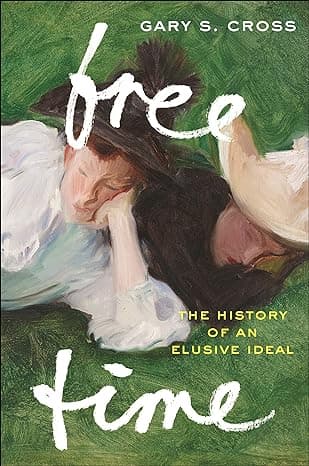
Free time, one of life’s most precious things, often feels unfulfilling. But why? And how did leisure activities transition from strolling in the park for hours to “doomscrolling” on social media for thirty minutes?
Today, despite the promise of modern industrialization, many people experience both a scarcity of free time and a disappointment in it. Free Time offers a broad historical explanation of why our affluent society does not afford more time away from work and why that time is often unsatisfying. Gary S. Cross explores the cultural, social, economic, and political history, especially of the past 250 years to understand the roots of our conceptions of free time and its use. By the end of the nineteenth century, a common expectation was that industrial innovations would lead to a progressive reduction of work time and a subsequent rise in free time devoted to self-development and social engagement. However, despite significant changes in the early twentieth century, both goals were frustrated, thus leading to the contemporary dilemma.
Cross touches on leisure of all kinds, from peasant festivals and aristocratic pleasure gardens to amusement parks, movie theaters and organized sports to internet surfing, and even the use of alcohol and drugs. This wide-ranging cultural and social history explores the industrial-era origins of our modern obsession with work and productivity, but also the historical efforts to liberate time from work and cultivate free time for culture. Insightful and informative, this book is sure to help you make sense of your own relationship to free time.
Add to your library to track progress and write reviews
1 books in catalog