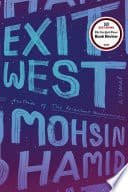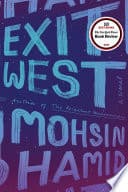
"In a country teetering on the brink of civil war, two young people meet-- sensual, fiercely independent Nadia and gentle, restrained Saeed. They embark on a furtive love affair, and are soon cloistered in a premature intimacy by the unrest roiling their city. When it explodes, turning familiar streets into a patchwork of checkpoints and bomb blasts, they begin to hear whispers about doors-- doors that can whisk people far away, if perilously and for a price. As the violence escalates, Nadia and Saeed decide that they no longer have a choice. Leaving their homeland and their old lives behind, they find a door and step through. [This book] follows the couple as they emerge into an alien and uncertain future, struggling to hold on to each other, to their past, to the very sense of who they are."--From regular print book.
Add to your library to track progress and write reviews
Find Exit West Mohsin Hamid in PDF, EPUB, ebook, audiobook, print, or library editions.

2 books in catalog
Exploring themes of globalization, migration, and identity through inventive narrative structures, modern international fiction addresses the shifting nature of human connection across borders. Contemporary novelist Mohsin Hamid gained widespread literary recognition with his 2007 novel The Reluctant Fundamentalist, a dramatic monologue examining post-September 11 identity that became an international bestseller and Booker Prize finalist.
Translated into over forty languages, his published body of work blends concise prose with imaginative premises, ranging from self-help satire to magical realism.
Born on July 23, 1971, in Lahore, Pakistan, Hamid spent his youth living between Pakistan and the United States. He studied international relations at Princeton University and later earned a law degree from Harvard Law School. Before committing to full-time creative writing, he worked as a management consultant in New York and London and later as a brand consultant.
Beyond his fiction writing, Hamid helped establish the Lahore Literary Festival, the Lahore Biennale, and the LUMS Young Writers Workshop. He was elected a Fellow of the Royal Society of Literature in 2018 and has written non-fiction essays for publications such as the New York Times, the Guardian, the New Yorker, and the New York Review of Books.
Hamid's narrative approach frequently relies on distinctive stylistic constraints and structural frameworks designed to directly engage the reader. Works such as The Reluctant Fundamentalist employ second-person address and monologue framing to challenge reader assumptions, while How to Get Filthy Rich in Rising Asia adopts the conventions of a self-help guide to trace personal relationships and economic change in a rapidly urbanizing society.
His thematic focus centers heavily on globalization, class dynamics, political radicalization, and human displacement. In novels like Exit West, he incorporates elements of magical realism—such as black doors that instantly transport individuals across international borders—to examine the universal realities of refugees and migrant communities.