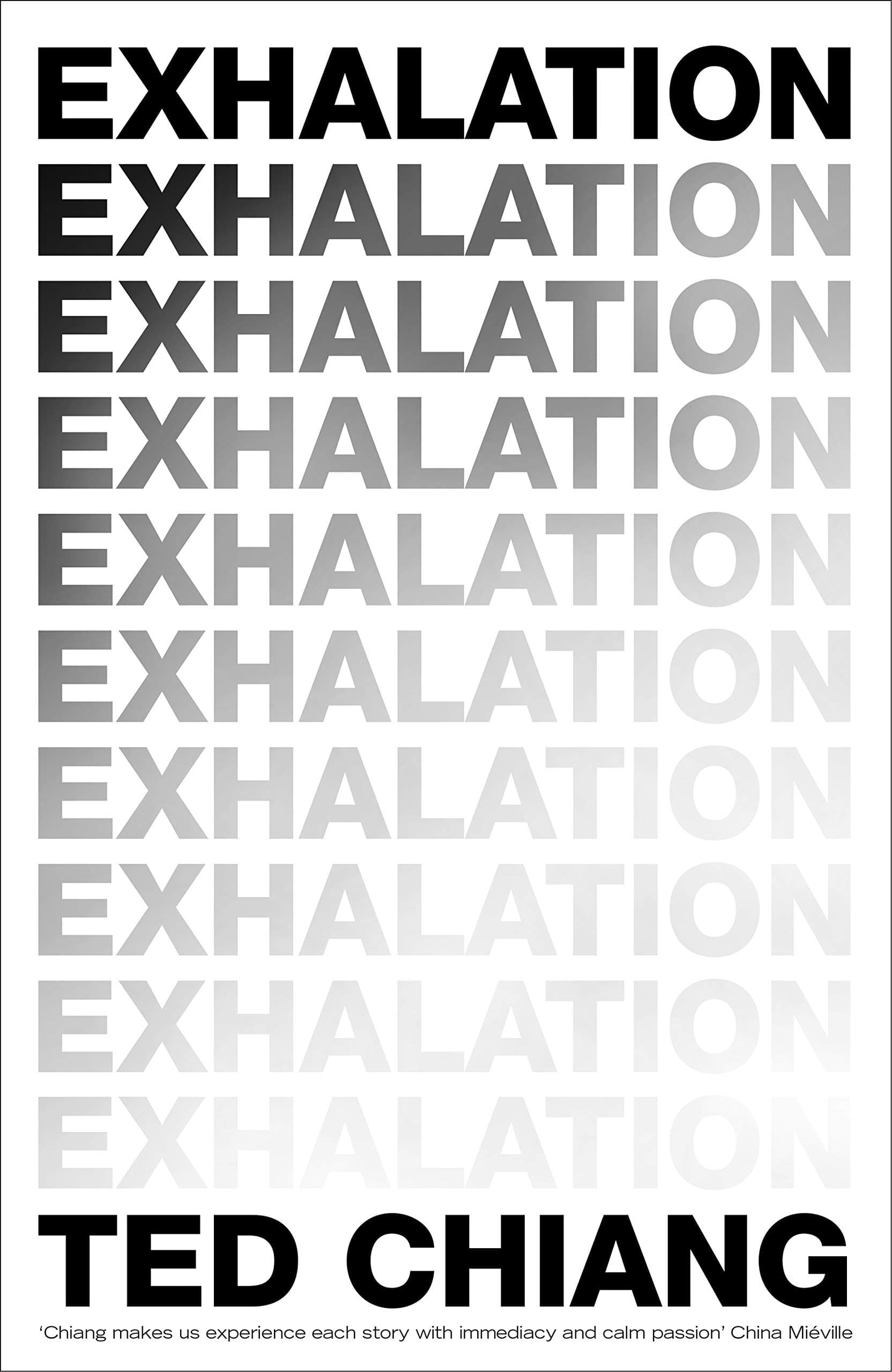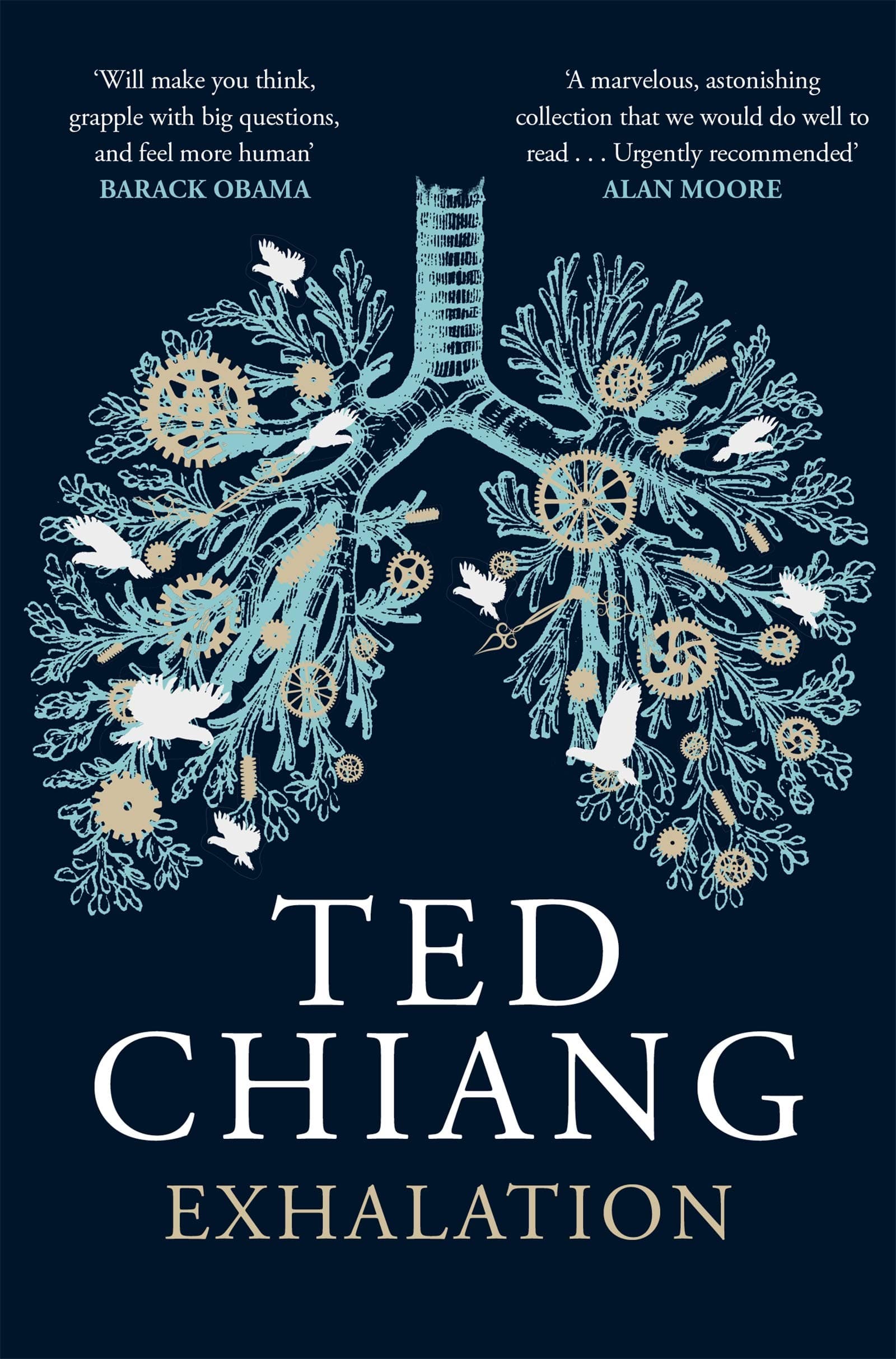
From the acclaimed author of Stories of Your Life and Others - the basis for the Academy Award nominated film Arrival - comes a groundbreaking second collection of short fiction: nine stunningly original, provocative, and poignant stories.
In 'The Merchant and the Alchemist's Gate', a portal through time forces a fabric-seller in ancient Baghdad to grapple with past mistakes and the temptation of second chances. In the epistolary 'Exhalation', an alien scientist makes a shocking discovery with ramifications not just for his own people, but for all of reality. And in 'The Lifecycle of Software Objects', a woman cares for an artificial intelligence over twenty years, elevating a faddish digital pet into what might be a true living being. Also included are two previously unpublished stories: 'Omphalos' and 'Anxiety Is the Dizziness of Freedom'.
In Exhalation, Ted Chiang wrestles with the oldest questions on earth - What is the nature of the universe? What does it mean to be human? - and ones that no one else has even imagined. And, each in its own way, the stories prove that complex and thoughtful science fiction can rise to new heights of beauty, meaning, and compassion.
Add to your library to track progress and write reviews
Find Exhalation Ted Chiang in PDF, EPUB, ebook, audiobook, print, or library editions.

4 books in catalog
Speculative short fiction often explores complex philosophical and scientific ideas through deeply human narratives, most notably in acclaimed short story collections like Stories of Your Life and Others. Ted Chiang has established a reputation for meticulously crafted fiction despite publishing a concise body of work across several decades. His celebrated 1998 story 'Story of Your Life' served as the basis for the 2016 feature film Arrival, bringing his thought-provoking approach to linguistics, time, and human consciousness to global audiences.
Born in Port Jefferson, New York, in 1967, Ted Chiang studied computer science at Brown University before attending the Clarion Writers Workshop in 1989. His technical background deeply informs his fiction, which frequently bridges rigorous technical concepts with moral and philosophical inquiries. Early in his career, Chiang received the John W. Campbell Award for Best New Writer, marking the start of a celebrated bibliography that includes four Hugo Awards, four Nebula Awards, six Locus Awards, and the Theodore Sturgeon Memorial Award. In addition to his fiction, Chiang served as an artist in residence at the University of Notre Dame from 2020 to 2021 and has written non-fiction essays on artificial intelligence and computing for The New Yorker.
Chiang is known for a deliberate, slow pace of composition, resulting in a compact body of work where every story undergoes rigorous conceptual development. His writing examines themes of determinism, free will, linguistics, theology, and the ethical implications of emerging technology. Rather than relying on traditional space-opera tropes, his narratives construct precise thought experiments that probe how technological tools or alternate natural laws alter human perception and relationships. Works such as The Lifecycle of Software Objects examine the emotional and moral responsibilities of raising artificial intelligences, while his second major collection, Exhalation, explores thermodynamics, memory, and cognitive choice.