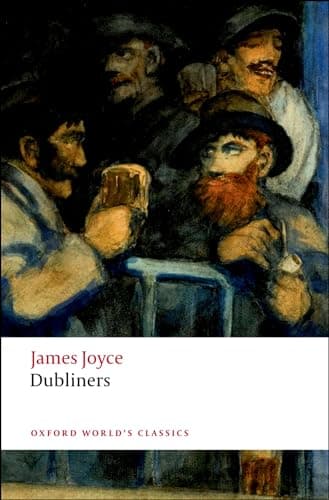
With these fifteen stories, James Joyce reinvented the art of fiction, using a scrupulous, deadpan realism to convey truths that were at once blasphemous and sacramental. Whether writing about the death of a fallen priest ("The Sisters"), the petty sexual and fiscal machinations of "Two Gallants," or of the Christmas party at which an uprooted intellectual discovers just how little he really knows about his wife ("The Dead"), Joyce takes narrative art to places it had never been before.
The text of this edition has been newly edited by Hans Walter Gabler and Walter Hettche and is followed by a new afterword, chronology, and bibliography by John S. Kelly. Also included in a special appendix are the original versions of three stories as well as Joyce's long-suppressed Preface to Dubliners. (back cover)
Add to your library to track progress and write reviews
Find Dubliners James Joyce in PDF, EPUB, ebook, audiobook, print, or library editions.

4 books in catalog
Twentieth-century modernist fiction was profoundly transformed by experimental narrative structures, stream-of-consciousness writing, and intricate symbolic frameworks in landmark works such as Ulysses. James Joyce, an Irish writer, poet, and literary critic, created a body of work centered primarily in Dublin that challenged conventional literary forms. His writing brought psychological realism and stylistic diversity to modern literature, linking localized urban observations with universal themes and classical literary parallels.
Born James Augustine Aloysius Joyce on February 2, 1882, in a suburb of Dublin, Ireland, Joyce attended Jesuit institutions including Belvedere College before studying at University College, Dublin. During his university years, he began writing poetry and short prose sketches that laid the foundation for his future fiction. After graduating, Joyce moved to Paris and later lived in Trieste, Zurich, and Paris, remaining outside Ireland for most of his adult life after 1904. Early support from figures like Ezra Pound helped bring his writing to publication. Throughout his career, Joyce endured severe eye ailments that required multiple surgeries, as well as censorship controversies that led to landmark legal rulings regarding obscenity. He continued writing until his death in Zurich in 1941.
Joyce is recognized for his technical innovation in interior monologue and stream of consciousness, designed to capture the unfiltered flow of human thought and memory. His narrative style frequently incorporates complex networks of symbolic parallels, multilingual puns, invented words, and extensive literary and historical allusions. Set almost exclusively in Dublin, his stories and novels explore themes of personal paralysis, religious and national identity, artistic exile, and epiphany. His aesthetic evolved from the naturalistic clarity of his short stories to hyper-dense, experimental linguistic structures in his final novel.