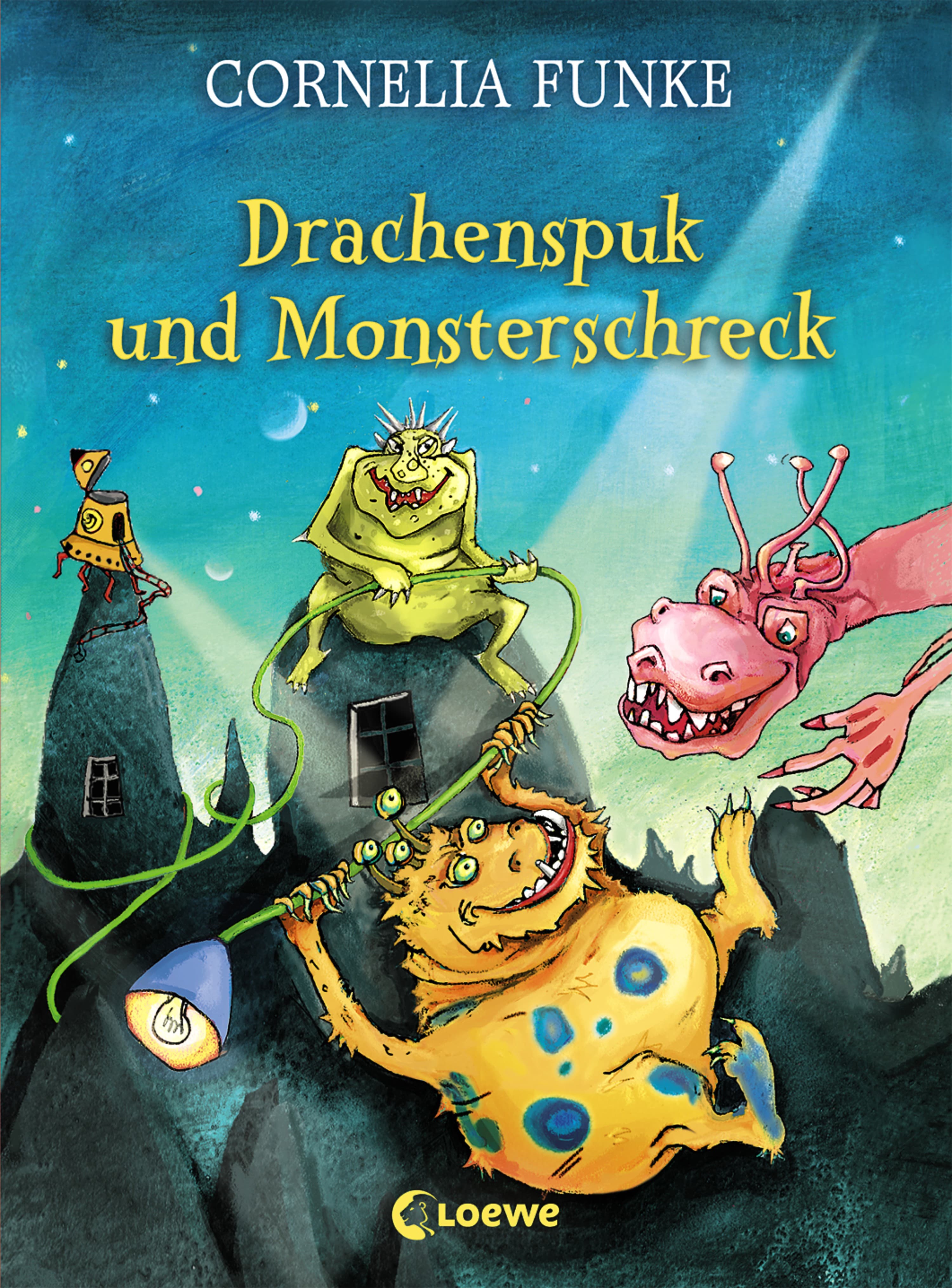

In the narratives of Cornelia Funke, the boundary between the mundane and the supernatural is thin enough to fit inside a kitchen appliance or a school bus. These stories challenge the traditional childhood fear of things that go bump in the night by placing monsters and dragons in unexpectedly domestic or social settings. Rather than existing in distant realms, these creatures are neighbors, nuisances, and occasional companions, forcing young protagonists to navigate a reality where the "scary" is often just misunderstood or out of place.
The tension in these tales arises not from a threat of total destruction, but from the disruption of the status quo. The central conflict often revolves around the discovery of these beings in everyday locations—ranging from the mountains to the local ghost train—and the subsequent realization that their presence requires a shift in perspective. The focus remains on the immediate problem of co-existence, exploring the friction between human logic and the unpredictable nature of the fantastic.
The world-building operates on a principle of playful intrusion. Magic is not a distant, high-fantasy concept but an immediate, physical reality that interacts with modern infrastructure. From amusement park attractions that house genuine spectral boredom to the cramped confines of a family's refrigerator, the setting is defined by the proximity of the fantastic to the everyday. The atmosphere balances a light sense of dread with a heavy dose of irony, suggesting that the most frightening thing about a monster might not be its teeth, but its specific needs or its peculiar dietary habits.
Character development in these short narratives centers on the transition from paralysis to agency. At the outset, the human characters are defined by their reaction to an anomaly—usually terror, annoyance, or disbelief. As they engage with the creatures, the dynamic shifts from passive victimhood to active engagement. The initial arc for most protagonists involves overcoming the instinct to flee, instead finding a way to communicate or solve the problem presented by the creature's presence, illustrating a growth in emotional intelligence within a magical context.
The collection utilizes several key tropes while dismantling their traditional applications to create a unique narrative friction:
In the narratives of Cornelia Funke, the boundary between the mundane and the supernatural is thin enough to fit inside a kitchen appliance or a school bus. These stories challenge the traditional childhood fear of things that go bump in the night by placing monsters and dragons in unexpectedly domestic or social settings. Rather than existing in distant realms, these creatures are neighbors, nuisances, and occasional companions, forcing young protagonists to navigate a reality where the "scary" is often just misunderstood or out of place.
The tension in these tales arises not from a threat of total destruction, but from the disruption of the status quo. The central conflict often revolves around the discovery of these beings in everyday locations—ranging from the mountains to the local ghost train—and the subsequent realization that their presence requires a shift in perspective. The focus remains on the immediate problem of co-existence, exploring the friction between human logic and the unpredictable nature of the fantastic.
The world-building operates on a principle of playful intrusion. Magic is not a distant, high-fantasy concept but an immediate, physical reality that interacts with modern infrastructure. From amusement park attractions that house genuine spectral boredom to the cramped confines of a family's refrigerator, the setting is defined by the proximity of the fantastic to the everyday. The atmosphere balances a light sense of dread with a heavy dose of irony, suggesting that the most frightening thing about a monster might not be its teeth, but its specific needs or its peculiar dietary habits.
Character development in these short narratives centers on the transition from paralysis to agency. At the outset, the human characters are defined by their reaction to an anomaly—usually terror, annoyance, or disbelief. As they engage with the creatures, the dynamic shifts from passive victimhood to active engagement. The initial arc for most protagonists involves overcoming the instinct to flee, instead finding a way to communicate or solve the problem presented by the creature's presence, illustrating a growth in emotional intelligence within a magical context.
The collection utilizes several key tropes while dismantling their traditional applications to create a unique narrative friction:
Add to your library to track progress and write reviews
Find Drachenspuk und Monsterschreck Cornelia Funke in PDF, EPUB, ebook, audiobook, print, or library editions.
7 books in catalog
7 books in catalog