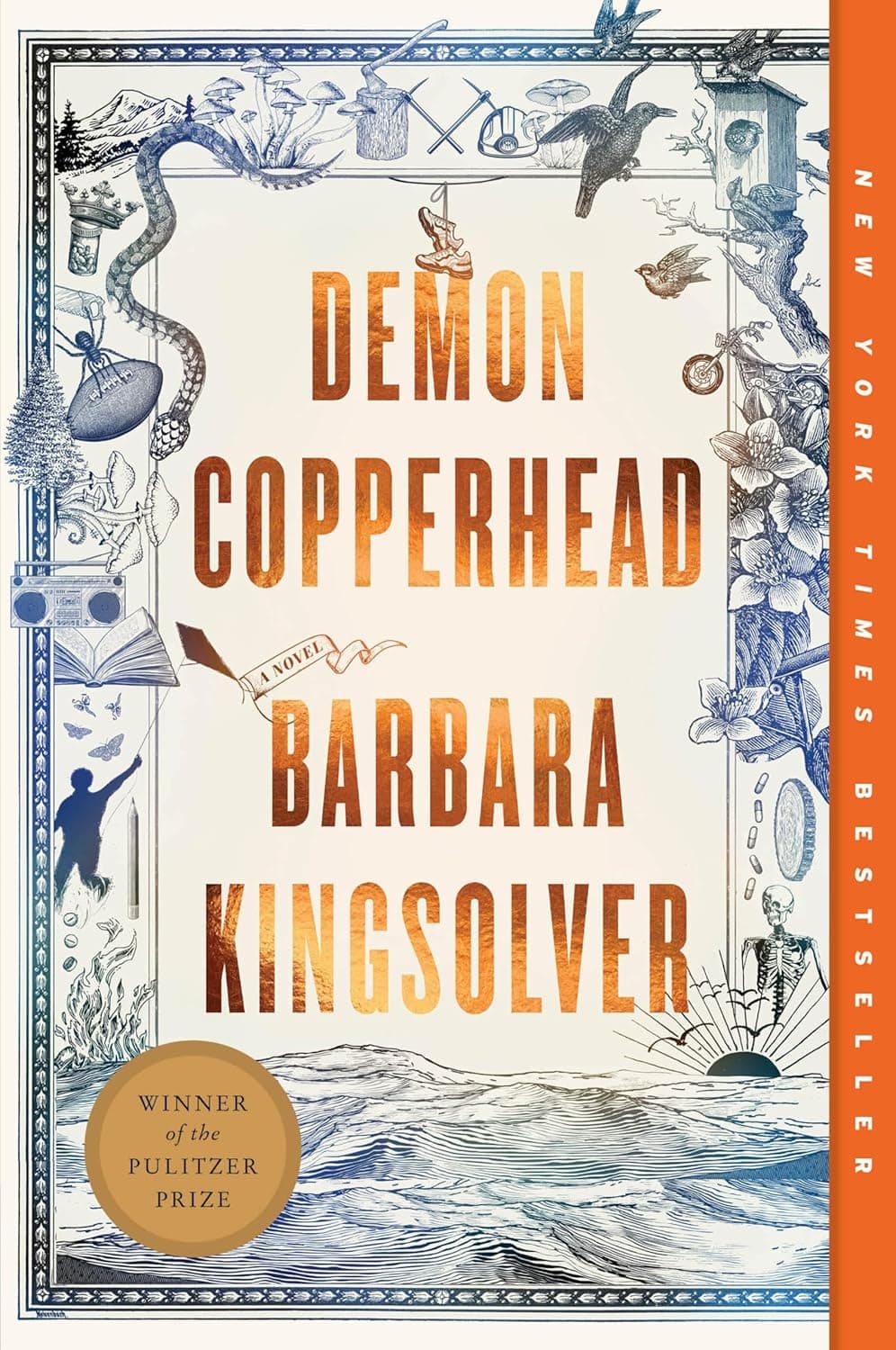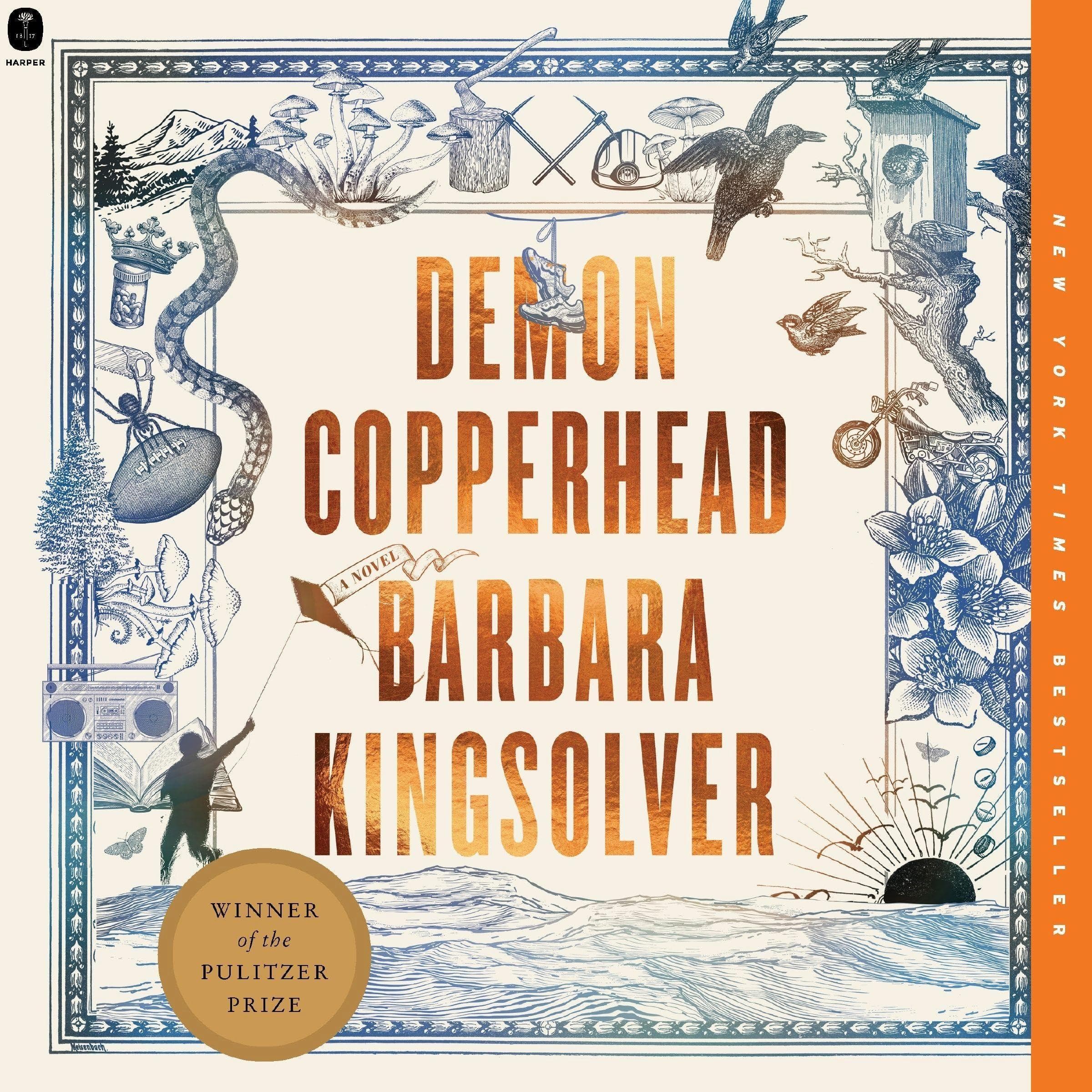

"Relayed in his own unsparing voice, Demon braves the modern perils of foster care, child labor, derelict schools, athletic success, addiction, disastrous loves, and crushing losses. Through all of it, he reckons with his own invisibility in a popular culture where even the superheroes have abandoned rural people in favor of cities.
Many generations ago, Charles Dickens wrote David Copperfield from his experience as a survivor of institutional poverty and its damages to children in his society. Those problems have yet to be solved in ours. Dickens is not a prerequisite for readers of this novel, but he provided its inspiration. In transposing a Victorian epic novel to the contemporary American South, Barbara Kingsolver enlists Dickens’ anger and compassion, and above all, his faith in the transformative powers of a good story. Demon Copperhead speaks for a new generation of lost boys, and all those born into beautiful, cursed places they can’t imagine leaving behind."-- Provided by Amazon
"Relayed in his own unsparing voice, Demon braves the modern perils of foster care, child labor, derelict schools, athletic success, addiction, disastrous loves, and crushing losses. Through all of it, he reckons with his own invisibility in a popular culture where even the superheroes have abandoned rural people in favor of cities.
Many generations ago, Charles Dickens wrote David Copperfield from his experience as a survivor of institutional poverty and its damages to children in his society. Those problems have yet to be solved in ours. Dickens is not a prerequisite for readers of this novel, but he provided its inspiration. In transposing a Victorian epic novel to the contemporary American South, Barbara Kingsolver enlists Dickens’ anger and compassion, and above all, his faith in the transformative powers of a good story. Demon Copperhead speaks for a new generation of lost boys, and all those born into beautiful, cursed places they can’t imagine leaving behind."-- Provided by Amazon
Add to your library to track progress and write reviews
Find Demon Copperhead Barbara Kingsolver in PDF, EPUB, ebook, audiobook, print, or library editions.


3 books in catalog
American fiction, poetry, and essay writing often intersect with environmental science and social critique, but few bodies of work integrate these disciplines as directly as the novels of Barbara Kingsolver. Known widely for The Poisonwood Bible, a sweeping narrative following a missionary family in the Congo, Kingsolver has produced a distinct catalog of prose examining rural life, human responsibility, and complex family structures. Her 2022 novel Demon Copperhead received the 2023 Pulitzer Prize for Fiction, establishing her major role in contemporary American literature.
Born Barbara Ellen Kingsolver on April 8, 1955, in Annapolis, Maryland, she grew up in rural east-central Kentucky. During her childhood, she lived briefly with her parents in the Congo, an early experience that informed her later creative writing. Kingsolver pursued formal scientific education, earning undergraduate and graduate degrees in biology from DePauw University and the University of Arizona. Prior to publishing fiction professionally in 1985, she worked as a scientific writer and freelance journalist, establishing a research habit that continues to shape her novels.
Kingsolver published her debut novel, The Bean Trees, in 1988, followed by works of short fiction, poetry, and creative non-fiction including Holding the Line: Women in the Great Arizona Mine Strike. Over two decades spent in Tucson, Arizona, and later in southwestern Virginia, she expanded her output across multiple genres. In 2000, she was awarded the National Humanities Medal for service through the arts and founded the PEN/Bellwether Prize for Socially Engaged Fiction. She also collaborated with her family on Animal, Vegetable, Miracle: A Year of Food Life, an influential non-fiction account detailing a year of eating locally.
Kingsolver's literary style pairs rigorous ecological observation with deep character studies. Grounded in her background as a biologist, her narratives frequently focus on environmental conservation, biodiversity, regional agriculture, and the delicate interdependence between human communities and local ecosystems. Her work systematically examines social justice, political displacement, post-colonial history, and the resilience of working-class families navigating systemic hardship.

3 books in catalog
American fiction, poetry, and essay writing often intersect with environmental science and social critique, but few bodies of work integrate these disciplines as directly as the novels of Barbara Kingsolver. Known widely for The Poisonwood Bible, a sweeping narrative following a missionary family in the Congo, Kingsolver has produced a distinct catalog of prose examining rural life, human responsibility, and complex family structures. Her 2022 novel Demon Copperhead received the 2023 Pulitzer Prize for Fiction, establishing her major role in contemporary American literature.
Born Barbara Ellen Kingsolver on April 8, 1955, in Annapolis, Maryland, she grew up in rural east-central Kentucky. During her childhood, she lived briefly with her parents in the Congo, an early experience that informed her later creative writing. Kingsolver pursued formal scientific education, earning undergraduate and graduate degrees in biology from DePauw University and the University of Arizona. Prior to publishing fiction professionally in 1985, she worked as a scientific writer and freelance journalist, establishing a research habit that continues to shape her novels.
Kingsolver published her debut novel, The Bean Trees, in 1988, followed by works of short fiction, poetry, and creative non-fiction including Holding the Line: Women in the Great Arizona Mine Strike. Over two decades spent in Tucson, Arizona, and later in southwestern Virginia, she expanded her output across multiple genres. In 2000, she was awarded the National Humanities Medal for service through the arts and founded the PEN/Bellwether Prize for Socially Engaged Fiction. She also collaborated with her family on Animal, Vegetable, Miracle: A Year of Food Life, an influential non-fiction account detailing a year of eating locally.
Kingsolver's literary style pairs rigorous ecological observation with deep character studies. Grounded in her background as a biologist, her narratives frequently focus on environmental conservation, biodiversity, regional agriculture, and the delicate interdependence between human communities and local ecosystems. Her work systematically examines social justice, political displacement, post-colonial history, and the resilience of working-class families navigating systemic hardship.