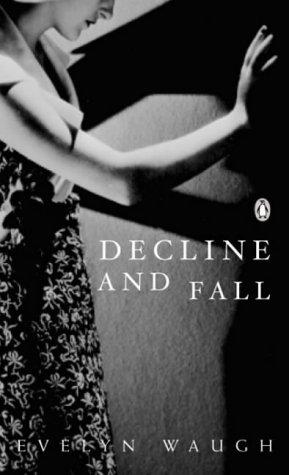
Evelyn Waugh's "irresistible" first novel (New York Times) is a brilliant and hilarious satire of English school life in the 1920s. Sent down from Oxford after a wild, drunken party, Paul Pennyfeather is oddly surprised to find himself qualifying for the position of schoolmaster at a boys' private school in Wales. His colleagues are an assortment of misfits, rascals and fools, including Prendy (plagued by doubts) and Captain Grimes, who is always in the soup (or just plain drunk). Then Sports Day arrives, and with it the delectable Margot Beste-Chetwynde, floating on a scented breeze. As the farce unfolds in Evelyn Waugh's dazzling debut as a novelist, the young run riot and no one is safe, least of all Paul.

Evelyn Waugh's "irresistible" first novel (New York Times) is a brilliant and hilarious satire of English school life in the 1920s. Sent down from Oxford after a wild, drunken party, Paul Pennyfeather is oddly surprised to find himself qualifying for the position of schoolmaster at a boys' private school in Wales. His colleagues are an assortment of misfits, rascals and fools, including Prendy (plagued by doubts) and Captain Grimes, who is always in the soup (or just plain drunk). Then Sports Day arrives, and with it the delectable Margot Beste-Chetwynde, floating on a scented breeze. As the farce unfolds in Evelyn Waugh's dazzling debut as a novelist, the young run riot and no one is safe, least of all Paul.
Add to your library to track progress and write reviews
Find Decline and Fall Evelyn Waugh in PDF, EPUB, ebook, audiobook, print, or library editions.
6 books in catalog
Twentieth-century British satire and social commentary reached some of its sharpest expression in comic fiction that dismantled interwar high society and wartime aristocracy, most famously in the 1945 novel Brideshead Revisited. English author Evelyn Waugh built a distinct body of work that ranged from biting early satires to serious, polished mid-century fiction and biographical studies.
Born in Hampstead, London, in October 1903, Waugh was the second son of publisher Arthur Waugh and his wife Catherine. He grew up in a literary household alongside his elder brother Alec, who achieved early success as a novelist. Waugh attended Lancing College and went on to study history at Hertford College, Oxford, leaving with an undistinguished third-class degree. Before establishing himself as a full-time author, he briefly worked as an art student, schoolmaster, and carpenter, while also writing short essays, journalism, and book reviews.
Waugh published his first book-length biography, Rossetti: His Life and Works, in 1928, followed that same year by his celebrated debut novel, Decline and Fall, which drew on his experiences teaching in private schools. Over the next decade, he traveled widely as a journalist while producing acclaimed satirical works including Vile Bodies and A Handful of Dust. During World War II, his writing assumed a more serious tone, culminating in Brideshead Revisited in 1945 and his post-war military trilogy Sword of Honour, published between 1952 and 1961. He also published notable biographical works, including Edmund Campion: Jesuit and Martyr in 1935 and The Life of the Right Reverend Ronald Knox in 1959, before his death in Somerset in 1966.
Waugh's writing style is defined by precise prose, traditional narrative framing, and an uncompromising satirical perspective on modern society. While working alongside the era of modernist innovation, Waugh eschewed formal experimentalism in favor of tightly constructed plots and meticulously chosen phrasing. His early works lampooned the recklessness and moral decline of interwar social elites, whereas his later fiction reflected a deeply serious engagement with Catholic theology, traditional values, and spiritual grace.
6 books in catalog
Twentieth-century British satire and social commentary reached some of its sharpest expression in comic fiction that dismantled interwar high society and wartime aristocracy, most famously in the 1945 novel Brideshead Revisited. English author Evelyn Waugh built a distinct body of work that ranged from biting early satires to serious, polished mid-century fiction and biographical studies.
Born in Hampstead, London, in October 1903, Waugh was the second son of publisher Arthur Waugh and his wife Catherine. He grew up in a literary household alongside his elder brother Alec, who achieved early success as a novelist. Waugh attended Lancing College and went on to study history at Hertford College, Oxford, leaving with an undistinguished third-class degree. Before establishing himself as a full-time author, he briefly worked as an art student, schoolmaster, and carpenter, while also writing short essays, journalism, and book reviews.
Waugh published his first book-length biography, Rossetti: His Life and Works, in 1928, followed that same year by his celebrated debut novel, Decline and Fall, which drew on his experiences teaching in private schools. Over the next decade, he traveled widely as a journalist while producing acclaimed satirical works including Vile Bodies and A Handful of Dust. During World War II, his writing assumed a more serious tone, culminating in Brideshead Revisited in 1945 and his post-war military trilogy Sword of Honour, published between 1952 and 1961. He also published notable biographical works, including Edmund Campion: Jesuit and Martyr in 1935 and The Life of the Right Reverend Ronald Knox in 1959, before his death in Somerset in 1966.
Waugh's writing style is defined by precise prose, traditional narrative framing, and an uncompromising satirical perspective on modern society. While working alongside the era of modernist innovation, Waugh eschewed formal experimentalism in favor of tightly constructed plots and meticulously chosen phrasing. His early works lampooned the recklessness and moral decline of interwar social elites, whereas his later fiction reflected a deeply serious engagement with Catholic theology, traditional values, and spiritual grace.